






Monster High dolls invade Barbie’s territory
As far as catfights go, this is a doozy.
Barbie, long the reigning queen in the doll world, suddenly has been thrust into the battle of her life.
But Barbie’s competitors look nothing like the blue-eyed, blond-haired, long-legged fashion icon. And they don’t have the same old standards of beauty as the aging diva either.
Monster High dolls, vampy teens that are patterned after the offspring of monsters such as Dracula and Frankenstein, have neon pink and green streaks in their hair. They wear platform heels and mini-skirts with skulls on them. And the dolls that go by names such as Draculaura and Ick Abbey Bominable are gaining on Barbie.
In the Maddux household in Portage, Wis., for instance, Olivia, 10, has been playing with Barbie for six or seven years. But she added Monster High dolls to the mix a year ago.
“I look at Olivia and some of her friends and see they’re growing out of Barbies,” says Olivia’s mom, Lisa Maddux, 42, a freelance writer.
That Barbie is losing her edge is no surprise. Since debuting in 1959 as the world’s first fashion doll, Barbie has long been a lightning rod for controversy and competitors.
To be sure, Barbie is still No. 1 in the doll market, and the Mattel franchise has an estimated $1.3 billion in annual sales. But Barbie’s sales have slipped for four straight quarters, even while the overall doll category is up 6 percent year-to-date, according to the researcher NPD Group.
Meanwhile, Monster High, which also is made by Mattel, has become the No. 2 doll brand in only three years, with more than $500 million in annual sales, says BMO Capital Markets Gerrick Johnson.
In addition to the competition from Monster High, Barbie has had to contend with increasing criticism of her impossibly proportioned body. While the 54-year-old doll has over the years graduated from pin-up girl to a range of characters that include astronauts, engineers and princesses, detractors continue to dismiss the 11.5-inch doll’s frame as impossibly top-heavy and tiny-waisted.
Monster High dolls, although still pretty slim, have a punk rock look that’s intended to send the message that being different is OK. And they’re aimed at slightly older children – adding to their appeal – while Barbie’s increasingly young audience is hurting sales. After all, no child wants to play with anything seen as a baby toy.
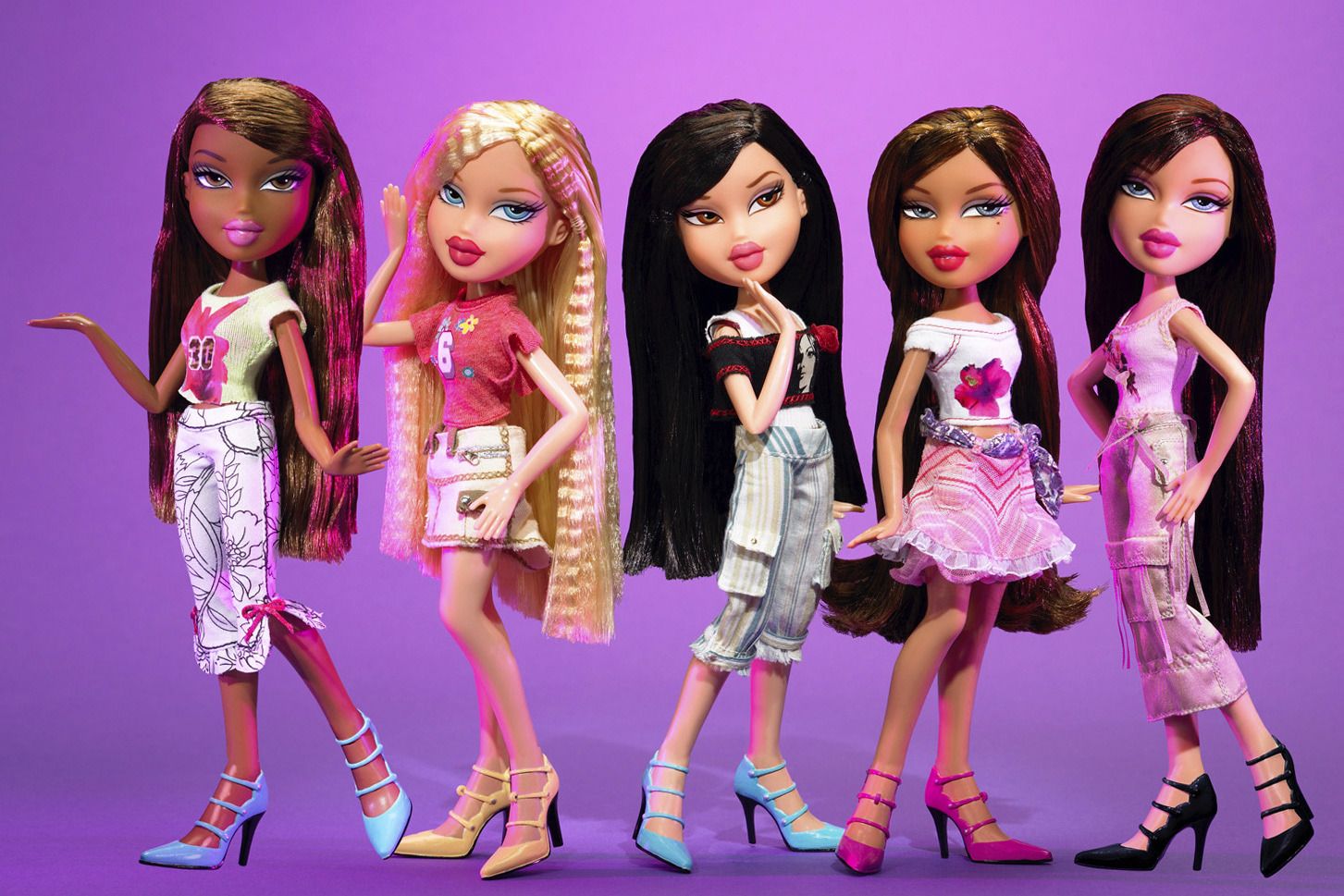
The last time Barbie wasn’t feeling the love was about 12 years ago when, after years of little competition, pouty-lipped Bratz dolls became wildly successful, sending Barbie into a sales spiral. Bratz dolls were edgy. They wore low-rise jeans, had heavy makeup and exposed navels. And they were sultrier than Barbies. But the Bratz fad faded in 2005.
Industry experts say it will take a lot to dethrone Barbie.
“It’s still one of the strongest brands in industry,” says Needham & Co. toy analyst Sean McGowan.
FILE – In this photograph released by MGA Entertainment Friday, Feb. 10, 2006, “Feelin’ Pretty” Bratz dolls are shown at the American International Toy Fair in New York. GA?s Bratz dolls, introduced in 2001, made a splash with their low rise jeans, makeup and platform heels. (AP Photo/MGA Entertainment)
FILE – In this Jan. 25, 2007 file photo, Baby Alive is demonstrated at a Hasbro media preview in New York. Hasbro?s Baby Alive took baby dolls to a new level. Introduced in 1973, the dolls that mimic? d eating and wetting a diaper were a hit in the 1970s. (AP Photo/Mark Lennihan, file)
FILE – In this Oct. 31, 2007, file photo, Barbie dolls are seen at the Barbie Store in Buenos Aires. As Mattel reported on July 17, 2013, Barbie is suddenly facing a popularity contest as the most popular doll on the Market. Instead, Mattel’s Monster High dolls, have exploded in popularity since being introduced in 2010. (AP Photo/Natacha Pisarenko, file)
