






Springs Rescue Mission responds to homeless people’s public complaints about its shelter
courtesy of Springs Rescue Mission
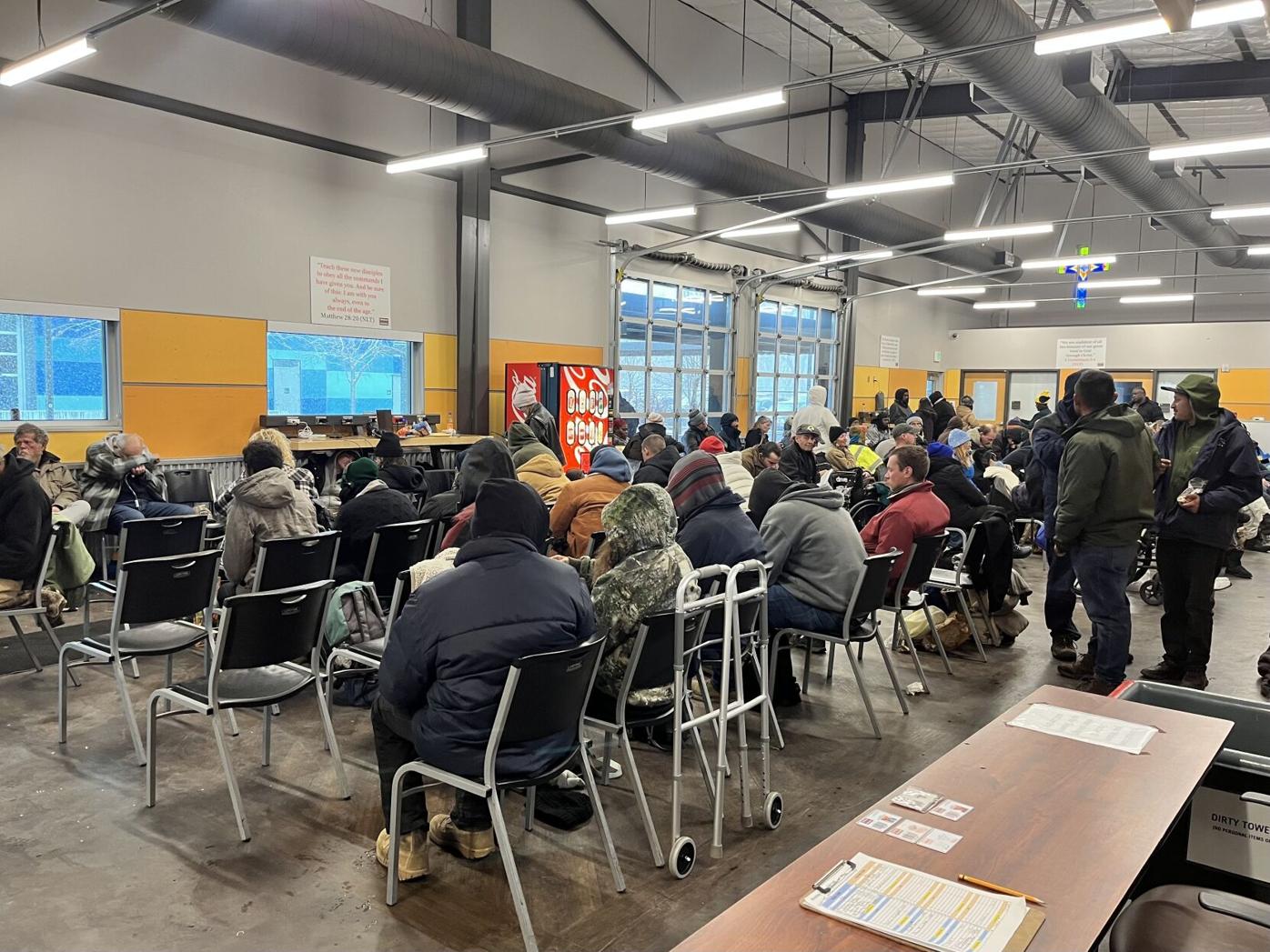
In recent months, Colorado Springs City Councilors have heard repeated complaints from homeless people that Springs Rescue Mission, the city’s largest shelter, is inadequate and unfair.
People have taken to the podium at meetings during public comment to criticize the food, which is based on an incentive system, and the rules, which do not allow people who act unsafely toward themselves, other clients or employees to stay there.
Some accuse the organization of forcing Christianity on shelter-seekers, some claim they are being turned out in bad weather or for minor infractions such as having candy in their backpack, some say they are ridiculed, others say their possessions aren’t being returned when they leave, and some feel the environment is unsafe.
Pueblo Rescue Mission looks to model Colorado Springs as demand grows
In responding to questions about such concerns at Monday’s council meeting, Springs Rescue Mission President and CEO Jack Briggs refuted the allegations and said the faith-based, Gospel-driven 501(c)(3) nonprofit organization isn’t going to change who it is or what it does.
“Some people don’t like rules. They’ll say you’re forcing me to do something. We are totally voluntary; nobody is at Springs Rescue Mission mandatorily,” he said.
“I have had individuals that have come from other places tell me, ‘I’m leaving, I’m going back to Denver. You guys have too many rules.’
“I say, ‘OK, and congratulations on making that decision.’ For folks to say I don’t like who you are, it’s who we are. We’re safe, we’re secure, we’re clean, we take pets. You can get health care, vocational training, help finding a place to live. In return we ask you to be safe to yourself and others.”
Briggs, a retired Air Force major general, said most people who claim the rescue mission is not safe have never been there.
“I don’t spend a lot of time trying to dispel something someone says,” he said.
Westside Cares marks 40 years of helping low-income, homeless residents in Colorado Springs
Briggs mentioned that before the rescue mission fenced off its 14-acre campus, 25% of clients were women. They’re now 40% of clients, Briggs said, attributing the increase to improved safety measures.
Every month the rescue mission confiscates and holds hundreds of knives, many of which go unclaimed, he said, because “they don’t need it inside the campus.”
Unlike living on the streets, people can sit or lie around the Springs Rescue Mission campus without fear of getting assaulted or mugged, Briggs said.
“We take the aggregate, the big numbers,” he said, adding that some people don’t fall into the middle-of-the-road category.
For example, the organization doesn’t have medical staff or aides to assist people who cannot care for themselves, if they have a condition such as an open wound.
“We don’t have the insurance or the expertise to care for somebody,” he said, adding that respite care for homeless people is a “hole in our community.”
Anyone who becomes violent or threatening is escorted out, and while people can enter under the influence of alcohol or drugs, they cannot drink or use drugs on campus.
“Our whole focus is to meet them where they’re at and help them with a better life,” Briggs said, in disagreeing with the claim that some people are made fun of by staff.
Springs Rescue Mission activates severe weather protocols, houses over 400
He argues that clients are treated with dignity and respect and are not made to stand outside in severe weather but encouraged to use its day center.
“Are we being too hard?” asked City Council member David Leinweber. “This population is really challenged with saying yes to help. There are some things we’ve put around this population that makes life harder; is that compassionate?”
“It depends on what you want to incentivize,” Briggs said.
The rescue mission helps people make decisions and have options, rather than see them as victims who have no agency to make decisions. That line of thought is “consigning them to that role,” he said. “I don’t think that’s compassion.”
In general, Briggs said, some people arrive with expectations that the rescue mission — one of more than 300 such facilities in the nation — doesn’t meet.
“Maybe they have a desire that’s just not in our purview,” he said. “We have to think of what’s doable with hundreds of people.”
As to the complaint about Christianity, Briggs said no one is hitting people with a Bible. And there’s no requirement of faith for anyone to receive relief services such as food and shelter.
“We don’t force it on people; we have plenty that come voluntarily,” he said. “No one argued someone into heaven. That’s not our purpose. Our purpose is exposure.”
For those who don’t like or want anything to do with its faith-based recovery programs, Briggs said there are other options in the community.
But the organization is not going to remove the Bible verses that hang on the walls in buildings.
“That’s protected under the Freedom of Religion Act; we can post Scripture,” he said.
The rescue mission spends the approximately $500,000 the city allocates annually from its budget, as well as state and federal funding, on relief services, not faith-based restoration programs, Briggs said. “We don’t comingle that money.”
Number of homeless public school students on the rise in Colorado and El Paso County
On Sunday night, 410 people spent the night in Springs Rescue Mission’s shelter. An alternative standup warming shelter system run by Hope COS, another local nonprofit, did not open Sunday night.
The issue of people not being able to use Springs Rescue Mission or not wanting to go there came to a head during recent severe storms, when numbers at Hope COS also topped 400 per night.
Executive Director Melissa Oskin said Hope COS’s mission is to provide shelter at local churches for people who are banned or for whatever reason won’t use Springs Rescue Mission.
But “We’ve started seeing people leave there and come to us, when our purpose is to serve the population that isn’t able to go to Springs Rescue Mission during winter weather protocols,” she said.
So people who are able to stay at Springs Rescue Mission are being rerouted back there, she said, adding that Hope COS plans to limit capacity to 120 people during severe weather events.
The main concern, Oskin said, is that Hope COS does not currently receive city funding for its temporary shelters that churches and other organizations host and does not have the resources to continue serving masses of people.
City Councilor Nancy Henjum said options for shelters is best for the community.
“I think we have to start looking at how does the city more broadly shape the city budget to weave in other shelters,” she said, “and not only see Springs Rescue Mission as the one and only option.”
Contact the writer: 719-476-1656.
