






Federal judge weighs whether to block new law governing loans to Colorado residents
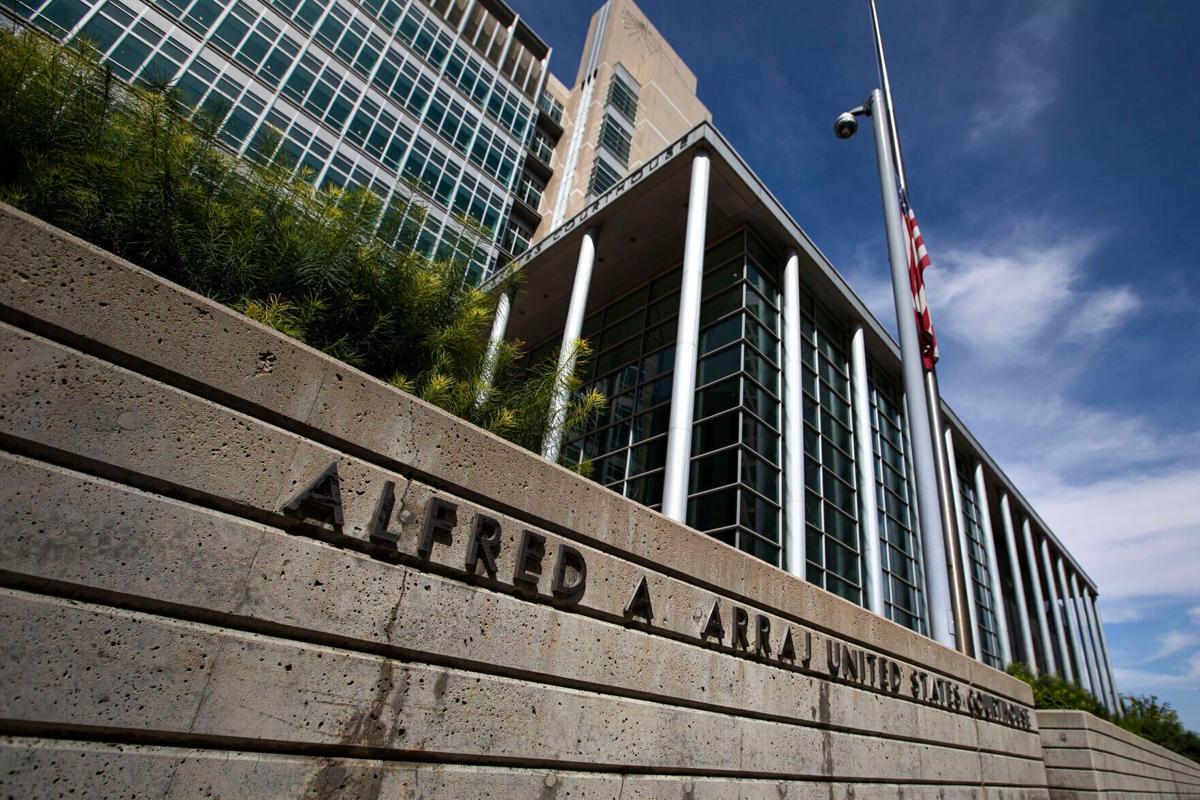
Timothy Hurst, The Denver Gazette file
A federal judge on Thursday heard arguments from the banking industry and bank regulators about whether Colorado is exceeding its authority by subjecting out-of-state banks to Colorado’s interest rate caps on loans through a new law set to take effect on July 1.
The controversy has implications for Coloradans’ access to financial products with high interest rates, but centers around the wording of a 1980 federal law, the Depository Institutions Deregulation and Monetary Control Act.
Amid rampant inflation, Congress passed a provision known as Section 521 allowing state-chartered banks to lend at interest rates up to their own state’s cap or slightly above the federal interest rate, whichever was higher. The goal was to ensure state-chartered banks with low interest rate caps could still afford to lend money.
Section 525, however, granted states the power to opt-out and ensure state-chartered banks charged interest rates in line with state law. The opt-out applies to loans “made in” the state.
So, when Colorado enacted a law in 2023 subjecting out-of-state, state-chartered banks to Colorado’s interest rate caps when they lend to Colorado consumers, are the affected loans “made in” Colorado after all?
“By definition,” said U.S. District Court Judge Daniel D. Domenico, “we’re talking about banks that are chartered by some other state than Colorado, are now being told what they can do and the rates they can charge — not by the state where they’re chartered, but by Colorado. How is that consistent with federalism?”

In March, the National Association of Industrial Bankers, a trade group based in Utah, sued Colorado in conjunction with other industry associations over House Bill 1229, enacted last year but taking effect in July. The law invokes Colorado’s ability to opt-out through Section 525 and apply its own caps on interest rates to consumer transactions “in this state.”
The plaintiffs did not dispute that Colorado could apply its own interest rate ceilings to banks chartered in Colorado that lend to Coloradans. The problem, they argued, was that federal law precludes Colorado from forcing banks chartered in other states from abiding by Colorado’s own interest rate caps when lending to Coloradans.
“The harm to my clients without an injunction on July 1 is clear. No one is going to sit around and wait for the first enforcement action against them before they lower their interest rate from 29% to 21%,” said attorney David M. Gossett. “They’re either going to stop lending or lose money.”
“I will say I can’t decide if this case is really simple or really complicated,” said Domenico.
He noted Congress’ reference to where the loan is “made” suggested the location of the bank matters. At the same time, Congress, in the companion Section 521, referred explicitly to where a bank is “located” — suggesting an intent to not limit Colorado’s reach to Colorado-only banks.
“You have a good point that it could use other language that might have made the plaintiffs’ position more clear,” he told the government’s attorney. “But it also could have used other language that would make your position pretty easy to justify.”
During the debate over HB 1229, the bill’s sponsors explained the goal was to prevent out-of-state banks from “hopping around” Colorado’s consumer lending laws by charging higher interest rates for financial products than Colorado law allows for its state-chartered institutions.

FILE PHOTO: The Senate entrance on the Colorado Capitol’s second floor. Gov. Jared Polis must decide if he’ll sign Senate Bill 205 into law, and become the first state to regulate artificial intelligence in a comprehensive manner.
“What this means is if a bank in Utah charges an interest rate on a small-dollar loan outside the scope of what is allowable in Colorado, they can still do so here. And Colorado consumers are still vulnerable to that sort of predatory lending,” said Rep. Javier Mabrey, D-Denver, at a committee hearing.
Rep. Mike Weissman, D-Aurora, stressed the bill would not prevent out-of-state banks from lending to Coloradans. But such institutions “just have to abide by the provisions that any other entity does, basically a Colorado state-chartered bank or a nationally chartered bank.”
The Federal Deposit Insurance Corporation, a regulatory agency that insures depositors against financial losses, was present at the preliminary injunction hearing to support Colorado. The agency argued if a bank in one state makes a loan to a consumer in another state, the loan is “made” in both states.
“The FDIC doesn’t take a position as to which state’s law applies to any particular loan,” said attorney Michael K. Morelli. But with the opt-out, “that’s what Congress envisioned. They didn’t envision uniformity.”
The Colorado Attorney General’s Office similarly defended Colorado’s authority to regulate interest rates charged only if the consumer, rather than the bank, is in Colorado. A loan is not “made,” the office pointed out, without a customer.
“That makes a lot of sense as policy matter,” Domenico acknowledged. “But that’s not what the statute says. It talks about loans being ‘made’ in a particular place.”
Domenico said he will issue a decision soon on whether to block Colorado’s law from taking effect.
The case is National Association of Industrial Bankers et al. v. Weiser et al.
Federal judge weighs whether to block new law governing loans to Colorado residents
The banking industry is challenging a 2023 state law designed to protect Colorado consumers from high interest rates on loans

A federal judge on Thursday heard arguments from the banking industry and bank regulators about whether Colorado is exceeding its authority by subjecting out-of-state banks to Colorado’s interest rate caps on loans through a new law set to take effect on July 1.
The controversy has implications for Coloradans’ access to financial products with high interest rates, but centers around the wording of a 1980 federal law, the Depository Institutions Deregulation and Monetary Control Act.
Amid rampant inflation, Congress passed a provision known as Section 521 allowing state-chartered banks to lend at interest rates up to their own state’s cap or slightly above the federal interest rate, whichever was higher. The goal was to ensure state-chartered banks with low interest rate caps could still afford to lend money.
Section 525, however, granted states the power to opt-out and ensure state-chartered banks charged interest rates in line with state law. The opt-out applies to loans “made in” the state.
So, when Colorado enacted a law in 2023 subjecting out-of-state, state-chartered banks to Colorado’s interest rate caps when they lend to Colorado consumers, are the affected loans “made in” Colorado after all?
“By definition,” said U.S. District Court Judge Daniel D. Domenico, “we’re talking about banks that are chartered by some other state than Colorado, are now being told what they can do and the rates they can charge — not by the state where they’re chartered, but by Colorado. How is that consistent with federalism?”
In March, the National Association of Industrial Bankers, a trade group based in Utah, sued Colorado in conjunction with other industry associations over House Bill 1229, enacted last year but taking effect in July. The law invokes Colorado’s ability to opt-out through Section 525 and apply its own caps on interest rates to consumer transactions “in this state.”
The plaintiffs did not dispute that Colorado could apply its own interest rate ceilings to banks chartered in Colorado that lend to Coloradans. The problem, they argued, was that federal law precludes Colorado from forcing banks chartered in other states from abiding by Colorado’s own interest rate caps when lending to Coloradans.
“The harm to my clients without an injunction on July 1 is clear. No one is going to sit around and wait for the first enforcement action against them before they lower their interest rate from 29% to 21%,” said attorney David M. Gossett. “They’re either going to stop lending or lose money.”
“I will say I can’t decide if this case is really simple or really complicated,” said Domenico.
He noted Congress’ reference to where the loan is “made” suggested the location of the bank matters. At the same time, Congress, in the companion Section 521, referred explicitly to where a bank is “located” — suggesting an intent to not limit Colorado’s reach to Colorado-only banks.
“You have a good point that it could use other language that might have made the plaintiffs’ position more clear,” he told the government’s attorney. “But it also could have used other language that would make your position pretty easy to justify.”
During the debate over HB 1229, the bill’s sponsors explained the goal was to prevent out-of-state banks from “hopping around” Colorado’s consumer lending laws by charging higher interest rates for financial products than Colorado law allows for its state-chartered institutions.

“What this means is if a bank in Utah charges an interest rate on a small-dollar loan outside the scope of what is allowable in Colorado, they can still do so here. And Colorado consumers are still vulnerable to that sort of predatory lending,” said Rep. Javier Mabrey, D-Denver, at a committee hearing.
Rep. Mike Weissman, D-Aurora, stressed the bill would not prevent out-of-state banks from lending to Coloradans. But such institutions “just have to abide by the provisions that any other entity does, basically a Colorado state-chartered bank or a nationally chartered bank.”
The Federal Deposit Insurance Corporation, a regulatory agency that insures depositors against financial losses, was present at the preliminary injunction hearing to support Colorado. The agency argued if a bank in one state makes a loan to a consumer in another state, the loan is “made” in both states.
“The FDIC doesn’t take a position as to which state’s law applies to any particular loan,” said attorney Michael K. Morelli. But with the opt-out, “that’s what Congress envisioned. They didn’t envision uniformity.”
The Colorado Attorney General’s Office similarly defended Colorado’s authority to regulate interest rates charged only if the consumer, rather than the bank, is in Colorado. A loan is not “made,” the office pointed out, without a customer.
“That makes a lot of sense as policy matter,” Domenico acknowledged. “But that’s not what the statute says. It talks about loans being ‘made’ in a particular place.”
Domenico said he will issue a decision soon on whether to block Colorado’s law from taking effect.
The case is National Association of Industrial Bankers et al. v. Weiser et al.
