






Colorado Senate votes to repeal Labor Peace Act as opponents call it a ‘declaration of war’
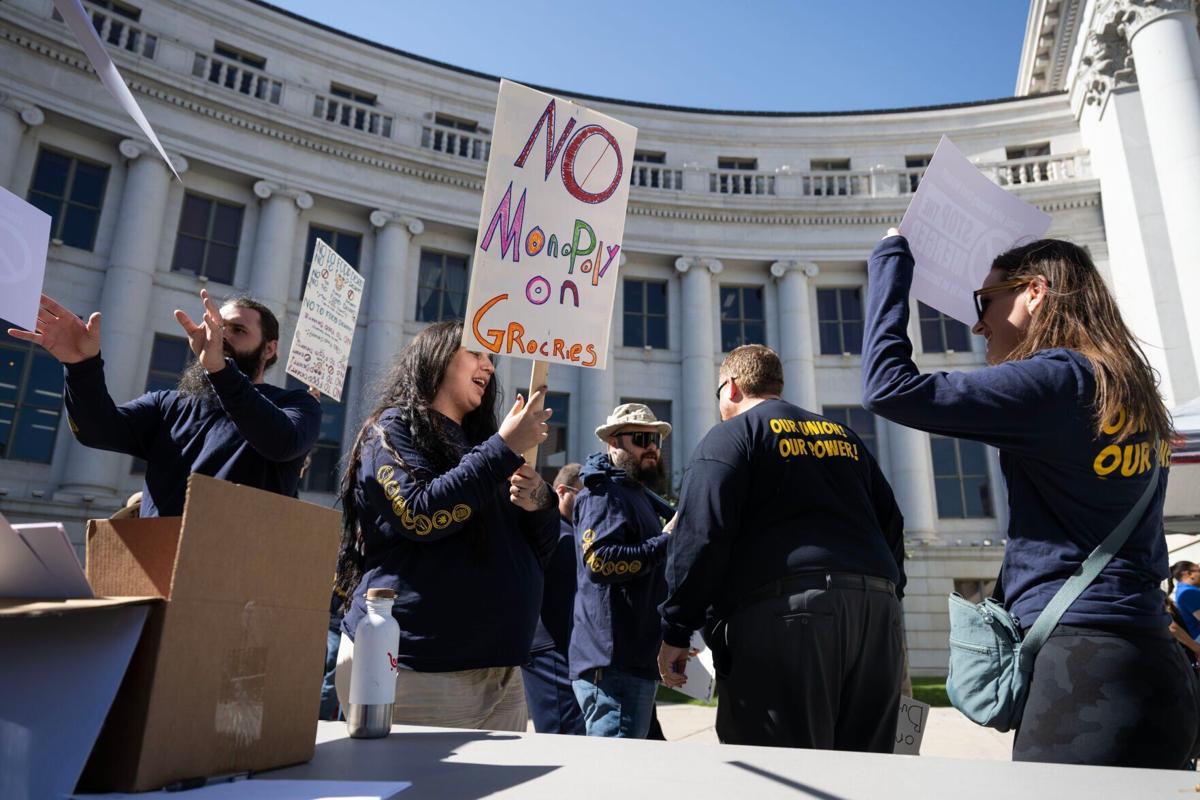
Stephen Swofford / Denver Gazette
Colorado senators Thursday advanced a bill that would eliminate a key requirement before a labor group can negotiate with a company to impose dues on non-union members.
The proposal, which would delete key provisions of an 80-year old labor law dealing with union elections, still needs the Senate’s final approval. Assuming the Senate ultimately passes the bill, a major battle is also expected in the state House.
The bill’s fate, even if reached the governor’s desk, remains uncertain. In his annual State of the State address, Gov. Jared Polis said that he would only support changes to the law if it has the buy-in of both labor and business. Polis vetoed three labor bills last session. The governor reiterated that message at a roundtable with business leaders hosted by the Colorado Business Roundtable last month.
Under the 80-year-old law, the first election to form a union must receive a simple majority to pass. The second election, which allows for the establishment of a “union security” agreement at a unionized workplace, requires a higher threshold of 75% to pass.
Assuming that second election meets that vote threshold, the union can then negotiate with the company to impose a fee on non-union workers.
Senate Bill 005 repeals that requirement for a second election outlined in the law called the Colorado Labor Peace Act.
The bill’s supporters argued that the current law is antiquated and that unionization is ultimately good for workers and the state economy. Critics said the current law is working and upending it will undercut Colorado’s economic gains.
“As corporate profits soar, it’s crucial to level the playing field, empower workers to negotiate for better pay, healthcare, and retirement benefits and job security, and Senate Bill 005 can help us do that,” said Majority Leader Robert Rodriguez, D-Denver, one of the sponsors.
While the Labor Peace Act was touted as a “great compromise” between business and labor when it was passed, it isn’t working for workers, added Sen. Jessie Danielson, D-Wheat Ridge.
“I know that the folks in my district and across the state are crying out for support,” she said. “The working people of Colorado, as well as the folks all across the country, are demanding that we be better for them and do right by the workers.
Supporters have cited a report from the Colorado Fiscal Institute, which said union members earn an average of 10% more than non-union members. The group projected that, if the bill passed, wages in Colorado could increase by over $1.11 an hour, which comes out to nearly an extra $2,500 per year.
“It’s time to show that we’re fighting for rights for workers and the middle-class people that are getting squeezed out of everything,” Rodriguez told Colorado Politics.
The business community, which has vowed to kill the legislation, is arguing that it would negatively affect the state’s economy and its ability to stay competitive against neighboring right-to-work states, such as Arizona and Texas.
J.J. Ament, president and CEO of the Denver Metro Chamber of Commerce, earlier said Colorado has thrived under the Labor Peace Act.
It’s a “particularly bad idea to open up this fight,” Ament said, given where Colorado’s economy is relative to the COVID-19 pandemic, and at a time when costs are high and state competitiveness is declining.
Minority Leader Paul Lundeen, R-Colorado Springs, called the bill “wage theft” because it would require all employees to pay union fees, regardless of whether they are union members.
Lundeen also called the bill a “declaration of war” against the Labor Peace Act.
Coloradans overwhelmingly approve of unions, but, he said, it is unwise to get rid of a policy that’s been in place for more than 80 years, which business community maintains is working well for the state.
According to a Metro Denver Economic Development Council report, nine of Colorado’s top 10 competitors are right-to-work states. The report ranked Colorado fourth on the list.
Additionally, Lundeen said, Colorado does better economically than many right-to-work states and all right-to-organize states.
Sen. Lisa Frizell, R-Castle Rock, cited a study from the Colorado Chamber of Commerce that found Colorado is now the sixth-most regulated state in the country. She argued that without the Labor Peace Act, companies would have no incentive to bring their business to such a highly regulated state.
“The bottom line is that this bill, if passed, will have a negative impact on economic development,” she said. “This particular feature has kept Colorado competitive. We’re attracting new businesses.”
The bill’s third reading is expected as early as Friday. The bill’s other sponsors are Reps. Javier Mabrey, D-Denver, and Jennifer Bacon, D-Denver.