






Mountain lion’s 1,000-mile trek ends with brutal death in Colorado
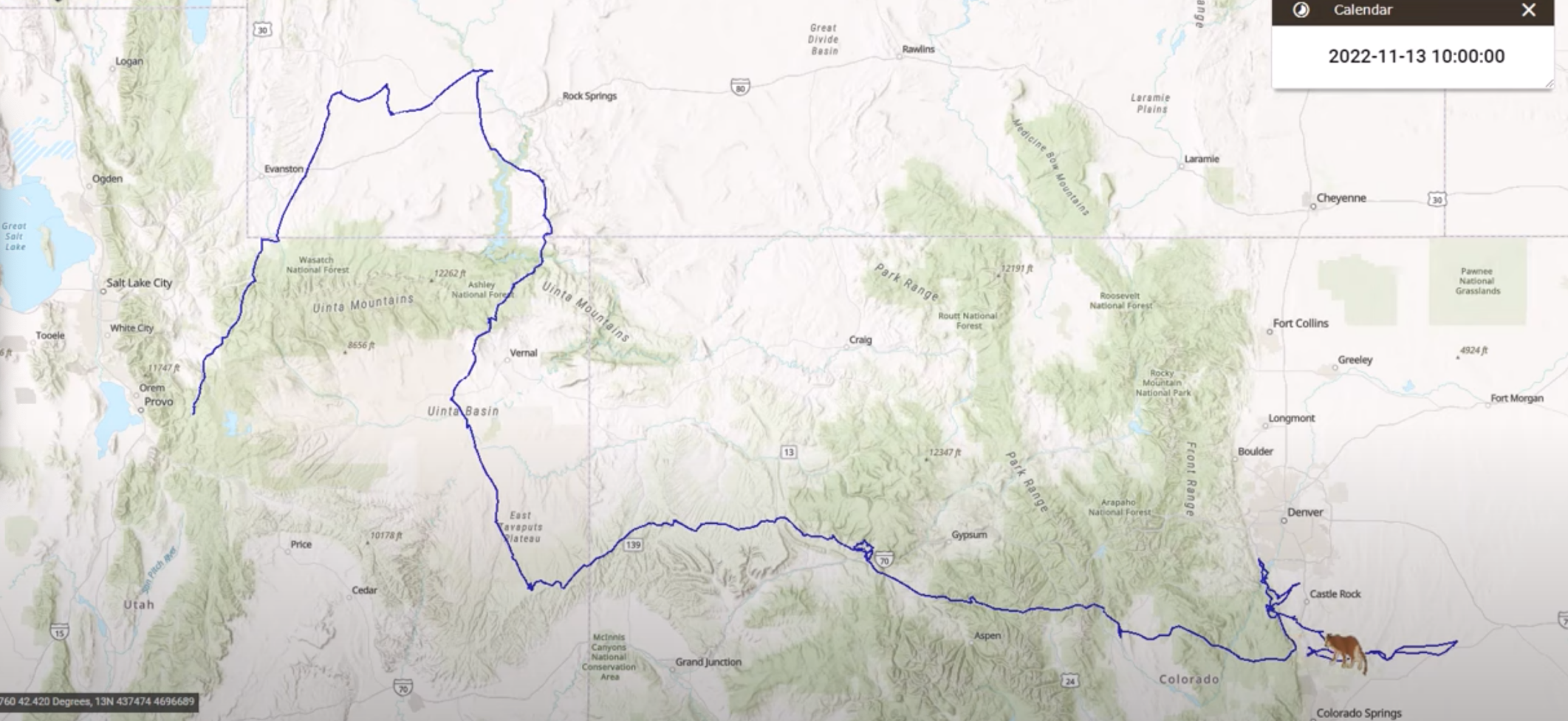
The Utah Division of Wildlife Resources recently released the story of a mountain lion that starts near Provo, Utah and ends over 1,000 miles later with the big cat’s brutal death on the Colorado Front Range.
The two-year-old female mountain lion dubbed F66 was first captured and collared in Utah’s Wasatch mountain range in February of 2022. It lingered in this part of the state before embarking on an epic journey in March.
Over the next 165 days, the mountain lion covered an average of six miles a day on her journey of just over 1,000 miles, with some days exceeding 20 miles of travel. According to wildlife officials, that big cat really only slowed down to eat as it traveled through the states of Utah, Wyoming, and Colorado.
A video that captures the route the mountain lion took shows F66 first heading north from Provo into Wyoming.
A pivotal moment for the mountain lion took place on July 4, 2022, when the mountain lion sat on the banks of the Confluence bend of Flaming Gorge Reservoir in Wyoming. About 220 miles into its trek, it had to decide if it would cross the chilly water. It took the plunge and swam at least a quarter-mile so that it could continue south back into Utah, which would ultimately lead to it entering the Centennial State where its death would take place months later.
After traveling back into Utah following the water crossing, F66 traveled south, eventually entering Colorado north of Grand Junction late on August 11, 2022. She then spent the next month making her way to the Aspen area before heading east to the Front Range toward Castle Rock, reaching this area around the start of October – and covering about 75 percent of the state in the meantime.
The lion then traveled into the Eastern Plains between Castle Rock and Colorado Springs before returning to the general I-25 corridor area.
This image, a screenshot from this video, captures F66’s 1,000 mile trek through the American West. Map: Utah Department of Wildlife Resources.
Unfortunately for F66, she would meet her demise in this I-25 corridor area on Nov. 13. When wildlife officials found her body, they were able to determine that she had been killed by another member of her own species.
According to the US Forest Service, mountain lions – typically solitary animals – will sometimes kill members of their own species when separation between adults is not maintained. With a tendency to be territorial, mountain lions can become defensive when another cat is moving into their established hunting grounds. It’s possible that’s what happened in the case of F66, showing up as a mitigatory cat in an area where another big cat had claimed space to roam.
Either way, F66 provided valuable information to wildlife officials regarding the migratory patterns of mountain lions, showing just how far and fast the species can travel.
Read more about this incredible trek here.
Photo Credit: Waldemar Seehagen (iStock).