






6th ‘Harry Potter’ weaves strongest spell
According to Newtonian physics, the universe is ruled by entropy, an unfortunate principle that states that, given enough time, any system will advance from order to disorder. Obviously no one informed the folks behind the Harry Potter franchise about the laws of thermodynamics. If things are supposed to deteriorate the further along one goes, why is it that the Harry Potter movies, now on their sixth excursion, just keep getting better and better?
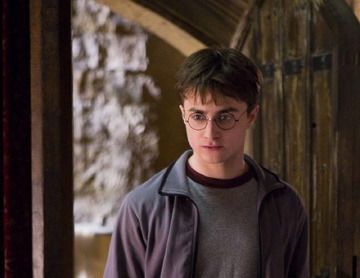
In “Harry Potter and the Half-Blood Prince,” Lord Voldemort has risen, and his minions, the Death Eaters, are wreaking havoc unchecked throughout the wizarding and muggle worlds. Back at Hogwarts school, Harry Potter (Daniel Radcliffe) and his friends Ron (Rupert Grint) and Hermione (Emma Watson) can only watch as the evil forces become increasingly brazen. It isn’t much safer inside — Professor Dumbledore (Michael Gambon, superb as one half of one of cinema’s best master/pupil relationships) is convinced the greatest danger lies within the castle walls. Dumbledore needs Harry’s help to convince a celebrity-obsessed but reticent teacher, potions professor Horace Slughorn (Jim Broadbent), to confess to a defining event that happened more than 20 years earlier when young Tom Riddle, the twisted boy who would grow to become the fearsome dark wizard, was his student.
For the first time in their lives, the students at Hogwarts have more to worry about than the end of the world as they know it. They have all discovered a magic of a different kind — hormones.
As love blossoms and jealousy threatens to break apart long-standing friendships, one of Hogwarts’ own plots an unspeakable act of evil, one that will touch the life of every student with bitter tragedy and hasten the final showdown between good and evil.
“Harry Potter and the Half-Blood Prince” is wickedly good. We have lived in this world for so long now and watched these characters grow into adulthood before our very eyes that the Harry Potter universe, with all its fantastical elements, is now completely believable. When our heroes begin falling in love, we trust it because they have earned it.
In the beginning, under the direction of Chris Columbus, the films were plasticized precursors: nearly one-dimensional, overly literal and without nuance. The latter films, however, are something entirely different — necessarily darker, more epic, maturing alongside their leads and infinitely more richly textured. While we owe Columbus a debt for being the vanguard of the series, it was for the best that he stepped aside. With “Prisoner of Azkaban” (which this new film most closely resembles), Alfonso Cuarón Orozco gave a luxuriant medieval historicity that showed everything that was to come.
But it was David Yates, a British television director, who best grasped the spirit behind J.K. Rowling’s beloved books at their enchanting core. The helmer of the final four films, Yates is wise enough know when to take it slow. He is a master of the operatic with a keen eye for the theatrical (a vision glowingly translated by Oscar-nominated cinematographer Bruno Delbonnel and replicated in gloriously fanciful sets by production designer Stuart Craig).
Yates is an intuitive condenser of the frequently loquacious literary material. And he is hyperaware that we marvel not at the magic that occurs in broad brush strokes, but at the enchantment that permeates the small things and makes even a fantasy universe plausible.
It’s not about the fun anymore. Oh, “Harry Potter and the Half-Blood Prince” still offers a great time, but whereas the initial forays were largely whimsical with occasional intrusions of peril, these final installments are pervasively creepy and, at times, genuinely frightening. The moody “Half-Blood Prince” builds slowly, piling on the menace. The foresight and wisdom of the casting directors who chose their child stars nearly 10 years ago becomes obvious now, not just with the leads, but with Tom Felton, who portrays Harry’s school nemesis, Draco Malfoy. Felton does a marvelous job playing Malfoy with imperious malevolence, the sort of posh malice only an English actor can pull off.
In the end, “Harry Potter and the Half-Blood Prince” does something very clever. Just as the rise of Voldemort threatens to steal the narrative thunder from the protagonists, the filmmakers make a bold choice to never spend any amount of time alone with the bad guys. We never even see Voldemort at all. Our perspective is always attached firmly to the leads — their impressions, their point of view — ensuring our attention is never seduced away from the more important human elements of the story.
This rule is bent for only one character, Malfoy, who finds himself at a crossroads between holding onto whatever shreds of innocence he has left or fully embracing his dark side. But don’t be fooled, just because you don’t spend time with evil doesn’t mean it isn’t there.
Danger permeates everything, and you should know going in that “Half-Blood Prince” ends as a cliffhanger. The final explosive chapter (broken into two films) comes next.
And if the established track record is any indication, the best is yet to come.
“HARRY POTTER AND THE HALF-BLOOD PRINCE”
Cast: Daniel Radcliffe, Rupert Grint, Emma Watson
Director: David Yates
Playing at: Carmike, Chapel Hills, Cinemark, Gold Hill, Hollywood, Tinseltown
Rated: PG (for scary images, some violence, language and mild sensuality)
Running time: 2 hours, 33 minutes
GRADE: A
Daniel Radcliffe tackles danger in “Harry Potter and the Half-Blood Prince.” Photo by Warner Bros.