






Weary Sky Sox fall to River Cats
Mickey Ayres envisioned his retirement home in Fountain surrounded by open space — a place of peaceful solitude after 30 years in the Navy.
He signed the paperwork to buy that home in 1999, planning to return to it a decade later when he left the service. That year, his retirement home looked perfect.
He faced a new reality upon his return.
“I’ve got a lot more neighbors right now than I used to,” Ayres said, grinning.
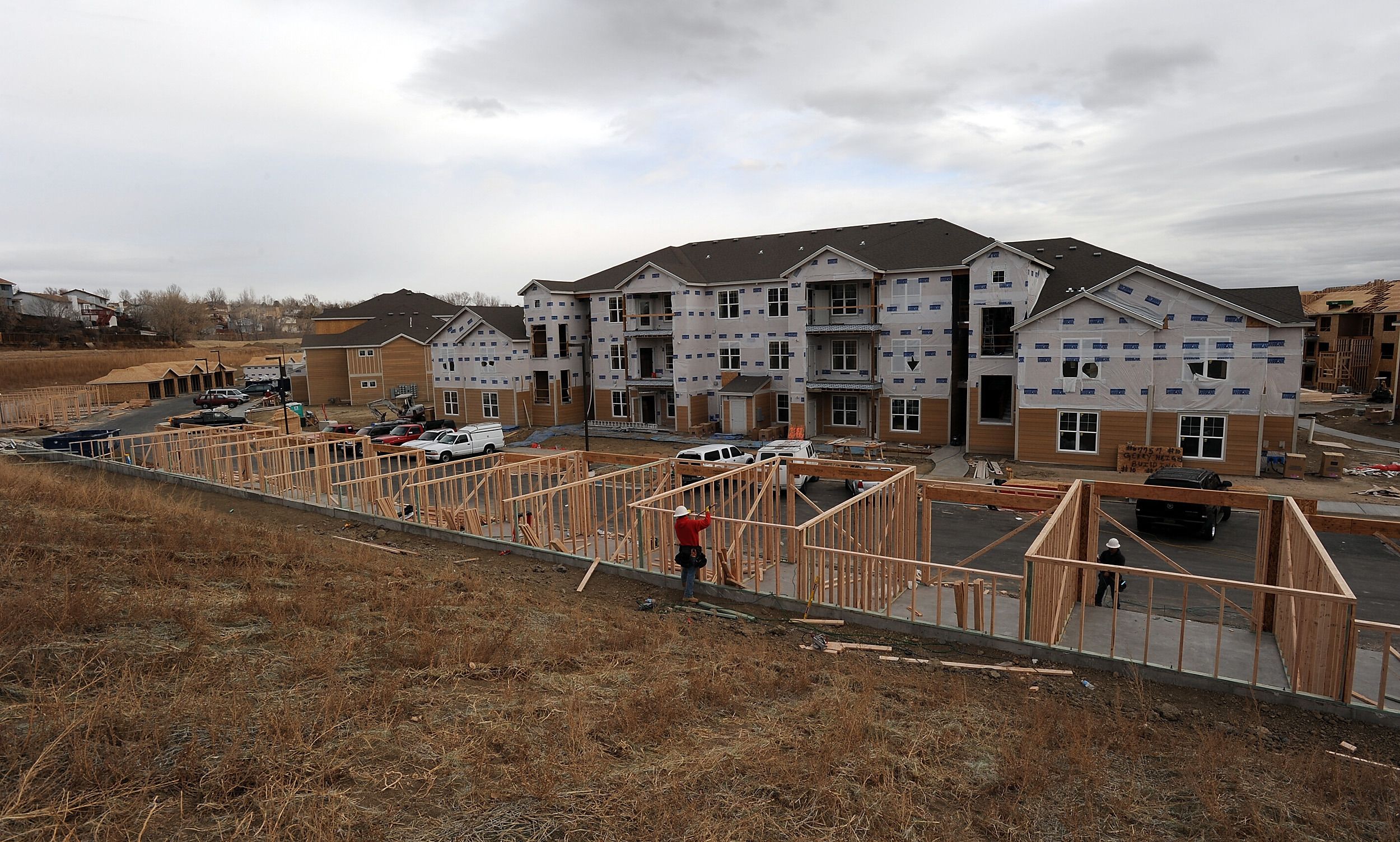
Nowhere else has the massive growth of Fort Carson been more apparent than in Fountain.Despite an economy slow to emerge from the Great Recession, construction workers inside Fort Carson’s gates broke ground this year on more than $200 million in construction projects. Meanwhile, construction crews have built fast-food restaurants, apartment buildings and neighborhoods of homes. in Fountain.
While the city flourishes with new commerce and a growing population, it has been forced to reassess its identity. Is it still a small town alternative to the hustle of Colorado Springs?Residents, developers and Fountain officials see no end to the growth — even if Fort Carson stops expanding.
“Every community in the United States grows or dies,” said Lisa Cochrun, Fountain’s economic development director. “Fountain’s fortunate enough to have people want to live here, choose to live here.”
Searching for a retirement project, Ayers opened a UPS store on the city’s north side. He commutes past five miles of newly built subdivisions he’ll rely on to keep afloat.
The conundrum facing this retired Navy command master chief epitomizes the changing face of the city he calls home.
“There’s so many people that it’s absolutely great for business,” Ayers said. “But I’m also in the back of my mind thinking of selling my house and moving out in the country.”
“So you keep on doing that. How far do you keep on going?”A changing faceForty percent of the buildings in Fountain — from houses to storefronts — weren’t around in 2000, according to the El Paso County Assessor’s Office.
The small town seemingly has it all: a growing population that is more educated and more affluent than ever, said Fred Crowley, an economist at the University of Colorado at Colorado Springs who compiles an annual economic report for Fountain.
“Not only have they had a big increasing population, but that population has income to spend,” Crowley said. “And that’s what’s attracting a lot of the retail growth down there.”
Military growth was key for drawing the retailers filling stores at the intersection of Fountain Mesa and Mesa Ridge roads, said Rich Walker, who oversaw the development.
Since 2003, the number of soldiers at the post has ballooned from 13,500 to more than 26,000. During 2013, A 2,700-soldier helicopter brigade will finish moving in.
“There’s no other major employers down here,” Walker said. “If it wasn’t for Fort Carson, why would they be living here?”
Tara Tsilianos knows of one house on her block that isn’t owned by an active duty member of the military.
The man across the street, she said, is a veteran.
Three developers — St. Aubyn Homes, Reunion and Aspen Homes — advertise houses east of Sneffels Street for people turning south from Mesa Ridge Parkway.
Aspen Homes implores passersby to ask about its Patriot Package.
To be fair, Tsilianos’ search for a nonmilitary household was a bit skewed: Builders had yet to construct houses all the way down her block.
What Tsilianos sees on Clymer Way, though, already resembles a neighborhood on post.For troops who often change posts every three years, the military-heavy community comes as a comfort.
“In your neighborhood, people get you,” Tsilianos said. “We’re able to communicate with each other.”
“I’m complete strangers with my neighborhood, but we have something in common.”
After nearly two years’ living in Colorado Springs, Tsilianos moved to Fountain so her husband, the commander of the post’s 764th Ordinance Company, could be closer to work.
Paying $1,200 a month to rent on Colorado Springs’ southeast side also became burdensome, she said. For nearly that amount, she planned to build her own house and later lease it when her husband receives orders to move.
Perhaps most important, though, is the quiet of Tsilianos’ new neighborhood.
“For me, it’s not too built up,” she said. “Everything’s still close enough that it’s reasonable for you.”
Even as she spoke after sunset, construction crews swung hammers inside a house a block away.
Does she worry that Fountain will one day become too big, too developed?
“Nope,” she said. “You know why? Because by the time it does, we’ll be gone.”
“Still feels like home”The military isn’t the sole reason for Fountain’s growth, Crowley said.
Fountain’s small-town charm is a drawing card.
“It’s a smaller community; it’s a bedroom community,” Crowley said. “Some people like that definition of a suburb.”
“Certainly the military’s very important to the community. But it is not the only driver down there.”
“On the mesa” — a section in the city along Fountain Mesa Boulevard that was built in the 1970s — Sue Tartaglione laments the change of pace.
For decades, the Fountain historian looked east and saw nothing but prairie. She once picked asparagus from a farm near C & S Road, a half-mile north of her house. “Everybody knew everybody, and the stores were closed on Sunday,” Tartaglione said.
The sign for the Heritage subdivision now rests on the former prairie, flanking a road leading to houses built in the late 1990s, as the city’s housing boom kicked into full swing.
Much like Mikey Ayers, owner of the city’s only UPS store, Tartaglione moved to Fountain for peace and quiet.
“I feel closed in — I like open spaces,” said Tartaglione, the wife of an Army 1st sergeant who retired in 1980.
The need for quiet is near unanimous here in Fountain.
Moving back to the city seven years ago after living elsewhere for about 10 years, Heather Hughes wanted a peaceful place to raise her three children — one of whom has autism and another who is recovering from a traumatic brain injury.
A few houses down the street from Tartaglione, Hughes insists that the city’s transformation is purely superficial.
“It still has that small town feeling to it,” Hughes said. “They (neighbors) still look out for each other.”
Ayers agrees.
Each new amenity — a Lowes warehouse, more fast-food restaurants — has led residents to demand more, Ayers said. Hardly a day goes by inside his store when a customer doesn’t remark that the city needs a fine dining restaurant.
“Fountain is like a small town within a big city,” Ayers said.
A few months after opening his store, he can’t complain. Business has doubled each month since opening in August.
For now, he’s content.
“It still feels like home,” he said.
Construction is underway Thursday, Dec. 6, 2012, on the Mesa Ridge Apartments on Mesa Ridge Parkway in Fountain. The apartments are one of many residential projects underway in Fountain. Photo by CHRISTIAN MURDOCK, THE GAZETTE