






Finding help gets tougher if car dealership is closed
Closures of General Motors and Chrysler dealerships don’t mean customers are stalled when looking for service and warranty work, although they may hit a few bumps in their search for assistance.For instance, Jim King, 62, of Colorado Springs bought a 2008 Dodge Ram 1500 at the Medved Autoplex in Castle Rock in December — six months before Chrysler closed 14 of the state’s dealerships and GM severed franchise agreements with nearly 15 Colorado dealerships.King chose the truck believing it had flex-fuel capability, which would allow it to run on E85, an ethanol fuel, gasoline or a blend of the two.Trouble struck the first time King filled the truck with E85 fuel; the “check engine” light came on.Mechanics at Colorado Springs Dodge revealed the problem: Despite what King was told, the truck was not a flex-fuel vehicle.King was told to contact the dealer, but the dealer had been disenfranchised.King called Chrysler’s customer service hot line several times, but said he got no adequate response.After inquiries from The Gazette to Chrysler’s Midwest public relations manager, Wendy Orthman, King was put in touch with a resolution team.“Talks are in progress, and we hope to resolve this to be satisfactory for him,” Orthman said last week. “We will replace his vehicle with the E85 Dodge Ram he intended to purchase.”King’s problem is unusual but any Chrysler dealer should be able to help customers of disenfranchised outlets, she said.“Warranties remain valid,” said Orthman. Customers do not need to pay for warranty work normally covered by the company if they go to an authorized Chrysler, Dodge or Jeep dealer.Independent repair shops may perform routine warranty services that the customer usually pays for such as tire rotations and oil changes, said Rich White, executive director of the Car Care Council based in Bethesda, Md. Receipts should be saved to document maintenance in case of manufacturer warranty issues.Colorado Department of Revenue’s Auto Industry Division mediates complaints between the public and the auto industry. The department’s Web site states buyers can pursue a complaint for a range of issues including warranty work included in the sales contract, lemon law grievances or alleged violations of the motor vehicle law. First, customers should try to resolve the problem with the dealer’s general manager or owner.Mark Couch, the department’s public information officer, said complaints are reviewed within seven to 10 days to determine if an investigation is needed.Buying a vehicle is a shared responsibility, Chrysler’s Orthman said. “We encourage customers do a little extra homework to make sure they’re getting the accessories they want.” Flex-fuel vehicles are issued window stickers and yellow gas caps, she said, markers missing from King’s truck that could have been a warning.While King waits for the outcome of his talks with Chrysler, he said he’s learned that perseverance pays when dealing with consumer problems: “Don’t take no for an answer, if you feel you’ve been wronged, keep talking until you find the right person.”
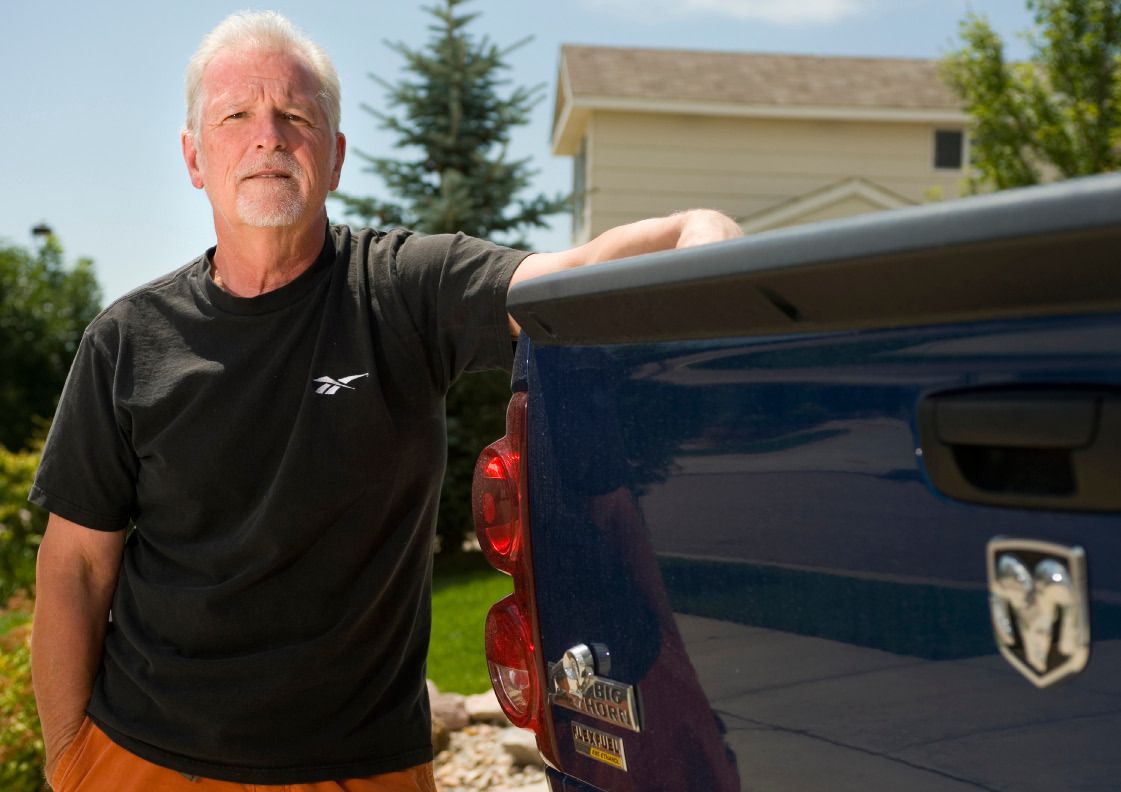
Jim King had to do a lot of legwork to get service help when the dealership he buoght his truck from was disenfranchised. Photo by THE GAZETTE