






Faith leaders, Colorado Springs professionals weigh in on the Force in “Star Wars”
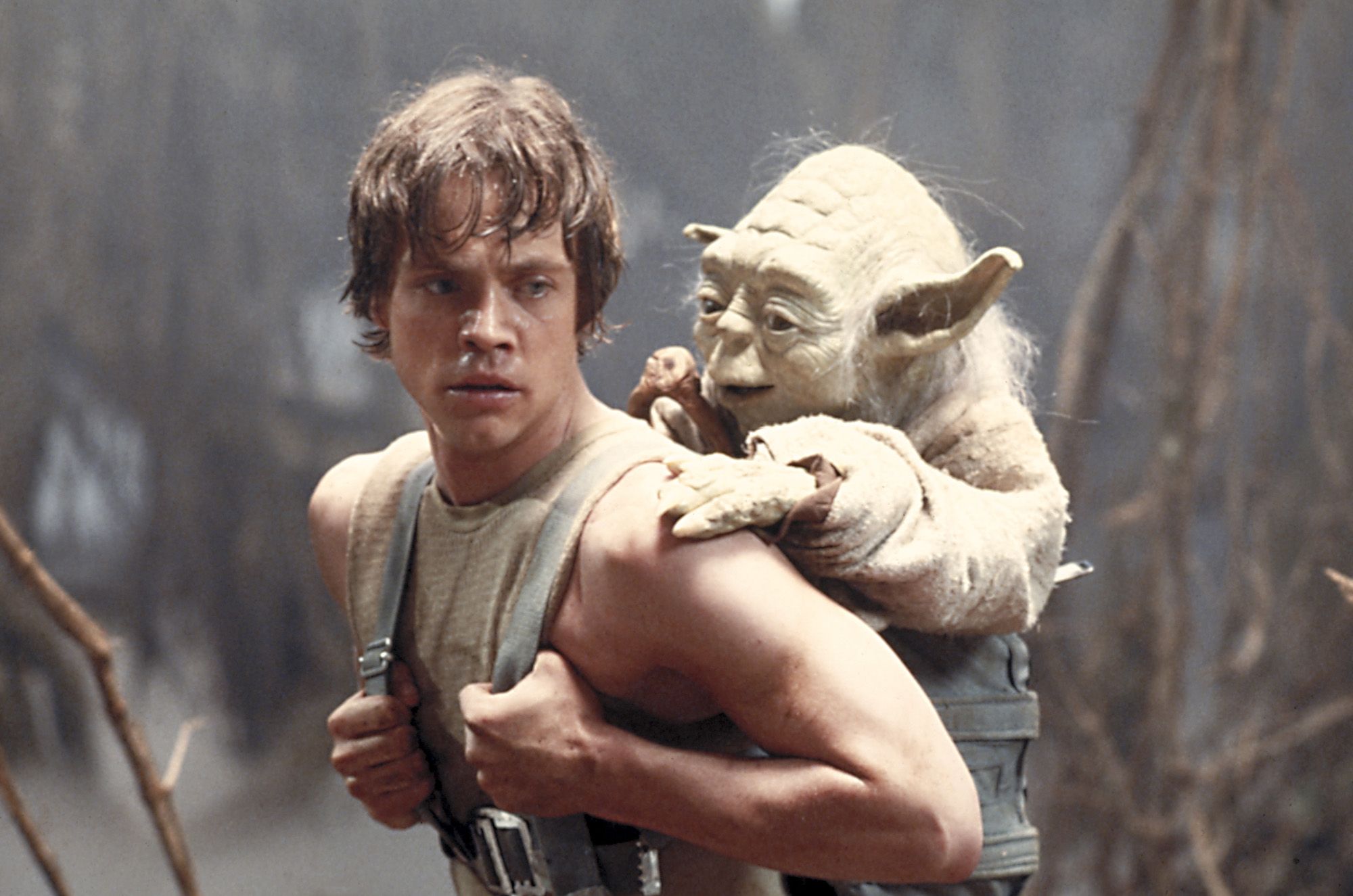
“A Jedi uses the Force for knowledge and defense, never for attack.” – Yoda, “The Empire Strikes Back”
“I find your lack of faith disturbing.” – Darth Vader, “Star Wars”
“Kid, I’ve flown from one side of this galaxy to the other, and I’ve seen a lot of strange stuff, but I’ve never seen anything to make me believe that there’s one all-powerful Force controlling everything.” – Han Solo, “Star Wars”
The Force has become a cultural force in the years since the 1977 premiere of “Star Wars,” the movie that gave us a name – and endearingly vague cosmology – for the energy field that binds all beings (and branded studio products) in the universe, a force that also lets a devoted practitioner do super-cool things such as levitate an X-wing fighter, control people’s minds and power a lightsaber.
The Force also appears to hold to a pretty sound moral structure, puts a premium on self-discipline and compassion, provides hope and the possibility of redemption, and contains elements familiar to those of diverse faiths and cultural backgrounds.
Midi-chlorians aside, the Force as we know it is a jambalaya of mysticism, religion, philosophy, science and pseudo-science that’s become a very real part of the real world.
“I’ve been to churches where people gave sermons about ‘Star Wars’ and the Force. I’ve been to comic conventions where people were heatedly arguing over the Force and midi-chlorians. I’ve had scientists quote ‘Star Wars’ in some of their papers,” said Travis Schenck, director of the Space Foundation Discovery Center in Colorado Springs. “The Force can represent a lot of different things to different people – the scientific, the religious, the philosophical. There’s a metaphor there.”
To mark the opening weekend of “Star Wars: The Force Awakens,” we asked faith leaders and professionals from a range of backgrounds to share their thoughts on the mysterious power fueling the Lucas-verse, and whether it might be used for good in our own:
Richard Trussell, chair of philosophy and religion at Pikes Peak Community College
“It’s pretty common knowledge that (filmmaker) George Lucas worked with (mythologist) Joseph Campbell on some of the main themes for the movie, such as the narrative arc and the spiritual context of the Force, which links up with Taoism. The Force contains teaching aspects: ethics, cause higher than self, personal growth and becoming one’s best self.
“‘Star Wars’ cannot be nailed down to any one religion. The Jedi warrior could be seen as a monastic warrior. The Force also has some great perks to it. Certainly, if you go to the East, the yoga traditions talk about special powers that come to people who meditate. The movement of qi in the body can be used for healing, or by martial artists who can use it to kill.
“The redemption of Anakin Skywalker, who becomes Darth Vader, is full of warm fuzzies and love, which is the deepest and strongest force in the universe. Love is your Force. To me, that message is very appealing. Of course, if I was the son of one of the imperial officers Darth Vader strangled for some small slight, I don’t know how happy I would be about his redemption.”
Adam Habluetzel, youth pastor at Woodland Park Community Church
“Overall, the Force presents a very different worldview and philosophy than that of Jesus Christ. There are some similarities, but a lot more differences – what I would call, even, fatal differences. I would use it as a negative teaching tool, if anything.
“The God of the Bible is a very personal God, not a big force that’s impersonal. In the movies, the Force doesn’t have a relationship with anyone. It’s just a force that’s indifferent to what’s going on.
“The Force in Star Wars is almost something that can be controlled and used for your own power. It’s about the exaltation of humans, not the exaltation of God. It’s a subtle difference, but a significant difference. The Force is seen as something that obeys you – ‘Use the force.’ God is there to obey our commands. It’s kind of backwards.
“Lucas was inspired by the writings of Joseph Campbell on comparative mysticism and mythology. He takes kind of a pantheistic view where God is in everything with a mix of all these different ideas and things, but I think what the Bible teaches and the Gospel of Jesus stand out as wholly different from all of those. That’s why I believe it. George Lucas based this on the wrong J.C. in my opinion.”
Daniela Mouser, psychic medium in Colorado Springs
“I love it when Yoda says, ‘Luminous beings are we, not this crude matter.’ Funny thing, I actually have Yoda and that quote on my website.
“The movies were very spiritual to me, and I liked that. To me, the Force is God or what others call God – an energy that permeates everything, every person, every plant, that connects us all and that we can access at any time. That’s what I think of the Force as – a universal divine energy that’s not tied to any particular faith.
“Usually, religion tries to disempower you and wants to be in charge of you, it seems. The movies are very empowering, talking about how anybody can use the Force if you stretch out with your feelings. It all rings true: Anger leads to hate and hate leads to suffering and to the dark side. It speaks to you on a different level. It’s not so high and mighty and complicated.
“We are human beings and we like to give names to things to understand certain concepts, but I don’t think the Force should be called God. It’s limitless. It doesn’t have a face or a name.”
Rev. Dr. Nori Rost, All Souls Unitarian Universalist Church
“I think the Force is a great metaphor for reminding us that we get to choose how we live our lives. We can choose to go to that force of love, of hope, of power that can propel us through many dangers, toils and snares, as the hymn goes. When we turn to look at love rather than hate and hope rather than fear, we’re stronger for that. The Force is even greater when people come together in solidarity. Really that’s what the Force is, a metaphor. It’s a way of looking at life.
“In the first movie, we see how Luke tries to force the Force to work for him and that doesn’t work. When he just thinks into it and lets intuition guide him and the goodness of his epic hero journey guide him, that’s when he tunes into it and saves the day. To any religious tradition – to Christians, to Muslims, to Jews, and to Unitarian Universalists – when we surrender to faith, that becomes our compass. It shows us where our true north is.”
Adam Holtz,senior editor of “Plugged In,” which offers music, movie and video game reviews, at Focus on the Family
“There’s overlap in a general sense between ‘Star Wars’ and Christianity in the acknowledgment that there is good and evil. In a world that sees everything these days in shades of postmodern gray, this is no small thing. That said, the spirituality in the ‘Star Wars’ universe has more in common with Eastern religions than with the Judeo-Christian tradition. The Force is … a force. It’s not personal. It’s not a being that you can know. It draws more from pantheism, the idea that ‘god’ is a part of everything.
“And the light side/dark side dichotomy also posits a dualistic worldview – the whole idea of yin and yang, of these two forces being balanced. If you remember, the whole prophecy about Anakin in the prequels was that he was going to bring ‘balance’ to the Force. Though we might tend to think about Christianity as a battle between the forces of righteousness and the forces of the enemy, Christianity isn’t a dualistic religion. God wins. God has won.”
Travis Schenck, director of the Space Foundation Discovery Center
“One of the interesting things as you watch the ‘Star Wars’ movies, you have Yoda explaining how The Force binds the universe together, connects all people together and unites matter. From a scientific background, there are phenomena in our universe that are similar to that.
“When we look at a galaxy and measure visible matter, we think it should move at a specific velocity in relation to how much mass there is. But as we observe these stars and galaxies, we see they are moving much faster than what can be accounted for by what’s visible, so there must be something else there that we can’t see. What scientists call this is dark matter, or dark energy.
“It can be conjectured that if there’s matter like that out there, far away that we can’t see, then that same matter exists all around us and affects our galaxies, and perhaps humans on some level. It’s kind of like the Force. When Han Solo says he’s never seen anything like it, we’ve never observed this dark matter but we can assume it exists because we see its affect on the movement of the stars and bodies in the universe.
“From a scientific background, this seems to very much fit with Yoda’s definition of the Force.”

