






Now Appearing: Hens and chicks can thrive in garden spots
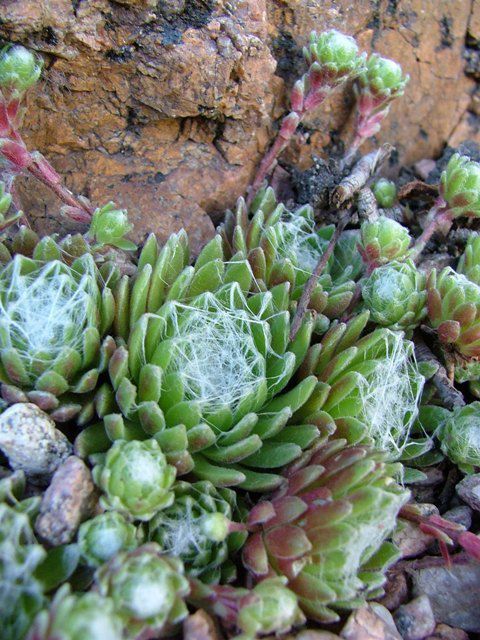
Hens and chicks come in several varieties and do well in any number of spaces in a garden.Hens and chicks, houseleekSempervivum
Appearance
The primary structure of this plant is made up of thick rosettes of succulent leaves. Baby rosettes grow as an offshoot of the parent plant and will root themselves to carry on after the parent flowers and dies. This exponential growth allows the plant to fill an area very densely. While the flower may rise 4 to 12 inches, the rosette itself stays very low to the ground, 2-4 inches.
Cultivation
Grown in full sun to partial shade, hens and chicks should be planted in soil that is poor to average in fertility and very well-drained. Add fine gravel or grit to provide adequate drainage. Provide water to get established, then only to prevent shriveling in dry periods. When transplanting small offspring, try using a hairpin to hold it in place. Hens and chicks are hardy in Zones 4-8.
Landscape use
This plant does amazingly well in a variety of places: dish gardens, very small spaces near retaining walls, on slopes, and in crevices found among the stones of a rock garden. It is best used alone and is difficult to weed if invaded by grass or sedums.
-For answers to your horticultural questions, contact the Master Gardener Help Desk at 636-8921, 8:30 a.m. to 4:30 p.m. Mondays-Thursdays, or CSUmg2@elpasoco.com.
Sempervivum arachnoideums, or cobweb houseleeks, have a distinctive look. Photo by Courtesy of Joan Nusbaum, Colorado Master Gardener