






Year-Round Gardening: Separating myth from fact
The ability to call up a search engine and type a few words puts the whole world at our fingertips. As spring approaches, we consider what to do in our landscape and perhaps how to start new gardens. We need to watch out for garden myths with no research-based support.
One of the most important garden questions in Colorado is how to improve our soil. Unless you are planting native plants, the soil in Colorado needs some help. We call it “amending” the soil.
Amending the soil is where we add something to the soil to assist the plant roots with uptake of water and nutrients, and to provide space for oxygen.
The two most common particles in our garden soil are sand and clay. Sandy soils have larger particles than clayey soils and thus the pore spaces are larger. Water and nutrients flow right through the sandy soil, while pooling in clayey soil.
You might assume it would make sense to amend a clayey soil with sand. However, consider this: To make adobe bricks, one combines 1 part straw, 2 parts sand, and 4 parts clay mixed with water. I’m fairly certain this adobe-like combination will not create the proper planting environment for my flowers and vegetables!
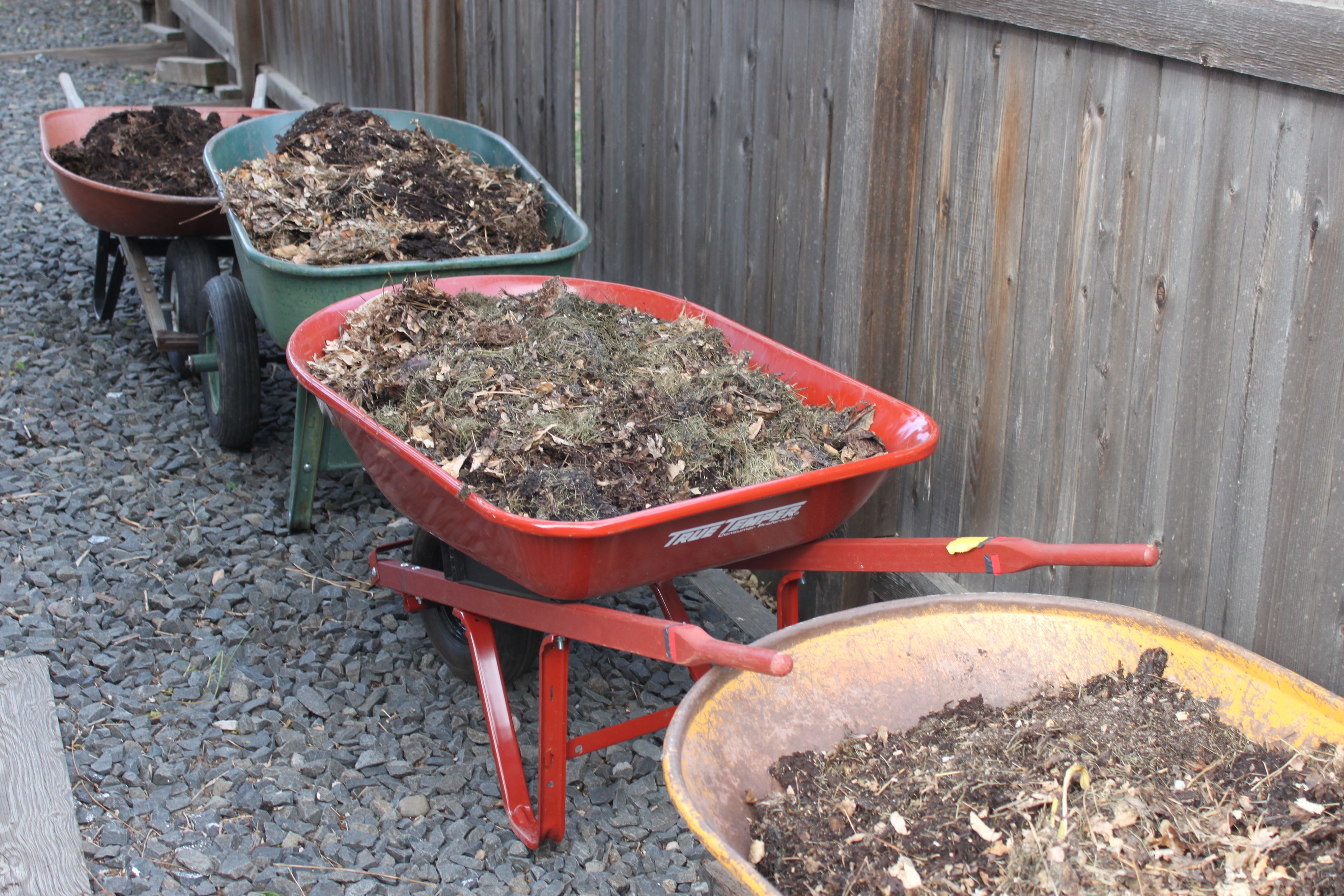
The best way to amend both sandy and clayey soils is with compost. Compost is decayed or decaying organic matter from plants and sometimes animals, such as manure. It fills the pore spaces between sand particles, holding on to both water and nutrients. In clayey soils, it breaks up the tiny clay particles to allow for oxygen and proper drainage.
Another myth many Colorado gardeners believe is the necessity of adding lime to their soil. Lime is a valuable soil amendment in certain areas of the United States. Many gardeners in the Eastern U.S. apply lime to their soils to improve plant performance. However, the addition of lime to soil in Colorado is often unnecessary.
Lime is applied to acid soils to raise soil pH. Soil pH is an important chemical property of the soil. The pH scale runs from 0 to 14 and indicates the relative acidity or alkalinity of the soil. A pH less than 7 is acid, above 7 is alkaline, and pH of 7 indicates neutral soil.
Soil pH is important because it influences the availability of essential nutrients. Most horticultural crops will grow satisfactorily in soils having a pH between 6 (slightly acid) and 7.5 (slightly alkaline). Since the pH of most Colorado soils ranges from 6 to 7.5, soil pH causes few problems for area gardeners.
Colorado gardeners should apply lime to gardens and lawns only when recommended by a soil test. Watch this space next week for information on how to obtain a soil test from Colorado State University.
For additional information about soil amendments, go to: https://extension.colostate.edu/topic-areas/yard-garden/choosing-a-soil-amendment/
When you have questions, Colorado State University Extension has research-based answers. Get answers to your horticulture questions by visiting ask.extension.org any time day or night. Follow the El Paso County Master Gardeners on www.facebook.com/ColoradoMasterGardeners.EPC/
11 a.m. Tuesday: The Science of Soil
4 p.m. Tuesday: High Altitude Baking
4 p.m. March 24: Vegetable Gardening
10 a.m. April 3: Agritourism business class
All classes at Colorado State University Extension office, 17 N. Spruce St. Registration and additional classes at epcextension.eventbrite.com or call 719-520-7690
The best way to amend soils with sand and clay is with compost.
Compost is decayed or decaying organic matter from plants and sometimes animals.