






Officer who helped keep peace in Ferguson speaks to Colorado Springs NAACP
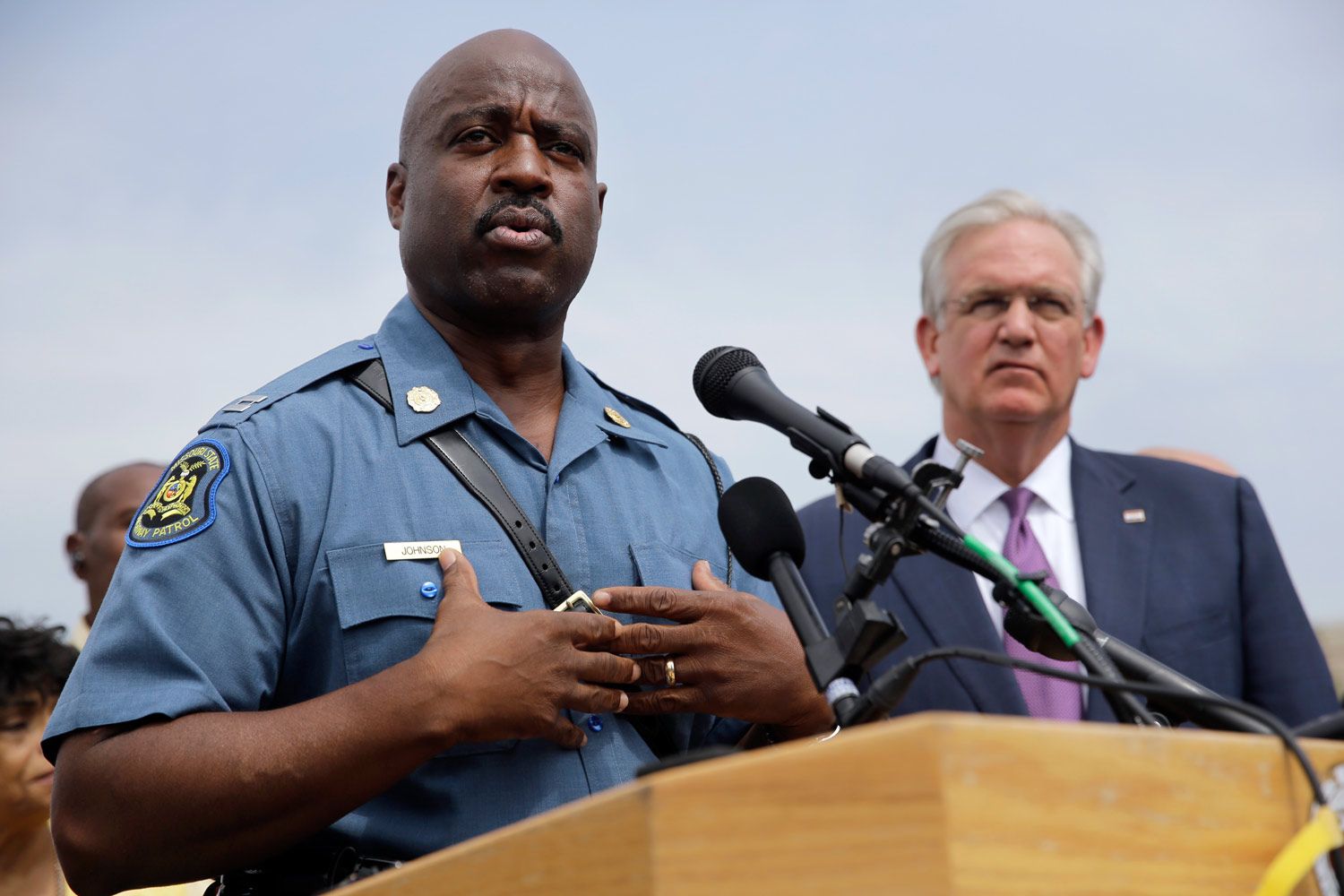
Missouri Highway Patrol Capt. Ronald Johnson said the “Ferguson effect” that swept the country in the wake of mass demonstrations in a Missouri city in 2014 was an “energizing movement of courage.”
Most recently students at the University of Missouri, a few hours from the St. Louis suburb of Ferguson, have protested over a lack of response to acts of racism on campus.
Johnson handled the police response to the discrimination unrest in Ferguson, but many credit Johnson with beginning the healing process for a deeply divided community. He was the keynote speaker at the Colorado Springs NAACP Freedom Fund Gala Friday night at the DoubleTree hotel.
In an interview with The Gazette before the gala, Johnson said he has been bringing the same message to communities across the nation since August 2014: what happened in Ferguson transcends race.
“If we focus just on making it 100 percent about black and white we will divide this nation, and I think to bring this nation back together we have to look at the total picture,” Johnson said. “You had a lot of issues come up and a lot of people were saying that just being different in America shouldn’t equate to a difference in treatment, a difference in opportunity. It was bigger than what we sometimes want to focus on.”
The Ferguson community reacted with unrest to the police shooting of unarmed black teenager Michael Brown. Brown’s death sparked a nationwide debate about discrimination in America, particularly when it comes to the interaction of police with young black men.
It was the first of many incidents in the last 15 months that have drawn vocal responses from the public.
Most recently, students began protesting on the campus of the University of Missouri following incidents of racism. The University’s president resigned this week.
“You always hear this term the Ferguson effect. A lot of times it’s connected to something negative, but I always tell people to me, the Ferguson effect, the positive part is that it has given people the courage to talk about stuff that needed to be discussed,” Johnson said. “The things we are seeing on the campus of Missouri are things that have been there for a while and the protests we are seeing across this country, whether it’s here whether it’s in Baltimore, L.A., it doesn’t really matter. I think it’s energizing and a movement of courage. I think that conversation will change our nation.”
Outgoing National Association for the Advancement of Colored People President Henry Allen Jr. attended Brown’s funeral and said he was inspired by Johnson.
“He went out into the public and dealt with the people,” Allen said. “I’ll never forget it. He was just walking out into the crowd. I thought then that I would bring him to our community.”
Allen said he didn’t think Colorado Springs was too far removed from the issues that sparked unrest in Ferguson.
“Any time you have unemployment or poverty or if you allow certain parts of your community to tumble, it’s possible,” Allen said. “I wanted Capt. Johnson to put us on notice.”
Johnson said there needs to be a community conversation about discrimination and disparity.
“Before you can say that it won’t happen in your community you have to have a discussion about the topic,” he said. “And once you have the discussion that will tell you whether it’s an issue. It will tell you the pulse of the community.”
–
Contact Megan Schrader: 286-0644
Twitter @CapitolSchrader
Captain Ron Johnson of the Missouri Highway Patrol, left, and Gov. Jay Nixon at a news conference Friday, Aug. 15, 2014. (AP file)