






Subhead
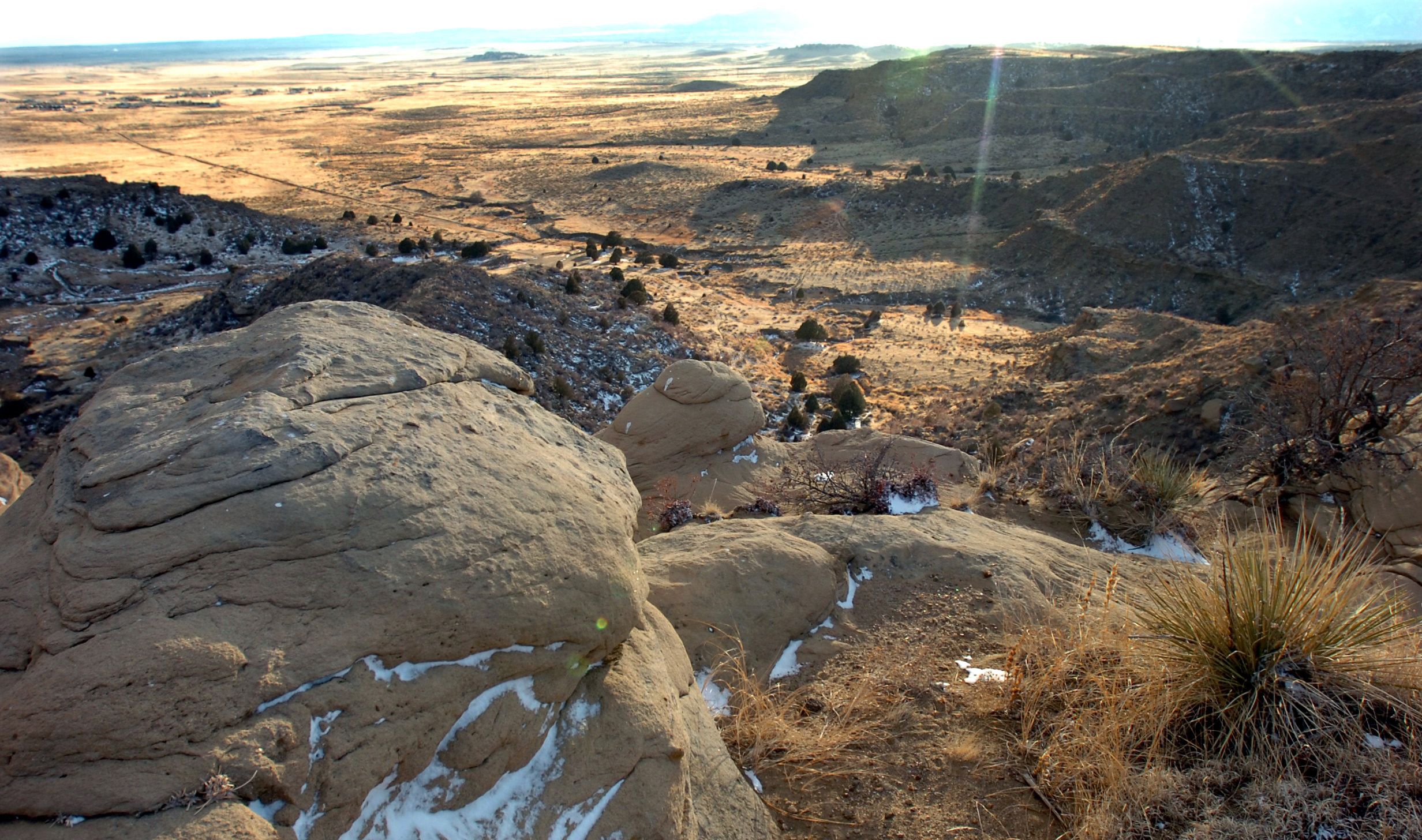
Every time she goes for a walk in the network of canyons, gulches and cliffs of Corral Bluffs Open Space, Jackie Hilaire finds something new.
A turtle fossil. Petrified wood. A rare bird. Even the way the light reflects off the hoodoos seems to change daily.
“We’re finding more and more stuff every time the wind blows,” she said. “And it blows a lot out here.”
It’s a rare patch of wilderness on the east side of Colorado Springs, one scientific researchers say holds a wealth of archaeological, geological and paleontological artifacts going back a million years.
But don’t be surprised if you haven’t been there or heard of it. Tuesday marks five years since the city of Colorado Springs bought the land, but hikers still aren’t allowed.
That’s where Hilaire comes in. As next-door neighbor and president of the Corral Bluffs Alliance, she’s one of the lucky few who get to see the place close-up, with special permission to lead guided hikes.
“We’re kind of low-key because the city doesn’t have the money to go forward with anything else at this point. It’s not a high priority because there are some other issues,” said Hilaire, who also chairs the city’s Parks and Recreation Advisory Board.
“I’m doing the best I can from the standpoint of making myself available whenever a group wants to come out.”
Little research done so far
When Colorado Springs spent $1 million to buy the 522 acres that constitute the heart of Corral Bluffs Open Space, it was with a sense of urgency.
El Paso County had floated, then rejected, a plan for a dirt-bike park there. The crash in the housing market had yet to cast a shadow on development at the nearby Banning Lewis Ranch, expected to bring tens of thousands of new residents to the area who would be looking for a place to hike.
But the urgency to open the area to hikers has been lacking since. Initial estimates said it would take 18 to 24 months to allow public access, time that was to be spent studying the resources, drawing a master plan and building trails. Then the economy went sour and city parks funds dried up.
Without such research, officials say they can’t open the open space to unfettered access, for fear of damaging the area’s unique resources. And what little research has been done on Corral Bluffs has only piqued scientists’ interest more.
Much to teach scientists
Arid and teeming with rattlesnakes, mountain lions and birds of prey, Corral Bluffs doesn’t look like much from the highway, but its gulches, washouts and overlooks have been used by humans for centuries. A study commissioned by El Paso County, which eventually doomed the plan for the dirt-bike park, showed hunters were using the area to lure buffalo to their deaths as far back as 6200 B.C, and those on guided hikes sometimes find arrowheads. More recently, 19th century cowboys used the bluff to corral cattle on the way to Denver’s stockyards.
Ian Miller, a paleontologist with the Denver Museum of Nature and Science, said Corral Bluffs has much more to teach scientists. Inside the exposed earth is a fossil and geological record going back at least a million years. Volunteer researchers have found fossils that Miller said reflect some of the earliest mammals, “things that were the size of rats.”
“It’s really an amazing record of life right after the time of the dinosaurs,” he said. “The age of the rocks is just right to look at this period of Earth’s history, and they’re well exposed.”
Miller had plans for a major dig until a discovery of mammoth and mastodon fossils in Snowmass Village diverted the museum’s energy for three years. With that project complete, Miller is interested in renewing focus on Corral Bluffs, though no funding is in place.
Vision for space changes
When open space advocates, environmentalists and neighbors formed the Corral Bluffs Alliance five years ago, their immediate goal was to defeat the idea of a dirt-bike park.
Hilaire said that when the city’s Trails, Open Space and Parks program bought the land, she envisioned an open space similar to Red Rock Canyon. TOPS is funded by a voter-approved sales tax.
“The group as a whole had a more traditional open space vision. The more we’ve been researching this, the more we’re understanding why that vision probably isn’t going to totally happen,” she said. “There are parts of it that will possibly be open, but I don’t know if we’ll ever have all of it, just because of the nature of what we have there.”
She offers guided tours to interested groups year-round, provided there are at least six people. Visit corralbluffs.org to sign up.
With guided tours, she said, “we’ve come up with reasonable ways for people to see it, but it’s not the way everybody wants to see it.”
Susan Davies, executive director of the Trails and Open Space Coalition, would like to see Corral Bluffs open, especially since fires and floods have closed so many other area hiking places. But she said the city needs to complete a master plan first.
“I always want to see as much access as possible. On the other hand, if you read what TOPS is about, it’s about the resource,” Davies said. “It’s about protecting fragile ecosystems and properties that have conservation values, and that is a very unique property.”
TOPS program head Chris Lieber said the city has received $16,000 in grants for research on Corral Bluffs but has no immediate plans to start a master plan. He envisions partnering with another organization, such as the museum in Denver or a university, to devise a plan to protect the resources while allowing public use.
Longtime open space advocate Lee Milner was among those who fought for the city to buy Corral Bluffs. He knew it would take awhile to open.
“Because of the fossils and the paleontological resources that are there, it’s going to be an interesting one to manage so those resources don’t get damaged,” he said.
“My hope is 20, 30, 50 years out, people will look back and say, ‘It’s a good thing that was preserved.'”
Wednesday, February 6, 2008-photo by Jerilee Bennett-A new OHV (Off-highway vehicle) park has been proposed for this area 6 miles east of Colorado Springs and below Corral Bluffs.
Jackie Hilliare, president of the Corral Bluffs Alliance, stands above the open space in this 2008 photo. She leads regular tours of Corral Bluffs, the only way the public is allowed to hike here.