






‘The Big Short’ and the radicalization of Adam McKay
LOS ANGELES – You don’t have to look too closely to realize that Adam McKay’s work has always been at least a little bit political.
But the director, writer and producer, best known for broad comedies like “Anchorman: The Legend of Ron Burgundy,” “Talladega Nights: The Ballad of Ricky Bobby,” and “Step Brothers,” turned some heads when he raised his hand to direct an adaptation of Michael Lewis’ financial crisis book “The Big Short.”
His film, in theaters now, is a bristling look at the real finance guys who realized before the rest of us that the housing bubble would burst – and profited when it did. It boasts an all-star cast including Christian Bale, Brad Pitt, Ryan Gosling and Steve Carell and has been garnering some serious Oscar buzz.
It’s a departure for McKay in that it’s so overtly about the thing he is talking about and not cloaked in allegory or big, absurdist laughs. But it wasn’t as big a stretch as one might think. Politics are life for McKay. He credits his childhood for that, when being dirt poor and on food stamps and having a single waitress for a mother still allowed for a nice life and solid educational opportunities.
“I grew up sort of believing that government could be a positive. It’s not always perfect, but there was a positive force to it,” he said. “My grandfather and I always talked about the election and what was going on. He was always reading the paper and telling me to stay in touch.”
That’s why it was so surprising to him when he moved to Chicago to start his stand-up and improv comedy career and he became known on the scene as the “political guy.” No one else talked about politics.
On “Saturday Night Live,” where he was tasked with writing many of the cold opens, people called him a leftie.
Even his big, broad absurdist comedies have germs of subversive ideas embedded in them. Don’t worry if that wasn’t clear – it’s not supposed to be front and center.
“First and foremost they’re supposed to be funny and entertaining. (Will) Ferrell and I always think that you have to have a point of view. So, as silly as it is, with ‘Anchorman,’ we were making fun of what has happened to local news. ‘Talladega Nights’ was about this weird red state pride that was going on at that time.”
“The Big Short” isn’t the first time McKay tried to tackle the financial crisis, either. It was in the 2009 comedy “The Other Guys.” The closing credits present a damning portrait of Ponzi schemes and exorbitant CEO compensation with animated charts. Audiences at the time left scratching their heads.
“We designed it to be a comedy allegory of the collapse. It didn’t quite work on those terms,” said McKay, laughing.
“The Big Short” was another chance to address it head on. He devoured the book in a single night. Brad Pitt’s company Plan B held the rights and liked the idea of McKay taking a shot.
To bring “The Big Short” to life, he threw out lots of filmmaking rules. His characters break the fourth wall. He melds documentary techniques with comedic energy and dramatic gravitas. He shot with multiple cameras.
“My goal is that it demystifies this world for some people. That it just takes away that feeling of, like, we’re too dumb to understand it,” McKay said. “That has to happen before there can be action.”
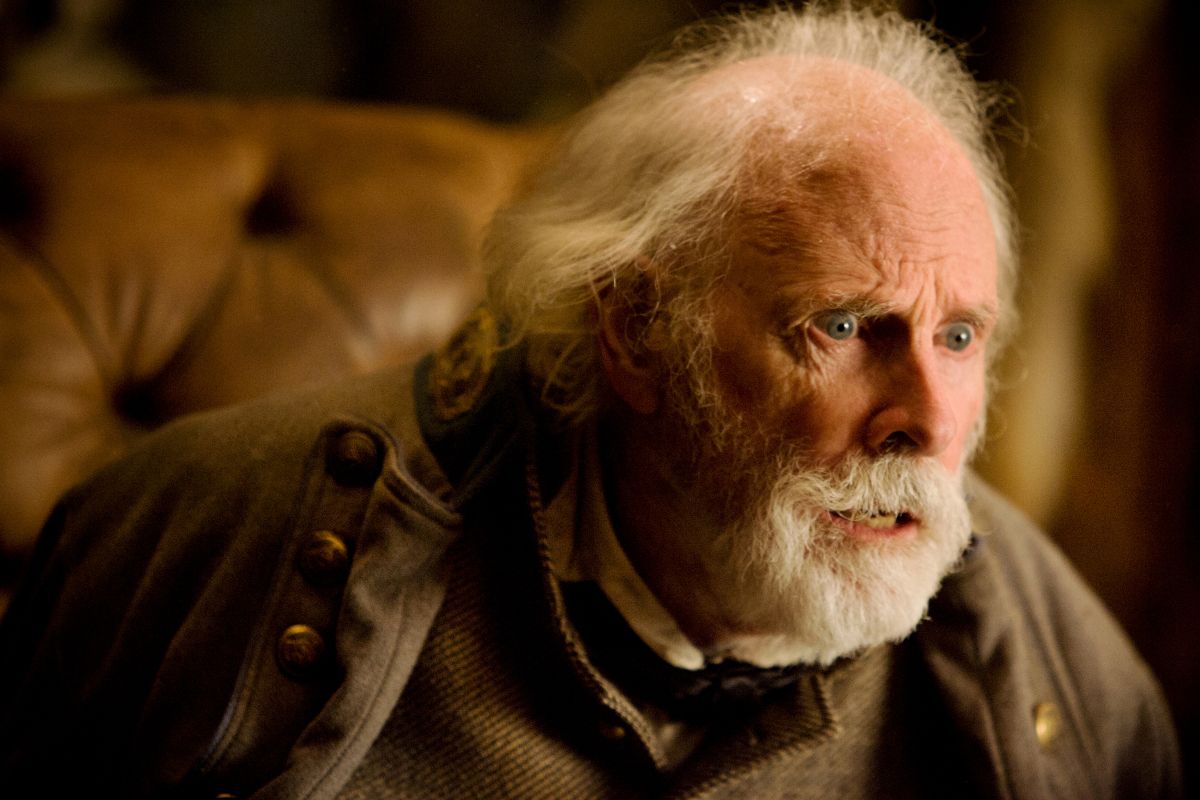
This image released by The Weinstein Company shows Bruce Dern in a scene from “The Hateful Eight.” (Andrew Cooper/The Weinstein Company via AP)
