






Noted classical actor John Douglas Thompson a sucker for Shakespeare
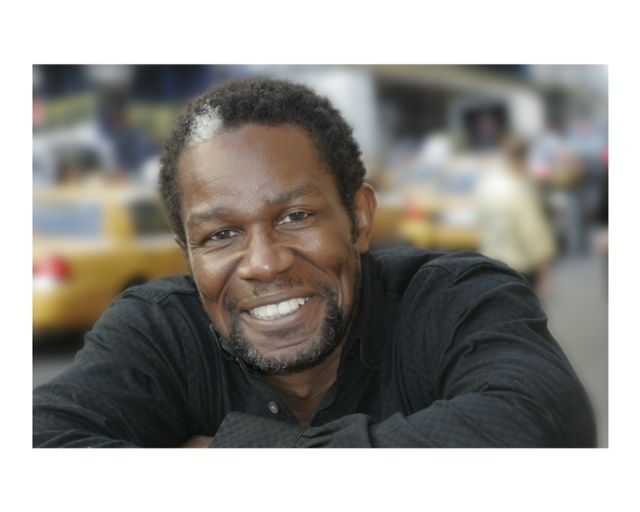
John Douglas Thompson is in love, and every word, every breath seems to telegraph his deep, abiding and committed joy.
But the object of his affection isn’t a person. It’s theater – and more specifically, the works of Shakespeare.
“I was immediately drawn to the writing. The poetry, the humanity of it,” says the New York City actor, who has been profiled by The New Yorker and who The New York Times has called “one of the finest Shakespearean actors around.” “It seemed, to me, to be a way to express myself. It’s beyond theater to me.”
On Sunday, the Obie- and Lucille Lortel-award winner appears at the University of Colorado at Colorado Springs as part of its Prologue series, which is also sponsored by TheatreWorks. The series regularly imports nationally respected actors, critics and others in theater, who are loosely paired with the current TheatreWorks production. Kevin Landis, a UCCS assistant professor of theater, leads the discussion. Topics for Thompson’s appearance will include Shakespeare, the craft of acting and the state of American theater.
Thompson, 50, didn’t start out to be an actor. He was a successful software marketing rep when he saw the play that would eventually change his life, August Wilson’s “Joe Turner’s Come and Gone.” In a personal story cum theater fairy tale, when Wilson’s powerful play was done, Thompson knew he’d found what he was meant for. “I wondered, why have I not been led to this place before?” Thompson says, whispers of awe and frustration in his voice even now. “What have I done with 26 years of my life to have not encountered it the way I have now?”
Thompson has gone on to play just about every iconic role of Shakespeare’s oeuvre, including Richard III, King Lear, Anthony, Hamlet and Othello, the latter four or five times.
“The language of Shakespeare doesn’t seem antiquated to me,” he says. “You need those words to express the powerful ideas. Smaller words will not do. I need the size of the words, the size of the thought.
“The language in Shakespeare’s plays really speaks to my soul.”
That’s how Thompson talks. Like a 19th-century romantic poet. Or a teenager in love. “Acting,” he says at one point, “is a noble profession.”
“The theater,” he says, “is a place the audience comes to find truth.”
Thompson is seduced by the humanity of the characters he plays, but, particularly, of Shakespeare’s giants, who are so often played as one-note brutes, hammers set to verse. Finding that nuance is the job. “That’s always like the major challenge, right? It’s not like you hear on an everyday basis how to humanize it and make it digestible for the audience. That’s who we’re doing it for, not ourselves. I’m a conduit, a vessel to get the message across.”
So he starts with research – into the language, the character, the time the play is set as well as when it was written. He haunts bookstores and has, over time, amassed quite a book collection of oddly disparate subjects. Working with his director is key, he says. And as he’s doing all of that, he burrows into the character in search of the human being there. To get there, Thompson examines his own vulnerability, which is critical to find the character’s.
Thompson mentions Othello, who’s love for his wife is poisoned by a friend’s lies.
“Talk about a vulnerable character,” he says. “I’ve always looked at him as someone who had never been in love before. … He’s not just angry, very stubborn and bullheaded, because no one’s like that when they’re in love.”
When it’s done right, “Othello” is “like getting on a train and knowing you are going to crash. You have to make people want Othello and Desdemona to make it.”
That’s the tack that Thompson and director Arin Arbus took in a 2009 production in New York City. Apparently, it worked.”The tenderness of Othello’s love for Desdemona feels as palpably real as the violence that surges through his body when Iago’s poison begins to infect his blood,” wrote New York Times critic Charles Isherwood of the production. “Moreover, the process by which Othello’s love is corrupted and coarsened into something monstrous is realed with clarity that rings terribly true.”
Thompson has veered from his first love lately, taking up bigger-than-life characters crafted by more contemporary writers, such as O’Neill, Ibsen and Brecht. And three decades after his “indoctrination” into theater, Thompson returned to the character and work that inspired him to become an actor: The incendiary Harold Loomis in “Joe Turner’s Come and Gone.”
The role was a dream for him, he says.
Does he see a time when he’ll opt for more life-sized characters?
They just don’t contain as much fodder for his process, Thompson says. “I’m looking for big containers.”
He pauses.
“At some point, I can’t do these characters and I’ll have to do something else. They’re too massive and I may not be able to do it,” he says. “Right now, though, they’re about right.”
JOHN DOUGLAS THOMPSON
What: The kickoff of the 2013-14 Prologue series
When: 2:30 p.m. Sunday
Where: Centennial Auditorium, UCCS, Austin Bluffs Parkway
Tickets: Free; 255-3232, theatreworks cs.org
Something else: In the mood for Shakespeare now? Check out TheatreWork’s production of “Cymbeline,”which plays 7:30 p.m. Tuesday-Saturdays, through Aug. 24, at Rock Ledge Ranch Historic Site, 3105 Gateway Road. Go to 255-3232 or theatreworkcs.org for details.