






Energy fuels increase in consumer prices
WASHINGTON • U.S. consumer prices rose in March, driven by a rise in volatile oil prices that masked moderate underlying price pressures.
The consumer-price index, which measures what Americans pay for household items such as bluejeans and services such as eye care, increased 0.41% in March from the prior month, the Labor Department said Wednesday. Excluding the volatile food and energy categories, so-called core prices rose just 0.15% from February.
Economists surveyed by The Wall Street Journal expected overall prices to increase 0.3% in March and prices excluding food and energy to edge up 0.2%.
Energy prices increased 3.5% in March, helping push up overall inflation during the month. Gas prices rose sharply last month, while food prices also continued to climb.
From a year earlier, consumer prices were up 1.9% in March. Prices were up 2% on the year when excluding food and energy.
Shelter inflation, which has cooled over the past year, accelerated to 0.4% in March. Other factors held down inflation. Apparel prices fell 1.9% in March from February, while airfares declined 0.6% on the month.
Meanwhile, separate data showed inflation ate into wage gains in March. After adjusting for the fresh inflation data, average hourly earnings fell a seasonally adjusted 0.3% from February. They were up 1.3% from a year earlier, a deceleration from recent months. Much of the weakness in so-called real earnings was likely due to the rise in energy prices.
The Federal Reserve follows the consumer-price index for clues about the trajectory of inflation, though the central bank’s inflation target of 2% is tied to a separate measure, the Commerce Department’s price index for personal-consumption expenditures. The consumer-price index tends to run a bit higher than the personal-consumption index, but both gauges generally follow the same path.
The price index for personal-consumption expenditures fell 0.06% in January from December and was up just 1.37% from a year earlier.
The figures were released with a lag due to the partial government shutdown.
Low inflation has helped support the Fed’s plans to take a patient approach in policy decisions, Fed Chairman Jerome Powell said at a press conference in March.
“What I see is inflation that’s close to 2% but that sort of keeps bumping up against 2% and then maybe moving back down a little bit,” Powell said. “I don’t feel that we have kind of convincingly achieved our 2% mandate in a symmetrical way.”
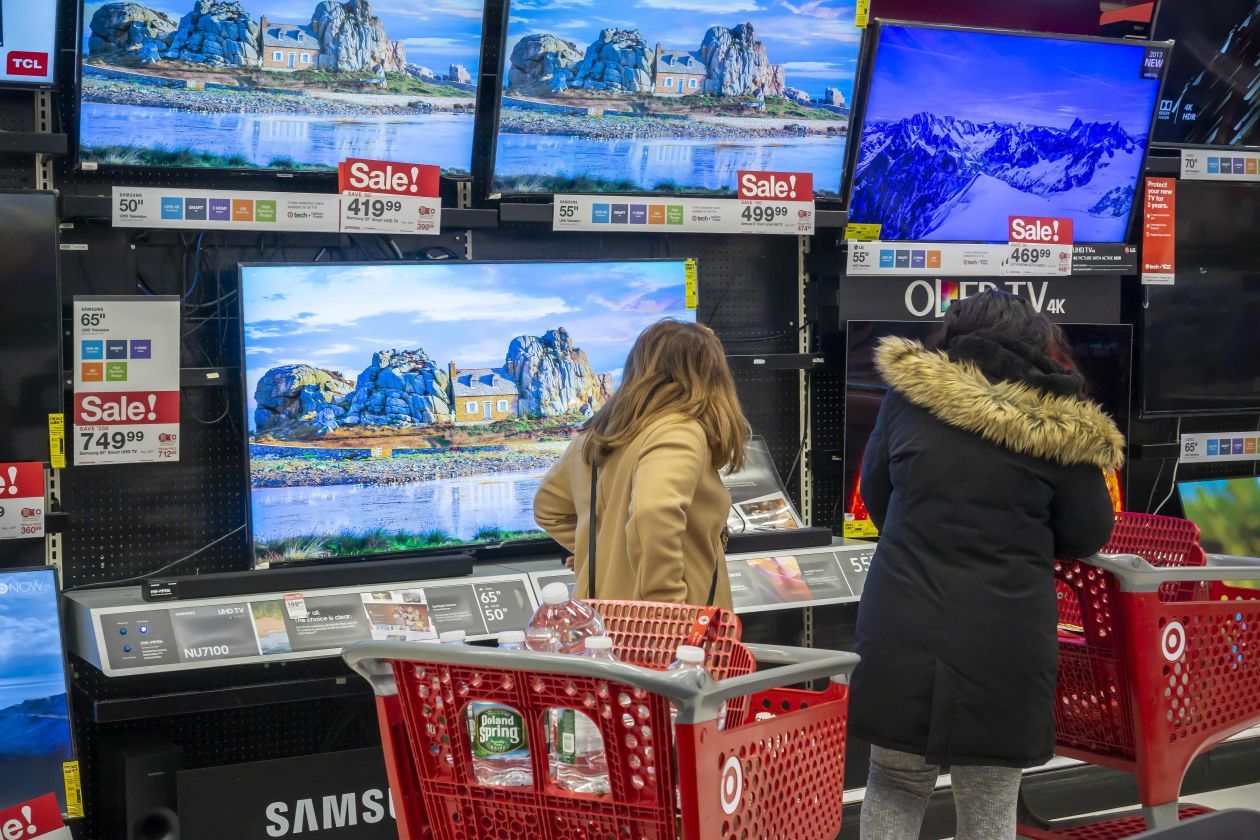
Shoppers browse the flat screen television display in a Target Corp. store in Queens, N.Y., in March.