






U.S., Germany sending battle tanks to aid Ukraine war effort
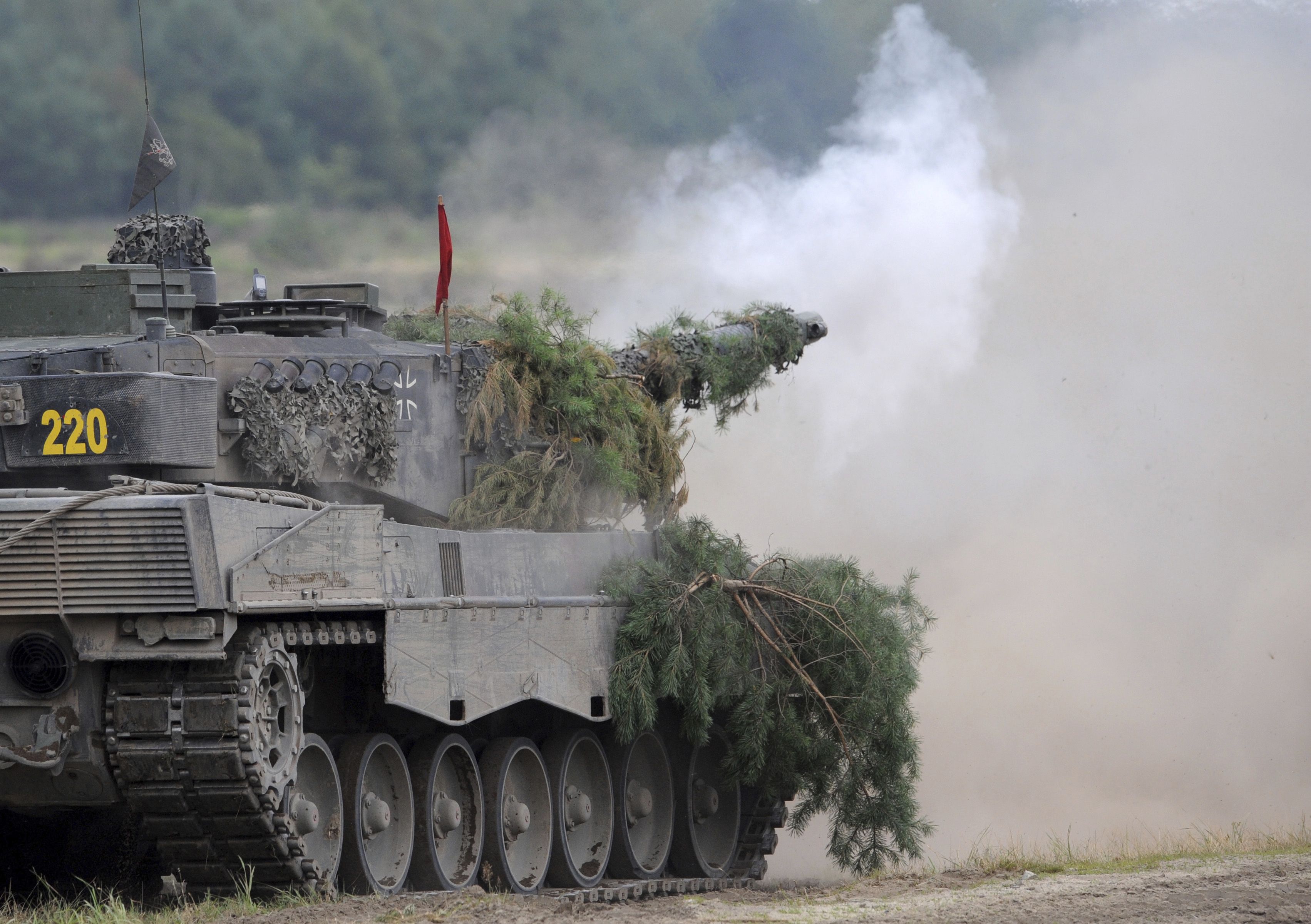
BERLIN • Germany and the United States announced Wednesday that they will send battle tanks to Ukraine, the first stage of a coordinated effort by the West to provide dozens of the heavy weapons to help Kyiv break combat stalemates as Russia’s invasion enters its 12th month.
American President Joe Biden said the U.S. will send 31 M1 Abrams tanks, reversing months of persistent arguments by Washington that they were too difficult for Ukrainian troops to operate and maintain.
The U.S. decision followed Germany’s agreement to send 14 Leopard 2 A6 tanks from its own stocks. Germany had said the Leopards would not be sent unless the U.S. put its Abrams on the table, not wanting to incur Russia’s wrath without the U.S. making a similar commitment.
“This is the result of intensive consultations, once again, with our allies and international partners,” Chancellor Olaf Scholz told German lawmakers. “It was right, and it is important that we didn’t let ourselves be driven” into the decision.
Biden said European allies have agreed to send enough tanks to equip two Ukrainian tank battalions, or 62 tanks.
“With spring approaching, Ukrainian forces are working to defend the territory they hold and preparing for additional counter-offenses,” Biden said. “To liberate their land, they need to be able to counter Russia’s evolving tactics and strategy on the battlefield in the very near term.”
Several European countries have equipped their armies with Leopard 2 tanks, and Germany’s announcement means they can give some of their stocks to Ukraine.
“German main battle tanks, further broadening of defense support and training missions, green light for partners to supply similar weapons. Just heard about these important and timely decisions in a call with Olaf Scholz,” Ukrainian President Volodymyr Zelensky wrote on Twitter. “Sincerely grateful to the chancellor and all our friends in (Germany).”
Ukrainian soldiers on the front lines said the decision comes at a critical point.
“Tanks will help reduce casualties among our soldiers … then gain new results and win this war quicker,” said Oleksander Syrotiuk, commander of a company in the 17th Tank Brigade deployed in Bakhmut.
Ukrainian soldiers and experts said Ukrainian forces are running low on spare parts to repair old Soviet-era tanks and the specific ammunition they require while enduring relentless barrages of Russian artillery. An expected springtime Russian offensive is also looming.
Though it will take months before their debut, the tanks will enable Ukraine’s forces to launch counter-offensives and reduce casualties, three military commanders, including two in the army’s tank division, told The Associated Press.
“Without the new tanks, we cannot win this war,” said Maksim Butolin, chief sergeant of the 54th Brigade’s Tank Division. He spoke by phone this week from near the Bakhmut front.
Ukrainian forces have had to preserve ammunition and deal with frequent breakdowns and maintenance issues, Syrotiuk said.
“The main problem we have with our tanks is they are old,” he said.
Expressing a preference for the Leopard 2, which he said was more suitable for Ukraine’s terrain, Syrotiuk said the modern tanks had more precise targeting systems, better armor and equipment to allow nighttime operations.
Gian Gentile, a U.S. Army veteran and senior historian with the Rand think tank, said the M1 Abrams and the Leopards will give Ukraine a “mechanized armored punching force.”
The Abrams tanks can hit a moving target up to 1.25 miles away.
A Leopard 2A6 tank fires at the Oberlausitz training area in Weisskeissel, Germany, in 2009.