






Scratch & sniff: Your cat’s claws serve a purpose
Sponsored Content: PETacular is a special advertising section of The Gazette
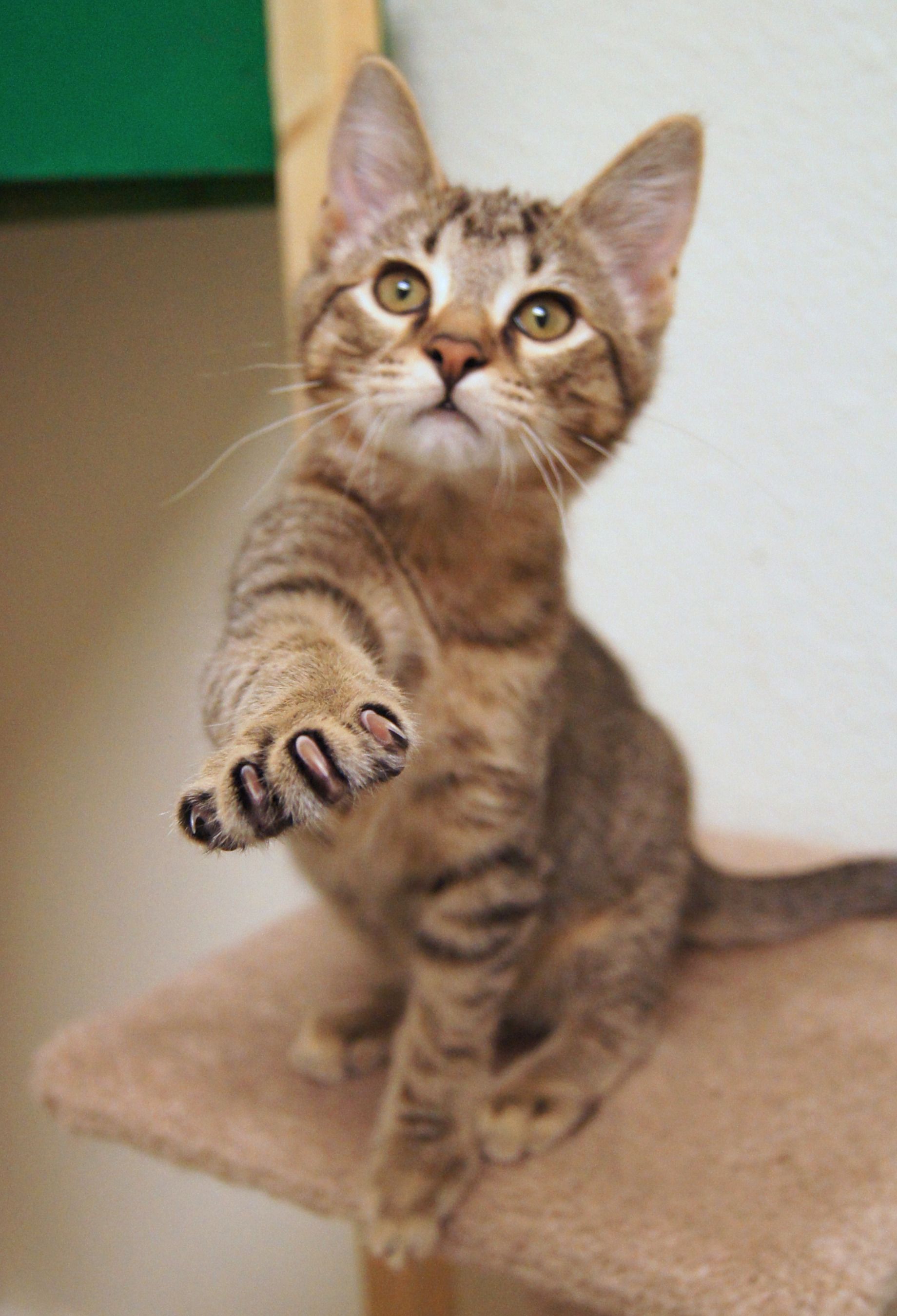
“Can a kitten be declawed at birth?” Someone recently asked this question at Happy Cats Haven. It’s a fact: cats come with claws. Scratching with their claws is a basic cat instinct, like eating or purring. It keeps their bodies functioning properly and is a major part of how they communicate.
HISTORY OF DECLAWING
Many of us have declawed our cats in the past, as more and more cats became indoor-only pets. Dr. Marcus Brown, President of the American Association of Feline Practitioners, said, “I think many cat owners just had no idea that a declaw is an amputation.” This procedure cuts off their toes at the first joint, along with their tendons.
Even many professionals were uninformed. The side effects, complications and aftercare of declawing weren’t taught in vet schools, according to Dr. Jean Hofve, partner with Jackson Galaxy on the website LittleBigCat.com.
Most people now realize that declawing can have lasting effects on a cat that can be just as bad as any behavior the procedure might be trying to prevent. Declawing is no longer taught in some veterinary schools, is now not required in most and is banned in most of the European Union.
APPROPRIATE MARKING
Cats have glands between their toes that let them leave their scent on the scratcher. This is like email for cats that leaves a message for other cats to “read,” letting them communicate without getting into each other’s personal space. You want your cats to mark their territory appropriately as this helps them avoid cat fights.
Cats also use their claws to knead, or “make biscuits,” rhythmically extending and withdrawing them. This is one of the biggest compliments a cat can pay you, since he is responding to you as if you were his mom. Simply adding another fabric layer under your cat will protect your legs and keep your cat happy as a kitten.
THE RIGHT SCRATCHER
A cat tree or scratcher is part of the basic equipment you need to have a happy, normal cat. It’s all about making sure the scratcher you provide is worth more to your cat than your furniture is.
Most cats have very specific preferences in scratchers. Some like to scratch vertically while some prefer horizontal surfaces. Many prefer sisal rope while others like cardboard or carpet.
If you don’t know what your new cat likes, let him tell you by offering a couple of inexpensive orientations and surfaces, using a string toy or catnip to lure him onto it. Location is equally important. Most cats like their scratchers to be in areas where they and their people hang out, just not in the middle of traffic.
If your cat is still drawn to something you don’t want him to scratch, you can make that place less pleasant for him while providing the scratcher he does like. Many cats avoid double-stick tape, aluminum foil or vinyl carpet runners with the spiked side facing up.
TRIMMING CLAWS
If you teach your cat that claw clipping never hurts and always gets a reward, it will become just another fun thing you can do with your cat. Break it down into small steps, go slowly and reward for every step, clip only when he is already relaxed, stop when he wants you to and always avoid hurting him with a misplaced clip.
Clicker training works very well for this procedure. We have lots of tips for how to choose the right scratcher and trim claws on HappyCatsHaven.com.
GET REAL ON DECLAWING
According to Dr. Karen Becker of the website HealthyPets.com, it is common for an outgoing, social cat to start hiding, spending most of his time out of reach of those who once were his human friends. It’s likely this is because he is in pain, just as if he were wounded.
Many cats never recover emotionally, leading to litter box issues as well. Some also become biters, as they now have fewer ways to communicate besides biting when their normal communication suddenly disappears.
Declawing changes how a cat walks, not just how he scratches. It causes pain so great that it’s the procedure used to test new pain medications in cats. It also affects cats’ elbows and spines, often leading to arthritis as they age.
There are millions of indoor cats in the world who prove that cats can scratch appropriately. At Happy Cats Haven, we do everything we can to provide our adopters and our community with the resources to help cats keep their claws.
If you have any doubts that declawing might be right for your cat, just imagine how it would feel if all 10 of your fingertips were chopped off, removed by the very people you love and trust the most. Would perfect furniture really be worth as much as that?
Photo courtesy of Happy Cats Haven