






‘Dune: Part Two’ cinematographer Greig Fraser likes shooting gritty worlds
Denis Villeneuve and Greig Fraser decided to start by going dark.
The director-cinematographer tandem from 2021 science fiction hit “Dune” were looking for an interesting way to begin its just-debuted sequel, “Dune: Part Two,” that would put audiences back in novelist Frank Herbert’s influential universe and specifically back on the desert planet Arrakis, but do it in a fresh way.
They landed on an eclipse.
And funnily enough,” says Fraser during a recent audio interview, “as we were shooting that scene, there was an eclipse in Jordan — obviously not for the entire scene.
“I believe there might be a shot of that eclipse of the sun (using) a long lens.”
A native of Australia now based in Los Angeles who is on the phone from London, the renowned Fraser has served as the director of photography for many notable movies, including 2012’s “Zero Dark Thirty,” 2016’s “Lion,” 2018’s “Vice” and 2022’s “The Batman.” He’s also worked in a galaxy far, far away, shooting director Gareth Edwards’ “Rogue One: A Star Wars Story,” and worked on the series “The Mandalorian,” shooting in the show’s famed “volume,” which uses video game-related tech to create potentially infinite backgrounds.
“Dune,” an acclaimed film and box-office hit, and “Dune: Part Two” together serve as an adaptation of Herbert’s “Dune,” published in 1965.
In a conversation edited for length and clarity, Fraser — who won the Academy Award for best cinematography for “Dune” — talks working with Villeneuve and why he’s not all that interested in shooting something that looks shiny and new and whether he’d work on a third “Dune” film, one not yet announced but widely expected to be directed by Villeneuve and adapted from Herbert’s 1969 sequel to “Dune,” “Dune Messiah.”
Q: You’ve worked with many different directors. I imagine that a director of photography’s level of creative input can vary from project to project and director to director. What is it like working with Villeneuve, who would seem to be a strong visual storyteller?
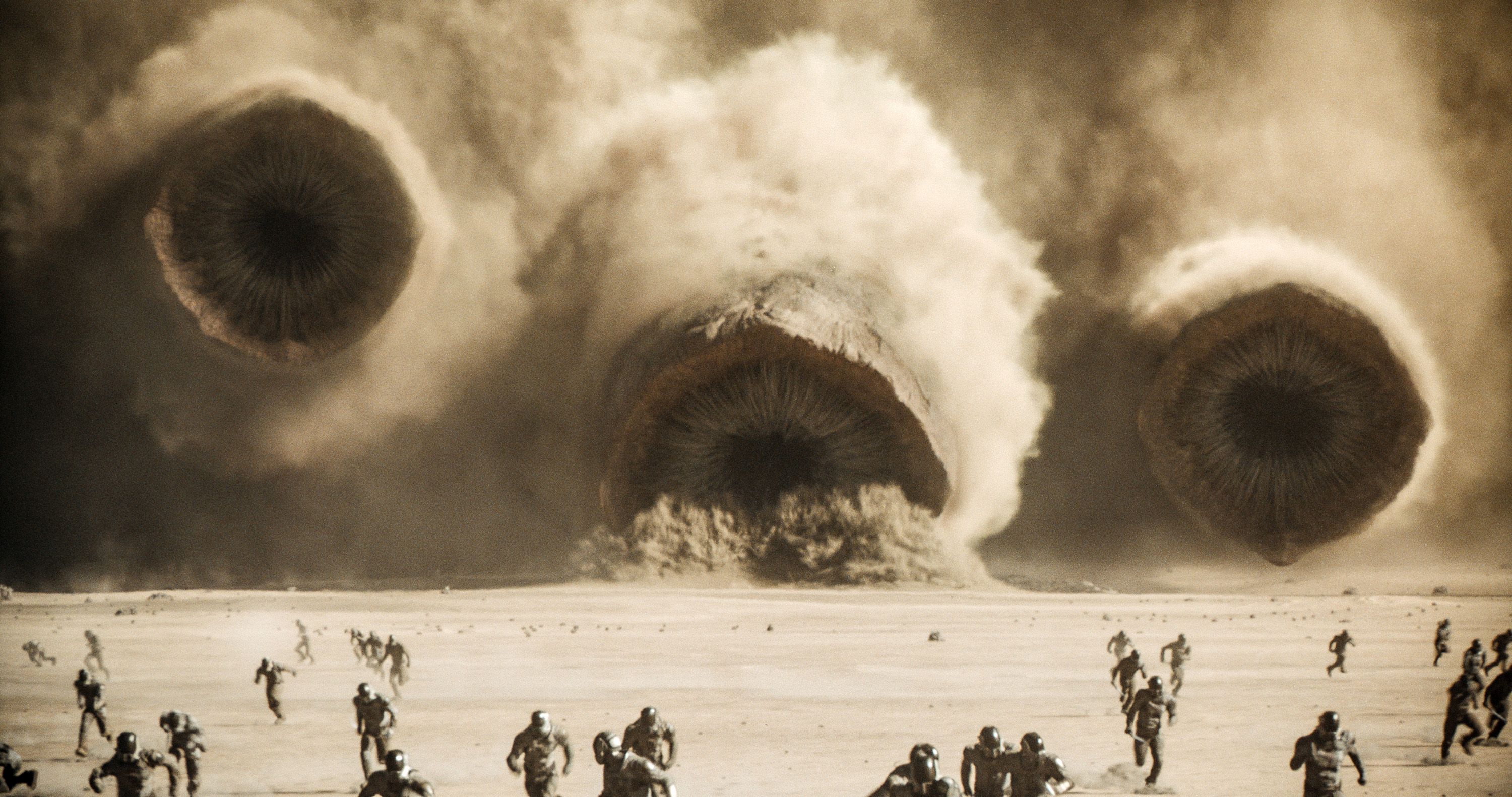
A: Denis is a fantastic storyboarder. He thinks in terms of storyboards, which is fantastic because it gives you a really great head start to understand what’s going through his brain when he’s talking through a scene. So a scene like the sandworm-riding sequence (in “Dune: Part Two”) or some of the battles is kind of (planned) a fair bit in the storyboarding.
He knows a lot about visuals, but he does very much lean on his DPs. If you look at his films and look at them quite closely, they all do look significantly different when with the different DPs. I think he really (adopts) the DP’s vision for the film but injects his own vision into it. It’s very much a collaborative process. It’s not the case that Denis wants me to put the camera there (and use) this lens. It’s like, “Let’s discover what the world is together. Let’s find what this world is and make it happen.”
Q: To piggyback on that, I saw where, a couple of years ago, you’d talked about wanting to do justice to the art department’s work on the first “Dune” and working to figure out how to do that given various constraints. Is a lot of your job problem-solving?
A: it’s a pretty high bar that they set when they give us the concept art. And then they build these beautiful pieces of art. You walk into their sets and you’re in awe of the shapes. (There’s) a self-pressure that I’m making sure that I light it well enough that I can look the designer in the eye make sure that he doesn’t feel that I’ve done him a disservice and that I’ve done the film service by showing those designs (as well as possible).
Q: These movies have been shot in various locations, including some desert environments. Did that make your job more challenging?
A: The sand is something the actors have spoken a lot about in their press that they’ve done, and what they failed to mention is that cameras and cranes and dollies — sand is their biggest killer. Lights do not (work well) with the sand because we have a lot of wind. You can tell on screen there was a lot of wind that we created — a lot of sandworm riding and a lot of dust flying around. We had a very hard time. But here’s the thing: The equipment that we chose we chose in part because it was sturdy, because it was the type of equipment that could withstand a bit of a beating. I’m pretty proud of the way my team kind of stood up and did that job of protecting the gear so that we could continue to make the film.
Q: The “Star Wars” universe is often referred to as having a “lived-in” quality, and I think the same can be said of these “Dune” films. Do you agree, having played in both sandboxes?
A: I personally have a distaste for any film in which the costumes look like they’ve literally just come out of the designer’s stall or where the actors have literally just walked out of the makeup chair and looked as coiffed as possible. I’m personally drawn to design, to costume, to makeup and to world-building that has an element of grit, because if you look around, the world is textured, the world is lived-in.
Q: Before I let you go, have you blocked out any time to work on a film that could be called “Dune: Part Three” or “Dune: Messiah”?
A: (Laughs) I mean, listen, if Denis, calls me and says, “We’re doing It,” and I’m free, I’m there in a heartbeat because it was an amazing experience working with this team. I don’t know what the future holds for “Dune: Part Three.” Denis would probably be the best person to talk to about that. But yeah, listen, if he calls I’m there.
The giant sandworms of the planet Arrakis are an even bigger presence in “Dune: Part Two” than they were in 2021’s “Dune.”
Greig Fraser