






Apple: App to detect atrial fibrillation is not for those with atrial fibrillation
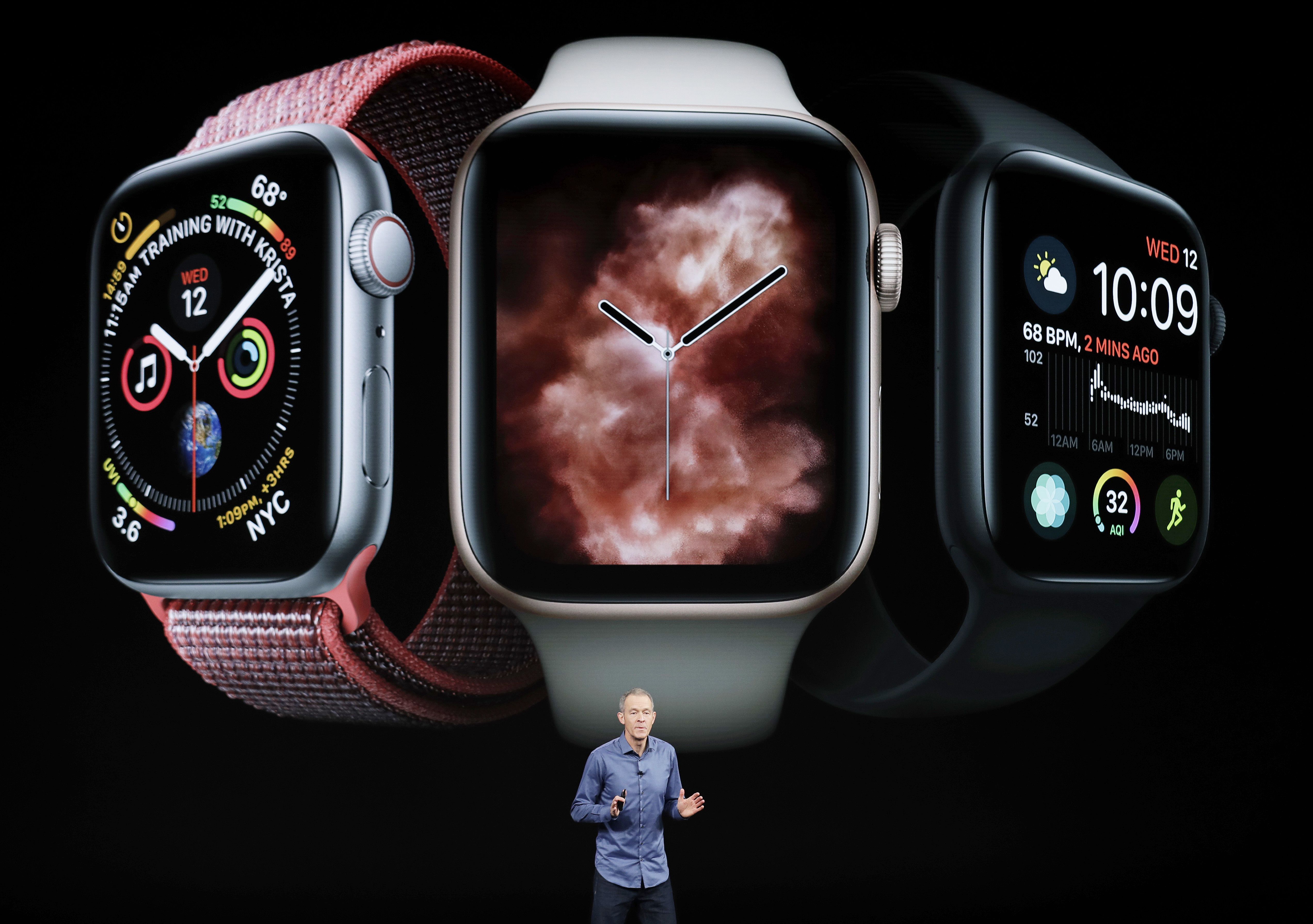
The fine print on Apple’s latest foray into health care carries a seemingly strange caveat: Its new Apple Watch app to detect atrial fibrillation is not intended for people who have atrial fibrillation.
The paradox perfectly sums up the deeper questions raised by the introduction of a mass-market monitoring tool for the heart. Apple’s products are designed to inspire, with clean designs and seamless operation. But health care is messy and unpredictable.
The latest gadget worn on the wrist is simply not accurate enough to handle the task of accurately assessing serious medical conditions, according to health officials. It’s mostly a gateway for conversations with your doctor, and Apple’s detailed setup screens for the new watch are loaded with warnings and explanations, including one that informs people with Afib that the new Apple Watch app is not for them.
But even those who have not been diagnosed with the condition might be unduly alarmed by the new app’s warnings.
“What’s going to be a bigger problem is these false positives, and people with normal hearts who have intermittent fibrillation’’ who do not require treatment, said Dr. Eric Topol, a cardiologist and director of the Scripps Research Translational Institute. He said those potential false positives likely will lead to cardiac stress tests, unnecessary use of blood thinning medications, and even unwarranted catheterizations.
“At the least we’re going to see a lot of engendered anxiety, and at worst it will be beyond anxiety,’’ Topol said. “It’s value is if it’s used only in the right people — not for 20-year-olds who have an Apple Watch.’’
The takeaway for Silicon Valley is the Apple Watch signifies substantial strides in health care, and is forging a path to the future. But the revolution in medicine and wearable tech is not yet here.
The possibilities for future advances are real. Gathering electrical signals from the heart in real time, at the precise moment when a patient feels ill or a fluttering heart; storing that data; and sending it to a doctor will lead to better options for patients and doctors, said Dr. Ben Scirica, a cardiovascular specialist at Brigham and Women’s Hospital in Boston.
“The potential to really understand somebody’s disease is enormous,’’ Scirica said. “I think this is the beginning of a real sea change in how physiologic and biologic data can be collected outside traditional care settings.’’
But potential false positives for atrial fibrillation are a significant issue in the new app. The Food and Drug Administration cleared it for use even though, in a clinical study, 20 percent of the time the watch’s warning of atrial fibrillation was not confirmed by an EKG patch the study subject also was wearing.
Apple said of that 20 percent, nearly all were classified as “clinically relevant arrhythmias,’’ indicating they warrant attention.
A second app Apple released Thursday, an electrocardiogram that displays heart rate when you put your finger on the watch crown for 30 seconds, is more accurate, according to figures Apple released.
It does not work well if it’s wet, or your skin is wet from rain or perspiration. Apple recommends holding your arm still on a table or leg to get an accurate reading. It is only available for download on the Apple Watch Series 4.
Neither app is meant for use by people under age 22, according to the FDA’s approvals, which is the threshold for a pediatric medical device requiring a separate approval.
With all the complexities, multiple setup screens for the new apps guide consumers through the context and nuance of normal heartbeat, irregular heartbeat, and the risks of stroke and other cardiovascular maladies.
The company was criticized for appearing to put marketing before medical accuracy in September when it unveiled its latest watch and the new heart monitoring apps with this dramatic proclamation by Chief Operating Officer Jeff Williams: “Apple Watch Series 4 is the ultimate guardian for your health.’’
Thursday’s release of the new apps contained no such hyperbole.
Jeff Williams, Apple’s chief operating officer, speaks about the Apple Watch Series 4 at the Steve Jobs Theater during an event to announce new Apple products in Cupertino, Calif., in September.