






Meat. Salt. Fire. Grilling Argentine-style involves the primal basics
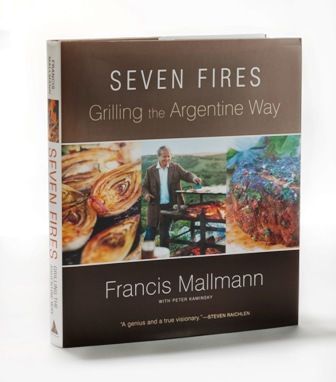
Classical Greek literature is not the first source most North Americans would turn to in making an analogy about grilling, but then how many of them have ever seen Argentine grilling in action? Steven Raichlen has.“Argentine grilling is the most heroic grilling, in the Homerian sense,” said the Miami-based grill expert and author. Homer, of course, was a legendary poet, author of ancient Greece’s most sweeping war epic, “The Iliad.”“It’s very primal. No adornment. Nothing fancy. No elaborate marinades,” Raichlen added. “It’s about meat, salt and fire.”And what fire! Take a gander at the back jacket of “Seven Fires: Grilling the Argentine Way” by superstar Argentine chef Francis Mallmann and Peter Kaminsky, a cookbook author and food writer from Brooklyn, N.Y. There Mallmann stands in open field, stacks of plates and logs beside him, tending what he calls an “infiernillo,” or “little hell,” a blazing double-tiered fire topped by a sloping griddle.“What Francis strives for is carbonization, but not incineration,” said Kaminsky. “A French chef would grill a steak rare and blue in the center. The Argentines want a salty crust and otherwise wall-to-wall color. The bigger the piece of meat, the lower the heat to achieve that crust and to get uniform color.”Other distinctive Argentine grilling practices, according to Kaminsky, include moving the meat closer or farther away from the flame along that sloping griddle, depending on the heat required, and the use of black iron skillets and griddles over the coals for much of the cooking. Sometimes there’s no grill at all; that sort of setup is called an asado.“Basically (it’s) a campfire with large hunks of meat or whole animals impaled on stakes in front of it,” writes Raichlen in his new cookbook, “Planet Barbecue!” (Workman, $22.95). “The heat is controlled by positioning the stakes closer to or farther away from the fire.”Mallmann charmingly likens getting that technique right to going on a first date.“It is something that you look forward to with great anticipation and a little anxiety,” he writes. “You can never know exactly what the conditions will be: the day can be windy or cold, the wood may be seasoned or green. In a way, every time you cook over wood outdoors, you are starting fresh in a strange kitchen. Once you have done it enough, however, you will always be able to adapt.”Raichlen sides with Mallmann on the superior merits of a wood fire for Argentine cooking. A gas grill could get something “approaching” the Argentine taste, he said, if the appliance is “screaming hot,” outfitted with heavy-duty grates and the meat is seasoned aggressively.May sound a bit excessive, but if you’re going to embark on an Argentine grilling odyssey, it pays to play boldly.
Cooking outdoors doesn’t always have to mean grilling food on an open rack. This recipe from Francis Mallmann’s “Seven Fires: Grilling the Argentine Way” uses a flat metal griddle called a chapa to cook the pork. A large cast-iron skillet or griddle would work just as well. You also can cook this on the stovetop.
PORK TENDERLOIN WITH BURNT BROWN SUGAR, ORANGE CONFIT AND THYME—Yield: 6 servings
6 (2-inch-long) pieces orange confit (recipe below), plus 2 tablespoons confit oil2 (1-pound) pork tenderloins2 tablespoons fresh thyme leaves1 tablespoon salt3 tablespoons light brown sugar
Procedure:1. Tear the orange confit into 1/2-inch pieces; scatter over the meat. Sprinkle with thyme and half the salt; sprinkle the brown sugar on top. Pat it down firmly with your hand. Drizzle with the oil from the orange confit.2. Prepare a grill for medium heat. Place a large griddle or skillet on the grill; heat until a drop of water sizzles on the surface. Transfer each tenderloin, using a wide spatula and inverting it to place sugar-side down on the hot skillet. Grill without moving the pork until well-browned, 5 minutes. (If the sugar begins to smell burned, adjust the flame or move the skillet away from the burning charcoal.) Turn the pork; grill until done to taste or to 135 degrees for medium, 10-15 minutes.3. Transfer the meat to a cutting board; let rest, tented loosely with foil, 10 minutes before slicing. Season with remaining salt.
Nutrition data per serving: 324 calories, 47 percent of calories from fat, 17 g fat, 4 g saturated fat, 100 mg cholesterol, 9 g carbohydrates, 33 g protein, 1,380 mg sodium, 1 g fiber
ORANGE CONFIT—Yield: About 2 cups
4 oranges12 black peppercorns3 bay leavesAbout 1 1/2 cups extra-virgin olive oil, divided3/4 cup dry white wine2 teaspoons salt
Procedure:1. Halve oranges, squeeze juice and reserve it for another use. Put orange halves in large saucepan with peppercorns, bay leaves, 3 tablespoons olive oil, white wine and salt. Add enough water to completely cover oranges. Bring to boil over high heat; reduce heat to medium. Cook until orange peel is tender, 25-30 minutes. Let cool in liquid.2. Drain oranges. Tear peel into rough strips about 1-inch wide. Place skin side down on work surface; scrape away every bit of white pith with sharp knife, leaving only orange zest. Repeat with remaining peel.3. Put strips of orange zest into small container; cover completely with remaining olive oil. Tightly cover. Store in refrigerator up to 2 weeks.
Nutrition data per serving: 97 calories, 92 percent of calories from fat, 10 g fat, 1 g saturated fat, 0 mg cholesterol, 2 g carbohydrates, 0 g protein, 146 mg sodium, 0 g fiber
SECRETS OF GRILLING ARGENTINE-STYLENorberto Zas has a recipe for a great grilling session, Argentine-style: “You need to have a good grill, you need to be near friends and you need to have a good glass of malbec.”The Argentine-born chef/owner of Piccolo Mondo Restaurant in Chicago’s Hyde Park neighborhood seasons his meat simply with sea salt and grills over a slow charcoal fire.“You can experience the flavor charcoal gives the meat when it is cooked slow,” he said. “You could do it over gas, too, but there’s a big difference.”Most Argentines cook over wood fires, and it would most likely be beef on the grill. The country consumes an average of 154 pounds of beef per person yearly, compared with 89.8 pounds in the United States, according to Steven Raichlen.Argentine beef is grass-fed — appropriate, given that the country is home to The Pampas, 300,000 square miles of grassland. While grass-fed beef is all the rage these days among eco- and health-conscious Americans, Raichlen notes that it will seem “less luscious and less luxurious” than corn-fed beef. At first.“With time, you come to appreciate its forthright, natural flavor, and in particular, the distinctive flavor of each cut of beef,” he said.As for cooking a steak, aim for a crust. “A steak that is seasoned and cooked properly has a salty crust produced by searing,” wrote Francis Mallmann in his book, “Seven Fires: Grilling the Argentine Way.” The crust, “sublime in its own right,” keeps the meat moist by preventing the juice from escaping as the meat cooks. The meat should attain a uniform rosy pink throughout.“It can be achieved only if you cook the meat at the proper rate,” Mallmann insists. “To get that uniform color, you need even lower heat and longer cooking for thicker cuts.”
RIB-EYE STEAKS WITH CHIMICHURRI—Yield: 8 servings
4 (1 1/4- to 1 1/2-inch-thick) boneless rib-eye steaks, at room temperature1/2 teaspoon saltChimichurri (recipe below)
Procedure:1. Prepare grill for medium-high heat. Salt steaks. Grease grill grate.2. Grill steaks 5 minutes; rotate meat 90 degrees to create crosshatch grill marks. Grill 4 minutes; turn steaks. Grill until cooked medium-rare, about 7 minutes, rotating steaks if necessary.3. Transfer steaks to platter; let rest 3 minutes. Serve with chimichurri sauce.
Nutrition data per serving: 429 calories, 59 percent of calories from fat, 27 g fat, 11 g saturated fat, 204 mg cholesterol, 0 g carbohydrates, 43 g protein, 231 mg sodium, 0 g fiber
Source: Adapted from a recipe by chef Francis Mallman in “Seven Fires: Grilling the Argentine Way”
“From gaucho campfires to society weddings, you can always find chimichurri in Argentina,” writes Francis Mallmann in “Seven Fires: Grilling the Argentine Way.” Make the chimichurri a day in advance, he writes, so the flavors have time to blend. Chimchurri may be refrigerated for two to three weeks.
CHIMICHURRI—Yield: 1 2/3 cups
1 cup water1/2 tablespoon salt1 head garlic, separated into cloves and minced1 packed cup fresh flat-leaf parsley, minced1 cup fresh oregano leaves, minced2 teaspoons crushed red pepper flakes1/4 cup red wine vinegar1/2 cup extra-virgin olive oil
Procedure:1. Bring water to boil in small saucepan. Add salt and stir until dissolved. Remove from heat; cool.2. Combine garlic, parsley, oregano and red pepper flakes in medium bowl. Whisk in red wine vinegar, then olive oil. Whisk in salted water.
3. Transfer to jar with a tight-fitting lid and refrigerate for up to 3 weeks.
Nutrition data per tablespoon: 43 calories, 88 percent of calories from fat, 4 g fat, 1 g saturated fat, 0 mg cholesterol, 1 g carbohydrates, 0 g protein, 136 mg sodium, 0 g fiber
When “overdosing” on red meat grilled Argentine-style, Steven Raichlen recommends a grilled-pepper salad on the side. “This is about as elaborate as an Argentine vegetable dish gets.” It’s adapted from his book, “Planet Barbecue!”
ROASTED BELL PEPPER SALAD WITH ANCHOVIES AND GARLIC—Yield: 4 servings
4 large red bell peppers1 (2-ounce) tin anchovy fillets, drained1-2 cloves roasted garlic (see note, below) or raw garlic, minced2-3 tablespoons extra-virgin olive oil2 tablespoons finely chopped flat-leaf parsley1/2 teaspoon saltFreshly ground pepper
Procedure:1. Prepare grill for hot, direct heat. Grill peppers until darkly browned and blistered on all sides, 3-4 minutes per side. Cool to room temperature. Scrape charred skins off peppers. Halve peppers, core them and scrape out the seeds. Cut each pepper in half again lengthwise.2. Arrange pepper pieces on a platter or plates. Arrange anchovy fillets decoratively on top. Sprinkle with garlic; drizzle with olive oil. Sprinkle with parsley; season with salt and pepper to taste.Note: To roast garlic, place whole head with skin intact on grill away from direct heat. Cover grill. Roast until skin is lightly browned and cloves feel squeezably soft, about 30 minutes.
Nutrition data per serving: 143 calories, 54 percent of calories from fat, 9 g fat, 1 g saturated fat, 12 mg cholesterol, 11 g carbohydrates, 6 g protein, 819 mg sodium, 3 g fiber.
Take a gander at the back jacket of “Seven Fires: Grilling the Argentine Way” by superstar Argentine chef Francis Mallmann and Peter Kaminsky, a cookbook author and food writer from Brooklyn, N.Y. There Mallmann stands in an open field, stacks of plates and logs beside him, tending what he calls an “infiernillo,” or “little hell,” a blazing double-tiered fire topped by a sloping griddle. Photo by MCCLATCHY