






Brazil mourns loss of treasures in museum fire
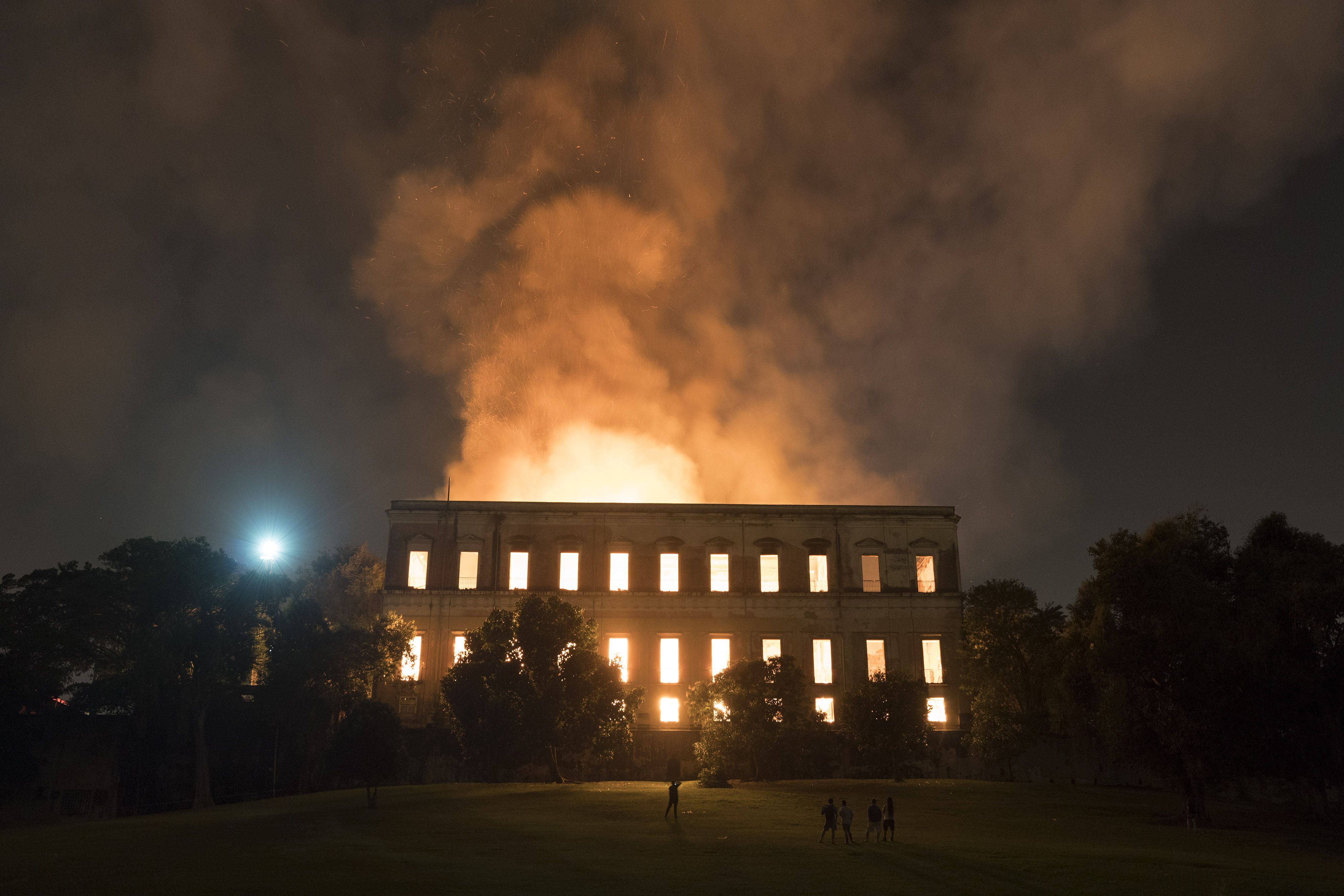
RIO DE JANEIRO • Firefighters dug through the burned-out hulk of Brazil’s National Museum on Monday, a day after fire roared through the building, as the country mourned the irreplaceable treasures lost and pointed fingers over who was to blame.
The museum held Latin America’s largest collection of historical artifacts, and officials suggested that the damage could be catastrophic, with most objects in the main building probably lost.
For many in Brazil, the state of the 200-year-old natural history museum quickly became a metaphor for what they see as the gutting of Brazilian culture and life during years of corruption, economic collapse and poor governance.
“It’s a crime that the museum was allowed to get to this shape,” said Laura Albuquerque, a 29-year-old dance teacher who was in a crowd protesting outside the gates. “What happened isn’t just regrettable, it’s devastating, and politicians are responsible for it.”
The cause of the fire that broke out Sunday night was not known. Federal police will investigate since the museum was part of the Federal University of Rio de Janeiro. But protesters, commentators and museum directors said years of government neglect had left the museum so underfunded that its staff had turn to crowdfunding sites to open exhibitions.
Luiz Fernando Dias Duarte, the museum’s deputy director, criticized authorities for starving the museum of vital funding while spending lavishly on stadiums to host the World Cup in 2014.
“The money spent on each one of those stadiums — a quarter of that would have been enough to make this museum safe and resplendent,” he said in an interview in front of the still-smoldering building aired on Brazilian television.
Roberto Leher, rector of the Federal University of Rio de Janeiro, said it was well known that the building was vulnerable to fire and in need of extensive repairs. Duarte said he was in the habit of unplugging everything in his office at night because of the risk.
Civil defense authorities were concerned that internal walls and the roof could collapse further, so officials had to wait to conduct a full accounting of losses.
Duarte said that anything held in the main building was likely destroyed. The collection of 20 million cultural and historical items included pieces that belonged to the royal family and a painting by the Brazilian artist Candido Portinari.
The museum, once home to the royal family, also housed extensive paleontological, anthropological and biological specimens. It was home to a skull called Luzia that was among the oldest fossils found in the Americas. It also held a Torah and an Egyptian mummy and the largest meteorite discovered in Brazil — one of the few objects that officials could confirm had survived.
Brazil has struggled to emerge from a two-year recession and seen its political and corporate elite jailed in Latin America’s largest corruption investigation. The country has been riven with deep political divisions following the impeachment and removal of former President Dilma Rousseff.
The protesters gathered outside the museum gates tried several times to push into the site, demanding to see the damage and calling on the government to rebuild. Police held the crowd back with pepper spray, tear gas and batons.
“This fire is what Brazilian politicians are doing to the people,” said Rosana Hollanda, a 35-year-old high school history teacher, who was crying. “They’re burning our history, and they’re burning our dreams.”
Education Minister Rossieli Soares said $2.4 million would be given to the university to deal with the damage to the building.
President Michel Temer announced Monday that private and public banks, as well as mining giant Vale and state-run oil company Petrobras, have agreed to help rebuild the museum and reconstitute its collections. French President Emmanuel Macron offered in a tweet to send experts to help rebuild the museum.
People watch as flames engulf the 200-year-old National Museum of Brazil in Rio de Janeiro on Sunday.