






House passes legislation to renew key NSA surveillance program after Trump’s contradictory tweets
The House voted decisively Thursday to reauthorize a powerful government authority to conduct foreign surveillance on U.S. soil, overcoming opposition from privacy advocates and confusion sown by a series of contradictory and seemingly misinformed tweets from President Trump questioning his own administration’s support for the program.
The 256 to 164 vote on the bill sets up the measure for consideration in the Senate, where leaders have said they believe they can pass the bill before the program’s statutory authorization expires on Jan. 19.
The legislation extends for six years the government’s ability to collect from U.S. companies the emails and other communications of foreign targets located outside the United States. The intelligence community considers the program, called Section 702 after the part of the Foreign Intelligence Surveillance Amendments Act of 2008 that established it, its key national security surveillance tool.
But the fate of the program appeared to be in jeopardy Thursday morning, after the president tweeted his doubts about it, questioning his administration’s position after seeing a segment about it on Fox News.
“‘House votes on controversial FISA ACT today,’” Trump wrote, citing a Fox News headline. “This is the act that may have been used, with the help of the discredited and phony Dossier, to so badly surveil and abuse the Trump Campaign by the previous administration and others?”
Trump attempted to walk back the tweet about 90 minutes later, urging legislators to approve the reauthorization. But top Democrats seized on the confusion, calling on Republican leaders to withdraw the bill from consideration “in light of the irresponsible and inherently contradictory messages coming out of the White House today,” top Intelligence Committee Democrat Adam B. Schiff (Calif.) said on the floor.
Republicans seemed undeterred by Democrats’ demands, plowing ahead with planned votes on the bill and a sole amendment to it Thursday morning. But the president’s mixed messages sent shock waves through the House GOP, which was gathered for a regular conference meeting when the first of the president’s tweets came out.
Trump then called House Speaker Paul D. Ryan (R-Wis.), and they spoke for half an hour. Later, House Majority Leader Kevin McCarthy (R-Calif.) alerted the GOP conference that the president had tweeted again, calming lawmakers’ nerves.
But top Democrats on the House and Senate intelligence committees were quick to leap on the first tweet as “irresponsible” and “untrue.”
“FISA is something the President should have known about long before he turned on Fox this morning,” Sen. Mark R. Warner (D-Va.), ranking member on the Senate Intelligence Committee, tweeted after Trump’s post.
In his second tweet Trump seemed to backtrack, pushing for the act to be re-upped.
“With that being said, I have personally directed the fix to the unmasking process since taking office and today’s vote is about foreign surveillance of foreign bad guys on foreign land. We need it! Get smart!” Trump wrote on Twitter.
It is unclear how Trump “personally directed the fix to the unmasking process since taking office,” since the bill’s author, House Intelligence Committe Chairman Devin Nunes (R-Calif.), stripped the major changes to unmasking procedures from the measure before presenting it for a vote by the full House.
Senior government officials can ask spy agencies to unmask the names of Americans or U.S. organizations if they believe that will help them better understand the underlying intelligence. Trump, and Nunes, accused the Obama administration of improperly revealing the identities of members of the president’s transition team. It is unclear what the dossier has to do with unmasking or the reauthorization of the spying program, but Trump has been repeatedly denouncing it in recent days.
Both Republicans and Democrats have pushed back against linking the controversy over unmasking to the FISA program the House is seeking to extend, known as Section 702. On Thursday, White House cyber coordinator Rob Joyce said there have “been no cases of 702 used improperly for political purposes.”
Privacy advocates in Congress objected to the measure, but failed in their attempt to amend with legislation written by Rep. Justin Amash (R-Mich.), that would have required law enforcement agencies to obtain warrants before being able to scour the database of those records for information about Americans who may have been in touch with foreign targets. The underlying bill only requires the government to seek a court order when they want to use what they find about Americans in criminal cases. The amendment failed to pass by a vote of 183 to 233.
Read this story at The Washington Post.
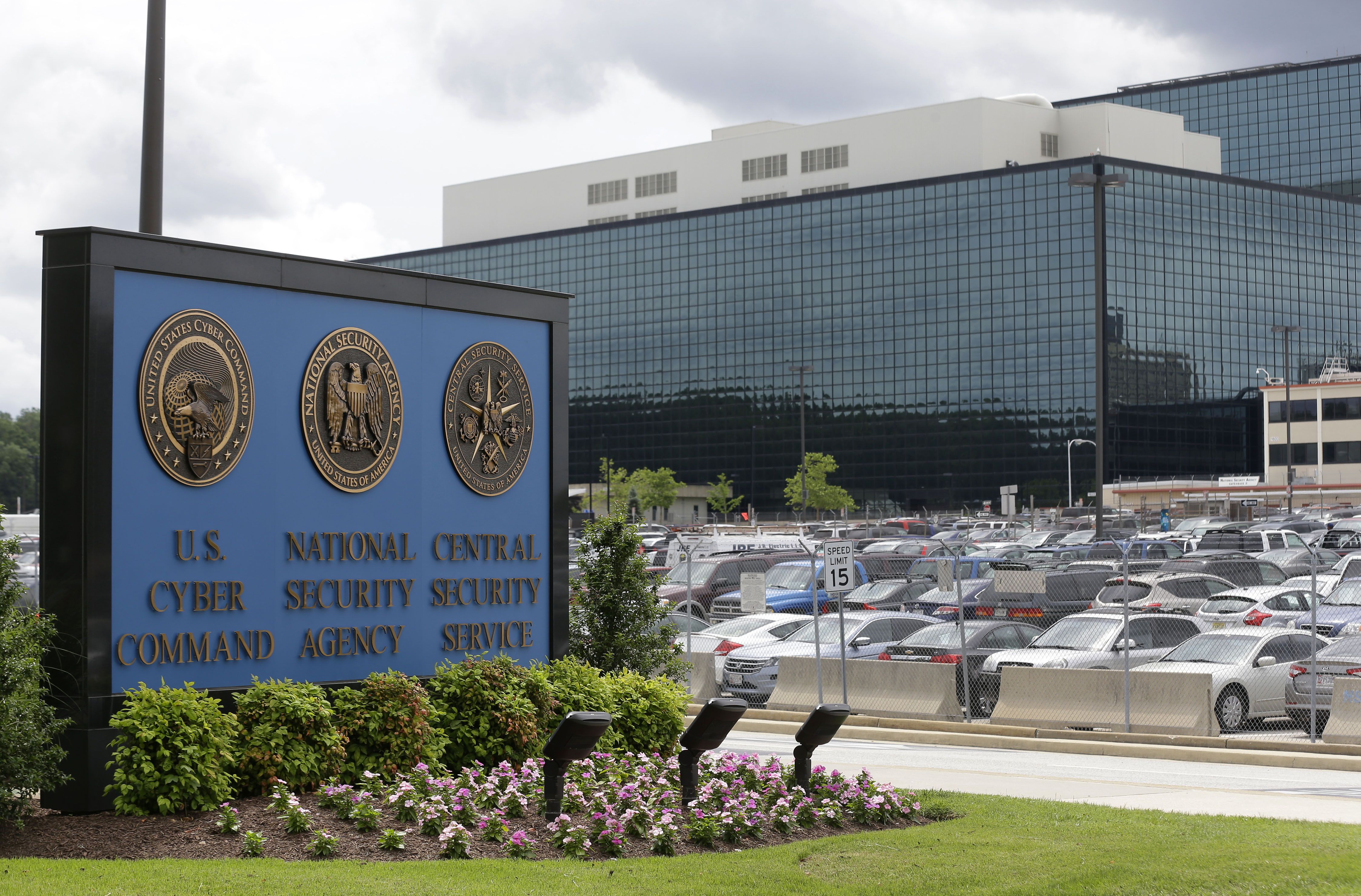
FILE – This June 6, 2013, file photo shows the National Security Administration (NSA) campus in Fort Meade, Md., where the US Cyber Command is located. U.S. officials say the Trump administration, after months of delay, is finalizing plans to revamp the nation’s military command for defensive and offensive cyber-operations. The plan would eventually split it from the intelligence-focused National Security Agency in hopes of intensifying America’s ability to wage cyber war against the Islamic State group and other foes.(AP Photo/Patrick Semansky, File)
FILE – This June 6, 2013, file photo shows the National Security Administration (NSA) campus in Fort Meade, Md., where the US Cyber Command is located. U.S. officials say the Trump administration, after months of delay, is finalizing plans to revamp the nation’s military command for defensive and offensive cyber-operations. The plan would eventually split it from the intelligence-focused National Security Agency in hopes of intensifying America’s ability to wage cyber war against the Islamic State group and other foes.(AP Photo/Patrick Semansky, File)