






Year-round gardening: Coping with deer in the garden
Justin Edmonds
By Fredricka Bogardus
Colorado Master Gardener
El Paso County is blessed, or perhaps cursed, with very healthy deer herds.
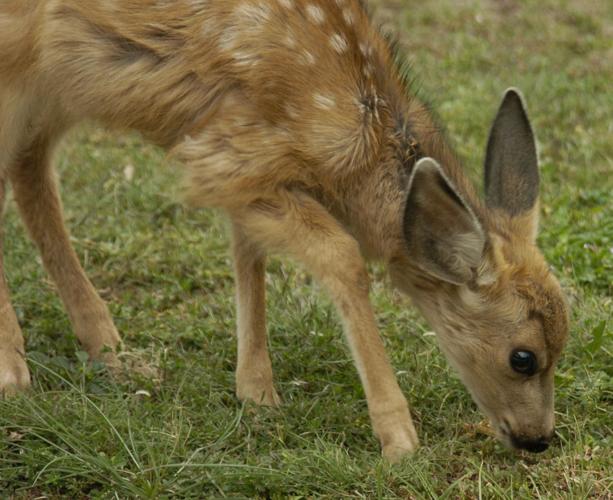
While the deer can be fun to see, especially the babies in spring, they can frustrate gardeners by treating the garden like an all-you-can-eat buffet.
Physical barriers such as fences are very effective as long as they are tall enough (6 to 10 feet) that deer cannot just jump over them. If fencing is not an option, then the best choice might be plant selection.
Deer are primarily browsers, not grazers; understanding that distinction can help with plant selection. Browsers primarily rely on leaves, and twigs for food. You may see them nibbling at your lawn, but they will do no harm; grassy plants, even ornamentals, are rarely damaged by deer.
Deer avoid plants with strong aromas, including many members of the mint family; examples are thyme, bee balm, lemon balm, salvias (both annual and perennial), and hyssop (Agastache sp.). Alliums are also not appealing to deer.
Deer will stay clear of very hairy, abrasive foliage such as that found in the borage family. Examples include lungwort, forget me nots, and false forget me nots. Many plants in the aster family will be avoided by deer, good examples are Shasta daisies, Echinacea, and yarrow. Plants that feature thorns or milky sap are also not attractive to deer.
Finally, there are the poisonous plants: Euphorbias, daffodils, monkshood, bleeding heart, foxglove, Lenten and Christmas roses, irises, milkweed, peonies and dogbane. Deer might nibble at these plants, but they are unlikely to damage them severely.
In early spring, deer seem to eat whatever they can find, especially the fawns.
Don’t be too alarmed if you find something nibbled at; many plants are resilient enough that a bit of pruning early in the season will actually stimulate some new growth and the plants will survive, This might be an ideal time to apply chemical repellents to discourage that spring nibble fest. The smelly repellents might ruin a deer’s appetite long enough for it to avoid the plants.
If deer regularly visit your garden, check for deer resistance before buying new plants. Frequently the plant label may indicate deer resistance, but it is a good idea to double check before buying.
Go online to elpaso.extension.colostate.edu or csu.org for more materials.
Submit gardening questions to csumg2@elpasoco.com or call 719-520-7684. The in-person help desk is open Mondays, Wednesdays and Thursdays from 9 a.m. to noon and 1 p.m. to 4 p.m. Visit elpaso.extension.colostate.edu and register for upcoming classes at epcextension.eventbrite.com.