






LETTERS: Shrine to mediocrity; commuter rails
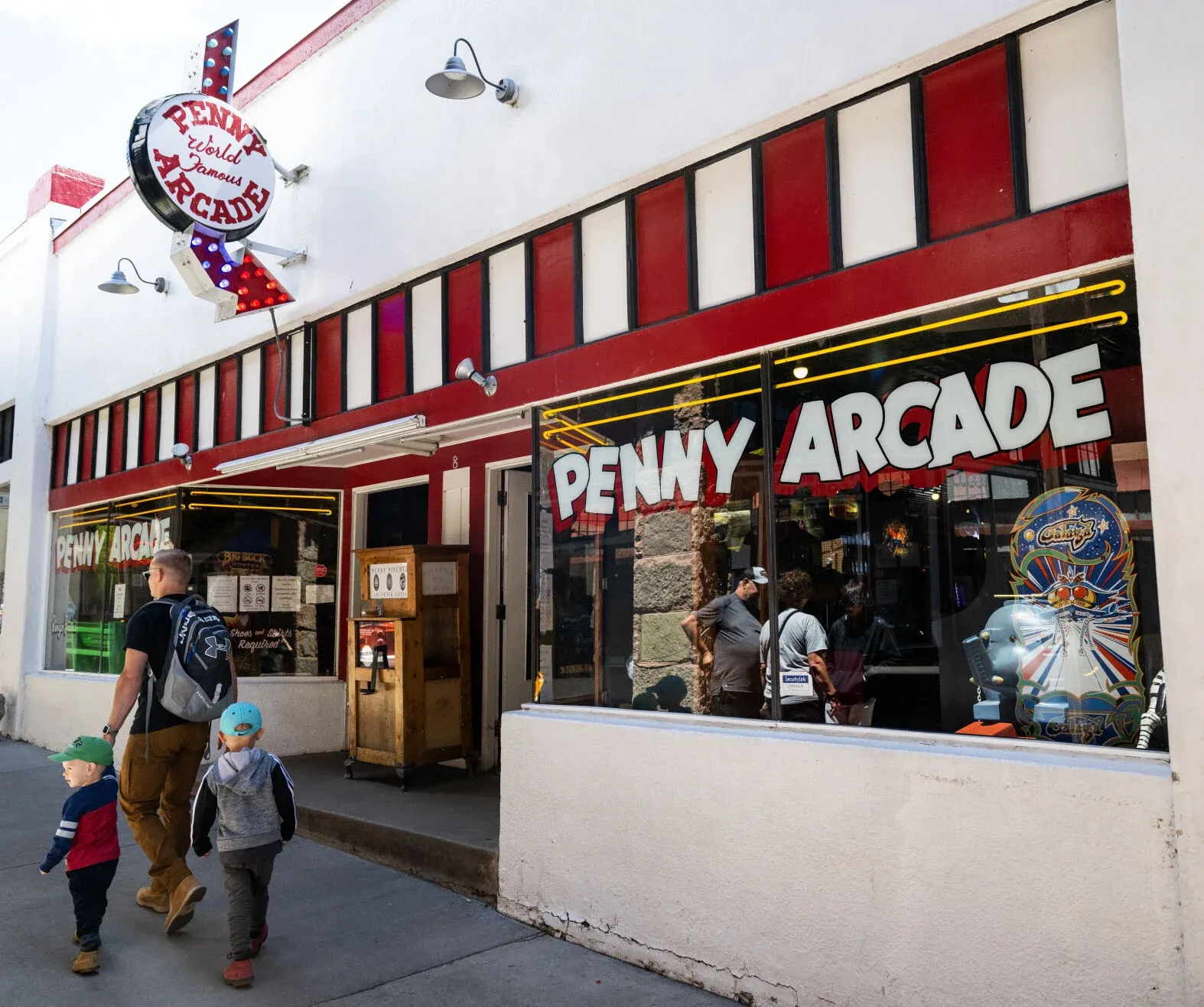
A shrine to mediocrity
Ah, Manitou Springs — the jewel of the Rockies, or so the brochures claim. A “must-see mountain village,” they promise, filled with “local color” and “quaint charm.” Well, I saw it. All three streets of it. If charm were measured in square footage, Manitou might just qualify as a driveway.
Let’s start with the highlights: a few stores selling identical souvenirs (“authentic” T-shirts printed yesterday), a couple of restaurants that are “decent” if you squint and lower your standards, and a general atmosphere of faded ambition. The town feels like it’s been coasting on old postcards and wishful thinking.
But the real showpiece — the true marvel of Manitou Springs — isn’t the scenery, the shops, or even the faint scent of nostalgia. No, it’s the parking. Six dollars an hour. Let me repeat that: Six. Dollars an hour. For what, you ask? The privilege of wandering three streets of mediocrity, dodging fellow tourists who are also wondering where exactly the “magic” is supposed to happen.
You have to hand it to the town fathers. It takes real creative genius to look at a small, tired town and decide: “You know what we need? Aspen-level parking fees!” Bravo, gentlemen. You’ve managed to monetize disappointment. Somewhere in a dusty chamber, one can imagine the great debate:
“Shall we invest in something of interest, perhaps a cultural event or scenic trail?”
“Nonsense! Let us charge six dollars an hour and call it progress!”
Thus, Manitou Springs stands as a monument to misplaced confidence — a shrine to mediocrity wrapped in mountain air. It’s not a town; it’s a toll booth with storefronts.
So, dear traveler, keep driving. Let your money rest safely in your pocket and your dignity remain intact. The mountains have other towns — real ones — with heart, history, and humility.
And as for the town fathers of Manitou Springs, those modern alchemists of avarice: shame, Shame. May your parking meters forever click.
Jose Pienknagura
Manitou Springs
Front Range commuter rail
Adding to Sunday’s column by Tom Cronin and Bob Loevy about Denver passenger rail: They state that Maryland’s commuter rail (MARC) lost passengers due to Covid. Earlier, and no doubt ongoing was a loss of passengers due to slow-downs and unreliable schedules. Midway on its way to Washington from Baltimore is a major automobile off-load. There are constant phone calls between MARC’s operating center in Jacksonville, Florida, the freight carrier and Maryland transportation officials. Money is at the center of this conflicting passenger/freight interface.
Commuter rail systems are often criticized for being too costly, as compared to European systems. The reason lies in different governmental funding priorities. Giving tours of Portland, Oregon’s impressive light rail system (prior, of course, to that city’s social unrest,) visitors glommed onto Portland’s use of a business payroll tax for its transit funding. In reality, a single tax such as that one focuses all the anger to one powerful group: the business community. Multiple local funding sources are much better.
As well, commuter rail must be linked with existing and future private developments. Providing coffee shops, newsstands, green grocers, parking and housing “feeds” passenger rail, and must be a primary factor in future rail construction.
The prospect of adding commuter rail to the Front Range/Denver Airport locales will improve our infrastructure and grow our communities to last and prosper. But getting there will take a healthy dose of realism particularly in the areas of local funding and land use.
Karen Cacy
Colorado Springs
White House renovations
Changes to the White House ince 1800:
1902 Teddy Roosevelt modernized the WH, adding the West Wing offices and the East Terrace.
1909 William Taft remodeled West Wing to create the Oval Office.
1927 Harry Truman completely gutted and rebuilt the interior, because the structure was unsound, and added a 2nd floor balcony.
FDR built and indoor swimming pool, which Richard Nixon converted to a press briefing room, and installed a one lane bowling alley.
JFK constructed a modern version of the Rose Garden.
1993 Clinton undertook a significant restoration and refurbishment of the WH.
Obama converted the south lawn tennis court to a basketball court and added the WH Kitchen Garden
In 1975 a privately funded swimming pool was added by Gerald Ford.
Most of these projects were on the taxpayer’s dime. The ballroom addition to the WH is privately funded, serves a purpose, and will be used for many years to come. I have an older home which we have remodeled over the years to update. This is no different, and I for one am happy we tax payers are not having to foot the bill.
Theresa Brown
Colorado Springs
Accepting federal assistance
Over time, states have grown so dependent on the federal government that they’ve effectively surrendered much of their constitutional authority. As of FY2024, states collectively receive an estimated $1.1 trillion in federal grants and subsidies. With this aid comes an array of stipulations—conditions that citizens cannot vote on, yet that shape state policy and spending. Colorado, like most states, has repeatedly chosen dependence over fiscal responsibility, leaving it unprepared to manage even normal expenditure growth or inflation, let alone unexpected crises.
Accepting federal assistance has become a political habit—an easier path than auditing expenditures, cutting waste, or raising local taxes. These necessary but unpopular measures could jeopardize political careers, so leaders avoid them. Whether through ignorance, inaction, or lack of will, decades of poor decisions from both major parties have entrenched this dependency.
Colorado’s own website acknowledges the extent of the problem:
“Protecting Colorado’s Federal Funding — With Federal investments making up over 30% of the money state government spends… supporting programs from disaster recovery and affordable housing to clean energy, education, and workforce development.”
This statement underscores how reliant Colorado has become on federal dollars to sustain essential services—a dependence that didn’t arise overnight.
Representative Crank’s handling of the potential loss of U.S. Space Command (USSPACECOM) illustrates this broader issue. His announcement that the White House had committed to bringing “new jobs and significant federal investment” to Colorado Springs raises key questions: Can those promises be trusted? How does accepting more federal money strengthen local control? And aside from waiting on federal action, what independent steps are being taken to protect Colorado’s interests?
Until state leaders confront this dependence directly, true self-governance will remain out of reach.
Heath Phillips
Colorado Springs