






Art, history collide at Colorado Springs Fine Arts Center
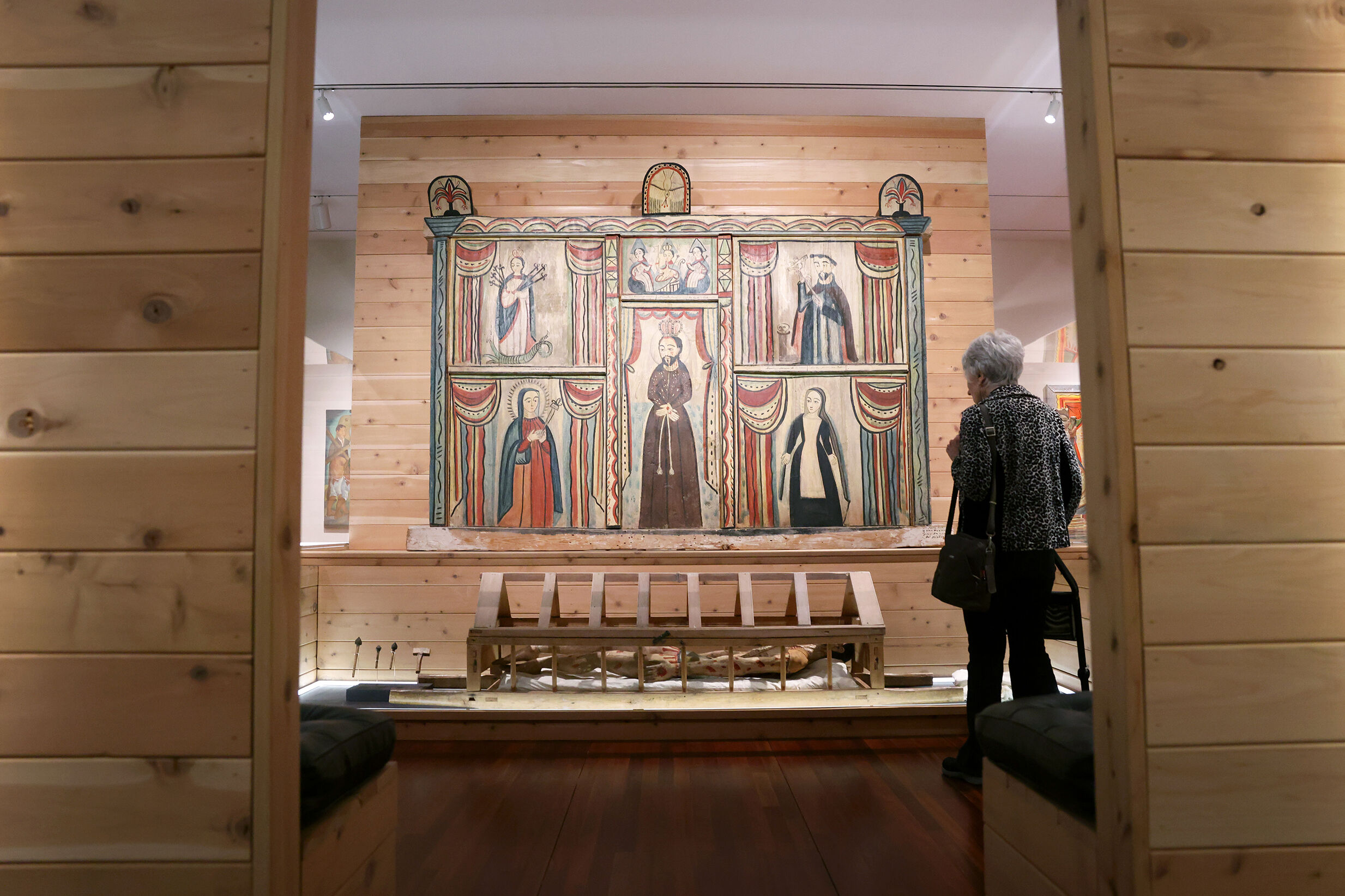
A numinous hush cloaks the Duff Gallery in “Gathering Place,” the new semi-permanent four-gallery exhibit at Colorado Springs Fine Arts Center at Colorado College.
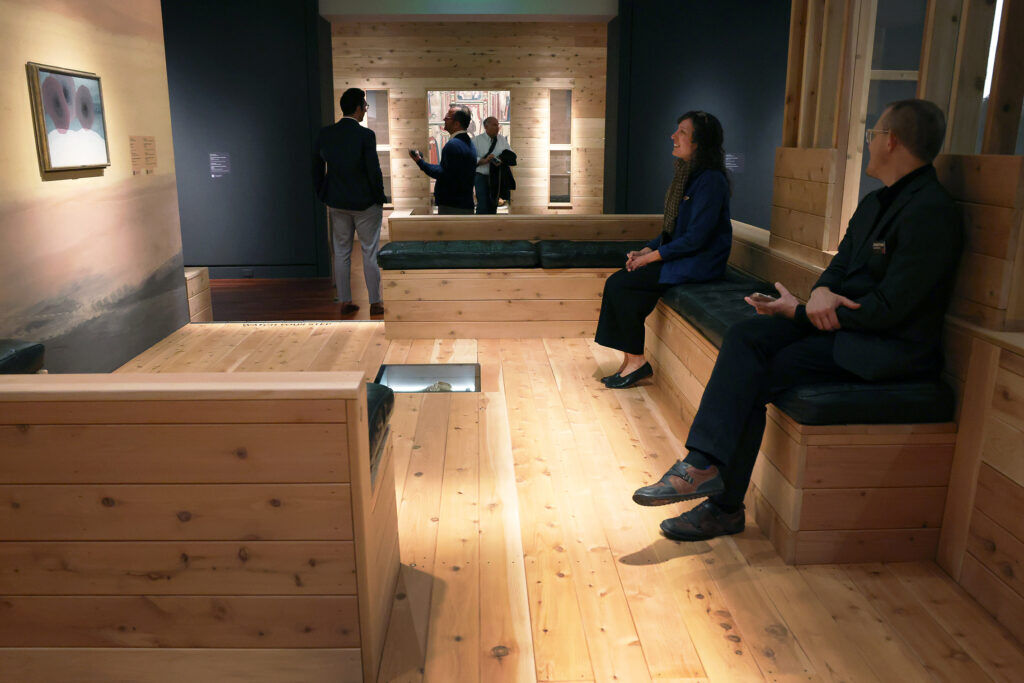
Church almost feels in session as you enter the “Sacred Expressions Across Culture” exhibit, and walk inside the large, newly constructed cedar enclosure in the center of the space.
Various santos (devotional objects) created by santeros (makers of santos) from New Mexico and Southern Colorado sit on shelves to either side of the enclosure. Before you is José Rafael Aragón’s undated “Casket for Entierro Cristo,” with his human-sized wooden figure of Christ in repose, his eyes shut, his body bloodied and resting in a wooden casket.
Behind the casket stands the large “Retablo mayor de la Capilla de Nuestra Senora de Talpa (Altar screen from the Chapel of Our Lady of Talpa),” also created by Aragón, who lived from 1796 to 1862. Constructed of pine, tempera and gesso, the almost 200-year-old wooden altar screen, painted with the visages of Christ as Our Man of Sorrows, the Virgin Mary, Saint Francis of Assisi, and the Holy Spirit, once lived at the Chapel of Our Lady of Talpa in Talpa, N.M.
The objects weren’t made as what we typically think of as art, says the gallery’s curator James Córdova, a longtime santero and art history professor at the University of Colorado. They were considered alive and sacred, and were treated like family.
In the gallery, he intended to show how New Mexican santos were meant to be primarily experienced in sacred spaces.
“We constructed an enclosure that speaks to that kind of space,” he said. “The enclosure isn’t sacred and isn’t meant to be, but it is meant to conjure that sense of conversation the santos had with their intended spaces, to create a sense of sacredness, to make the sacred present in the world.”
The santos featured in the gallery are just a small slice of the FAC’s passel of about 1,200, largely sourced from New Mexico and Southern Colorado. The significant collection is one of, if not the largest, collection of santos in the U.S.
“We have folks who see that as a resource for their art making or scholarly research, so we want to make sure we’re doing right by that collection,” said FAC’s Director of Visual Arts Michael Christiano. “I don’t know that that’s commonly understood about our collection, so we want to celebrate that.”
Córdova’s exhibit is one of four new exhibits in “Gathering Place,” a refresh of the first-floor galleries, which have historically been home to works from the museum’s 18,000-piece permanent collection. The previous “Art of the Southwest” and “Oh Beautiful: Shifting Perspectives of the Pikes Peak Region” exhibits, installed around 2017, are now back in storage.
Each new gallery is themed around a sense of place, identity and belonging that honors the Southwest arts and avant-garde roots of the longtime cultural institution, and features 150 to 200 fresh pieces from the permanent collection, some of which have never been on display.
“The driving impetus was to uplift the collection,” Christiano said. “We wanted to reprioritize how we present and care for the collection. We wanted to make sure we’re actively exhibiting the collection, caring for the works, and building relationships with the community whose works are represented.”
Curating the galleries
To create a curatorial model that was more expansive and inclusive, the museum invited four guest curators with experience and expertise related to the collection to organize three of the galleries, while the fourth was curated by the FAC team, including Christiano.
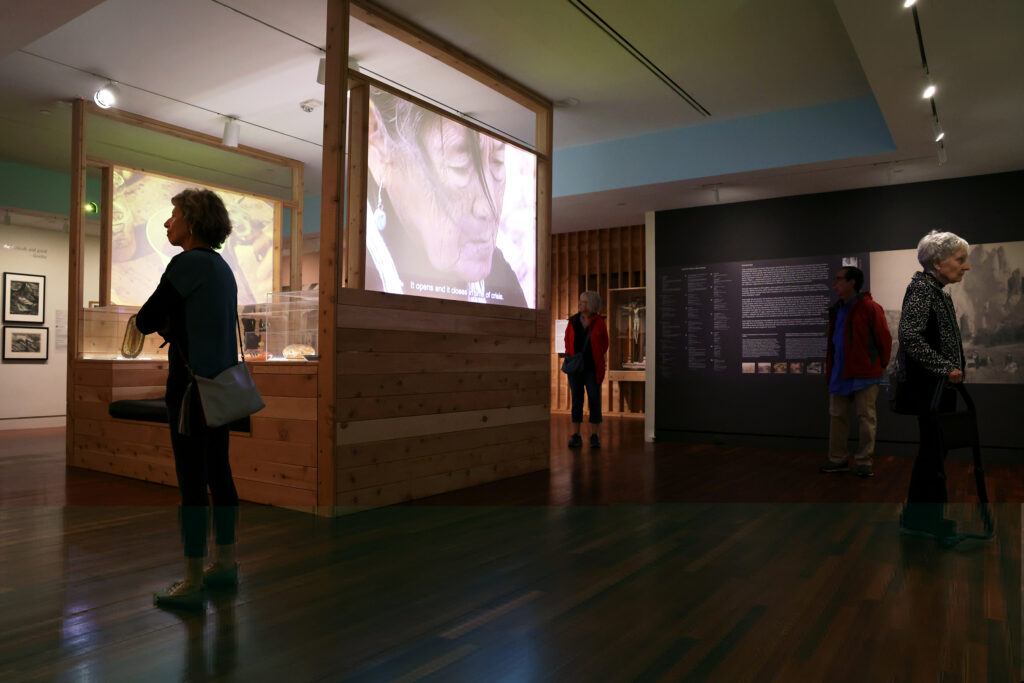
Artist Cassandra Atencio, a member of the Southern Ute Tribe, and artist and art historian Josh Franco partnered on the first gallery, “Where Am I When I Am Here?,” which explores how landscapes are represented and whose voices are centered in those depictions.
“We were thinking about who were the people who were here first?” Atencio said. “The invisible people. Where are you when you’re here? You think of the city, but there’s so much around us, like Garden of the Gods. It’s not thought of as a sacred space. Can it be called a special spot with so many people touristing on it? My people went in there and prayed.”
Córdova organized the second gallery, while Springs artist and educator Pat Musick’s “Cultural Ecotone” inhabits the third gallery, and parses the FAC’s evolution as a cultural meeting place for the avant-garde and Southwest arts.
“A lot of people who have not been to the FAC or grown up in Colorado Springs would be surprised to find out it was such a major institution nationally in the early to mid-20th century,” Musick said.
In the final gallery, the FAC’s “Movement” features contemporary artists who are expanding the history of the collection through themes of movement, migration and cultural exchange.
“We wrestled with the story in the contemporary space, in part because other areas of the collection were so specifically defined. Art of the Southwest was foundational to who the FAC was, and modern art was introduced largely as examples of Western fine art for the arts school at the FAC,” Christiano said.
“When it comes to contemporary, it becomes much more expansive. What struck us was how contemporary artists, particularly from the Southwest or who moved through the Southwest, were engaging in representing issues of movement in some way, shape or form.”
Paying homage
Musick’s gallery is based on ecotones, or transitional places where different life zones meet, such as the Pikes Peak region, where the species of the Rocky Mountains meet and mix with those of the Great Plains.
The FAC can be considered a cultural ecotone, Musick says, thanks to its three founding forces – Alice Bemis Taylor, Julie Penrose and Elizabeth “Betty” Sage Hare – who intermingled the art of the Southwest with Western American and contemporary American art.
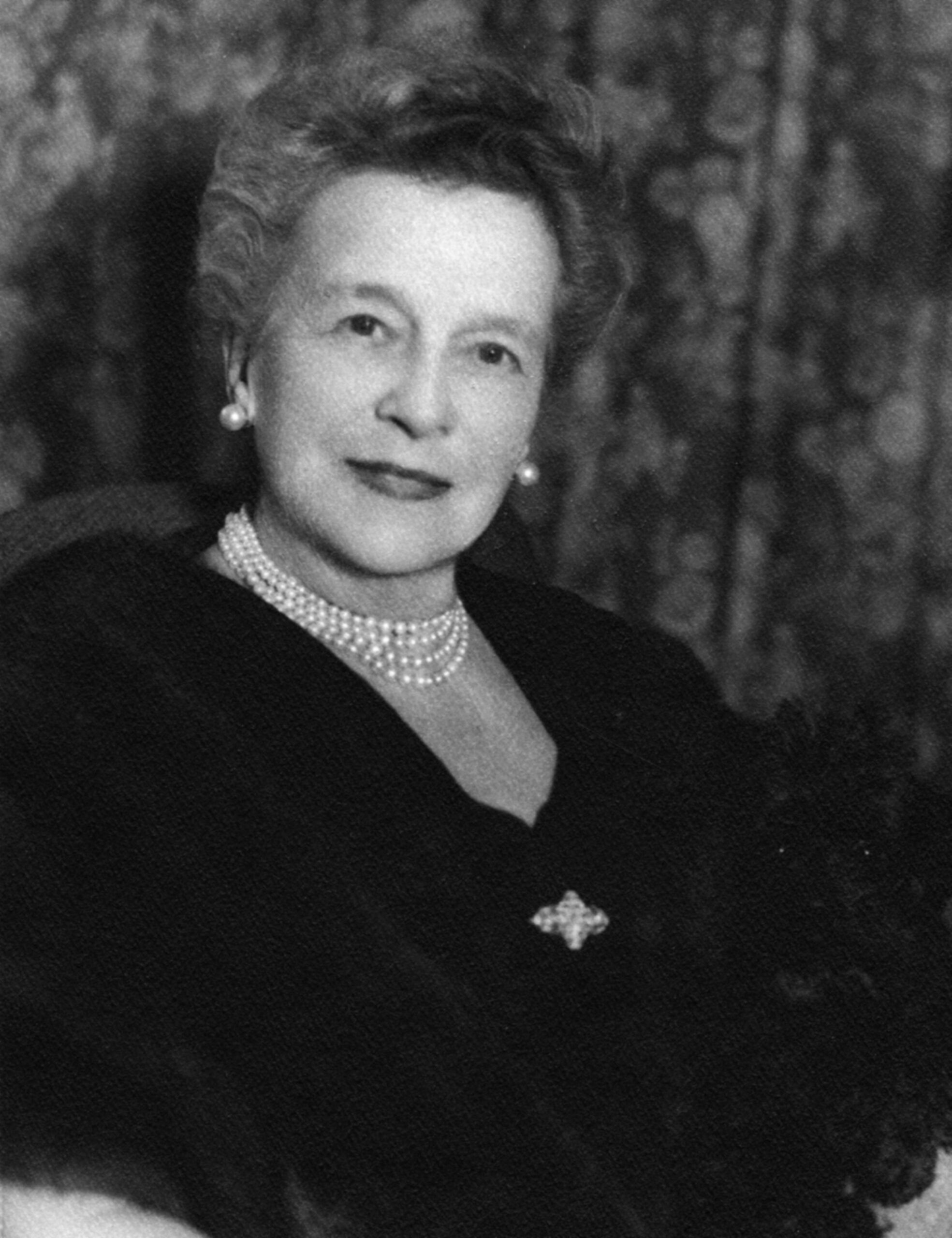
Penrose, whose husband was Broadmoor founder Spencer Penrose, reimagined the couple’s former mansion, at 30 W. Dale St., where the FAC is now located, into the renowned Broadmoor Art Academy in 1919, a school for famed artists from across the country and hundreds of aspiring students who hoped to study with them.
The academy attracted some of the biggest names in the art world, including Ernest Lawson, Francis Drexel Smith and Birger Sandzén. In 1930, nationally celebrated painter, lithographer and illustrator Boardman Robinson took over as head of the school.
One of those students was Musick’s famous painter and muralist father, Archie Musick, who studied under Robinson in the 1920s and ‘30s before it became the FAC in 1936. His undated painting, “Easter Sunrise (At Garden of the Gods),” hangs in the first gallery. Archie lived from 1902 to 1978.
BAM’s success encouraged Julie, Taylor and Hare to dream bigger, imagining one complex that housed an art school, galleries, theater, art studios, music rooms and a Southwestern museum. The BAA was razed, and in its place rose the John Gaw Meem-designed FAC, which opened to great fanfare, attracting the likes of modern dancer Martha Graham, who performed at its opening.
The BAA went defunct when its name changed, though art classes continued at the FAC School through the late 1940s. Robinson left in 1947, marking the official end of the BAA era, though famous lithographer Lawrence Barrett continued to work at the school, along with other nationally known artists.
The careers and development of the artists who studied at BAM in the ’30s might surprise people, Pay says.
“If people are aware of 1930s art, they see it as a regionalist style and representational and a particular kind of realism that most of the students did at the FAC,” Pat said, “but in their later careers, a lot of them went into total abstraction or in different directions. I tried to indicate that, as well. The training and attitudes they got at the FAC were not static.”
Inside the galleries
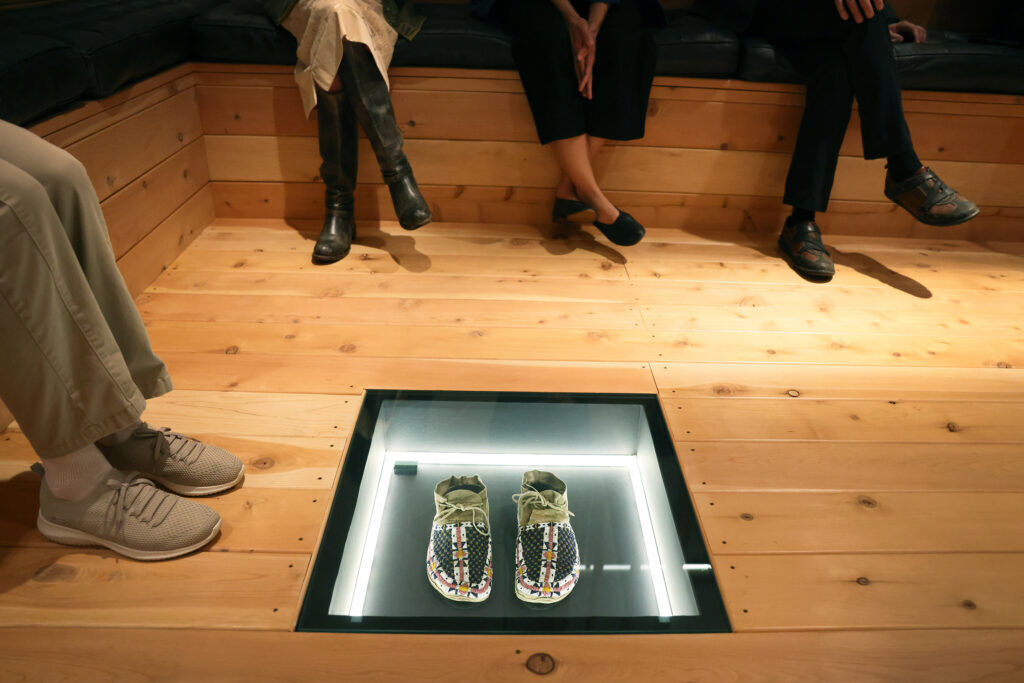
Treasures in all artistic mediums populate the galleries, some even built into the woodwork, such as Southern Ute and Springs resident Debra Box’s “Beaded Hide Man’s Moccasins” in the first gallery.
The beaded footwear, displayed in a glassed-in compartment on the floor of a new cedar enclosure, are intentionally paired with Arthur G. Dove’s 1929 oil painting “Fog Horns,” which hangs nearby.
“FAC staff were interested in pieces in conversation with each other,” Christiano said. “Cassandra and Josh wanted to pair these in part to invite people to consider that beadwork is as much a part of a creative tradition alongside someone like Arthur Dove working in the Western abstract tradition.”
Several films run continuously in the third gallery, including one of famed lithographer Adolf Dehn demonstrating the lithography process and one documenting the life of Robinson.
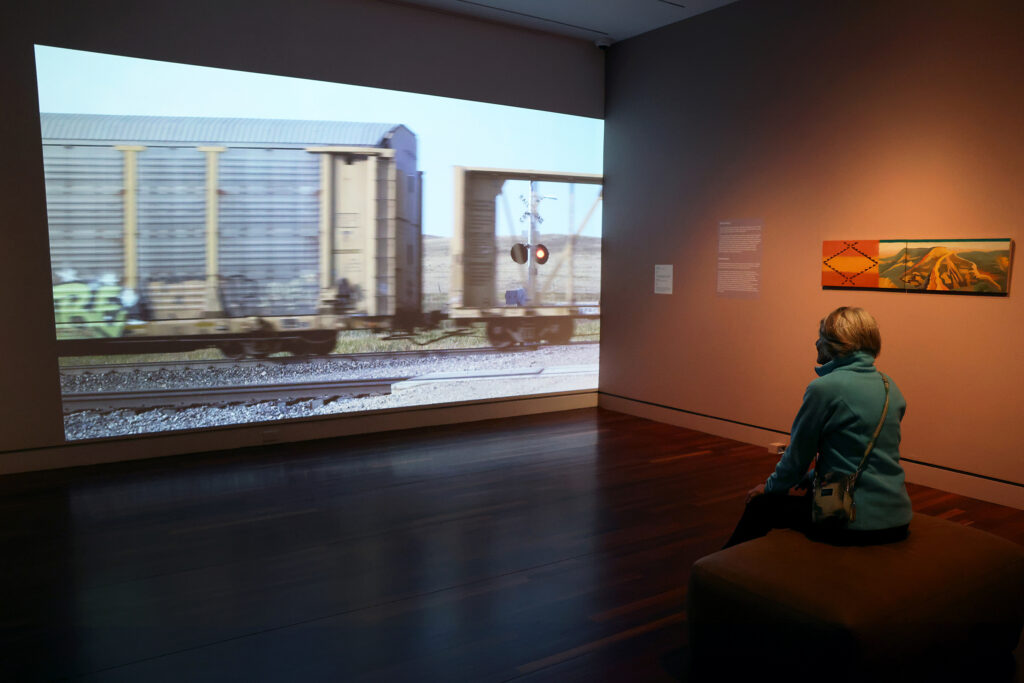
And at regular intervals, a train whistle and the chugging of a locomotive can be heard emitting from the “Movement” gallery, where a short film by performance artist Eiko Otake, who has performed at the FAC and in the Springs several times, captures the artist standing in a landscape and watching a train move through.
“It felt important to reference the trains because they were such a critical force in shaping so much of the Southwest, for better and for worse,” Christiano said. “Moving goods, moving people, creating economies. Also creating displacement. So much of what we know and understand as the Southwest was enabled through the train.”
Debra Box’s 1956 Painted Parfleche Envelope stands at the entrance to the “Movement” exhibit. Parfleche containers were essentially envelopes used by indigenous communities to move objects, often across the plains.
“It very directly invokes physical movement, and Deborah is a contemporary indigenous artist who’s working in a tradition, so it also demonstrates movement of processes over time,” Christiano said. “We wanted to make sure the work we presented by indigenous makers, in particular, that we’re never historicizing these works. These works are all part of a living creative tradition.”
In designing “Gathering Space,” it was important to not only select the works and shape the story, but also to present the works in a way that honors the intentions of the makers and the communities from which the works come, Christiano says.
“We’re also reflecting on the roots of the institution. You have folks like Martha Graham who performed at the opening, so there was this avant-garde impulse that was there from the beginning that sat alongside the art of the Southwest,” Christiano said. “These things have always been part of who we were, and we want to make sure we’re both honoring and reflecting and interrogating those things as we bring them into our contemporary moment.”
\\\\\\\\”Gathering Place,\\\\\\\\”10 a.m.-5 p.m. Wednesdays, Thursdays, Saturdays, 10 a.m.- 8 p.m. Fridays, Colorado Springs Fine Arts Center at Colorado College, 30 W. Dale St., $5-$10, free FAC members, students and teachers with ID and 12 and younger; 719-634-5581, fac.coloradocollege.edu