






Historic Preservation Board adopts historic survey | Cronin and Loevy
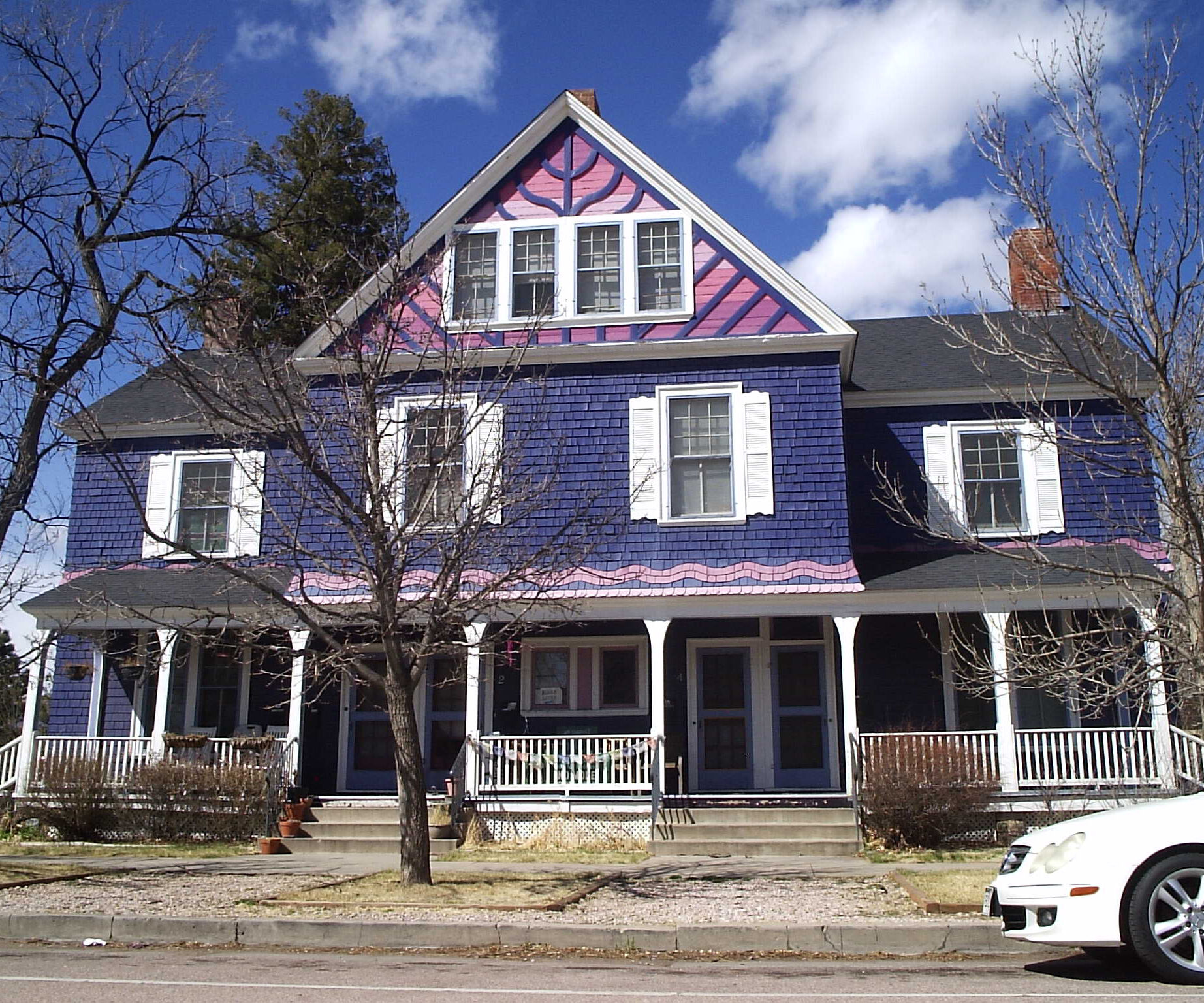
Historic Preservation is the process of identifying historic properties (homes, businesses, government buildings, etc.) and public facilities (parks, playgrounds, landscaped street medians, etc.) and then researching their histories and promoting their significance to the community.
A study of Historic Preservation in Colorado Springs has been prepared and was adopted last Monday by the city’s Historic Preservation Board. The study is entitled the Colorado Springs “Historic Resources Survey and Context Plan.”
It was prepared by Ron D. Sladek of Tatanka Historical Associates in Fort Collins.
One major conclusion of the study was that, to date, most preservation in Colorado Springs has taken place in six adjoining areas of the city. They are often referred to collectively as the Historic Corridor.
They are (1) the downtown area, (2) a neighborhood to the north of downtown called Historic Uptown, (3) the Colorado College campus, (4) the N. Weber Street-N. Wahsatch Avenue National Register Historic District, (5) Monument Valley Park, and (6) the Old North End National Register Historic District.
Smaller preservation efforts within these six include Boulder Crescent (five properties on the National Register) and the Parkside Historic Overlay Preservation District east of Monument Valley Park.
Outside the Historic Corridor in the downtown area, a major successful effort at Historic Preservation is the Old Colorado City Historic Commercial District.
Created in 1982, the Old Colorado City Historic Commercial District consists of 27 properties that are listed in the National Register of Historic Places. People enjoy shopping in this area of quaint old stores.
A major historic asset in downtown Colorado Springs is four multi-story office buildings that date from the Cripple Creek and Victor mining boom era from 1890 to 1910. All four are in good shape and actively used.
The office buildings are the Independence Building (built in 1898), the Cheyenne Building (1901), the Mining Exchange (1902), and the Exchange National Bank (1909).
Other historically significant buildings downtown include the El Paso Club (1891), the former El Paso County Courthouse (1903), the Acacia Hotel (1903), the Colorado Springs City Hall (1904), the YWCA Building (1912), the Art Deco Municipal Utilities Building (1931), the former Holly Sugar Building, now called the Wells Fargo Building (1966), and the Century Link Building (about 1970).
Two historic treasures in the downtown area are the two major railroad stations, both of which still look how they looked when they were active travel centers.
The former Denver and Rio Grande railroad station is located behind the Antler’s Hotel downtown and was recycled as a restaurant for many years. The Atchison, Topeka & Santa Fe railroad depot, on the east side of downtown near Shook’s Run, is now used as an office building.
The two railroad stations in Colorado Springs are excellent examples of how older buildings, which have outlived the original purpose for which they were built, can be fruitfully refitted and recycled for other uses.
The historic Uptown Neighborhood is located between downtown and the Colorado College campus. Many beautiful old homes from the Victorian era can be found there. A good example is the large home with a massive full-length front porch at 601 N. Cascade Avenue.
Colorado College could have applied for historic district status for the entire campus, as many colleges and universities have done. It chose instead to put a significant number of its most historic buildings individually on the National Register of Historic Places.
Colorado College has worked hard at getting historic restoration grants to fix up its major historic buildings. It also has purchased many older private homes adjacent to the campus and has restored them as near as possible to their original historic appearance.
As a result of these efforts, History Colorado in Denver has labeled Colorado College “the poster child for institutional historic preservation in Colorado.”
Two outstanding historic buildings at Colorado College are Cutler Hall and Palmer Hall.
Monument Valley Park, which contains Monument Creek, adjoins the west side of the Historic Uptown neighborhood, Colorado College, and the Old North End. It offers walking, jogging, bicycling, and enjoying a green and leafy outdoors.
The N. Weber Street-N. Wahsatch Avenue National Historic District extends north from E. Boulder Street to E. Del Norte Street. It is a pleasant mixture of both homes and businesses. There is not a strong homeowners’ association in this historic district, therefore nothing has been done in recent years to further enhance its historic character.
The Old North End neighborhood north of Colorado College was built during the Cripple Creek and Victor boom years. It thus contains many large and ornate homes built with profits from the nearby gold mines.
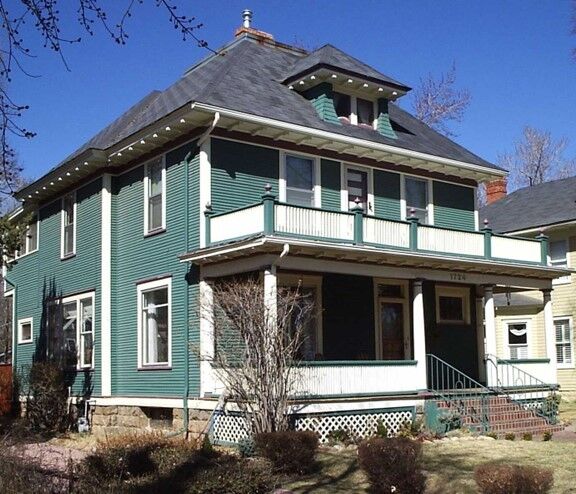
In 1982, the Old North End was designated a National Register Historic District. The neighborhood subsequently developed design guidelines and historic preservation overlay zoning by the city of Colorado Springs.
This led to the installation of district-defining street-name signs, historic-profile streetlights, and six large stone entryway signs into the neighborhood. Three books have been published about the neighborhood’s history, architecture and preservation.
Outside the Historic Corridor from downtown to the Old North End, there is basically only one form of historic preservation in Colorado Springs. That is individual property owners doing the research and writing to place their individual home or business or institution on the National Register of Historic Places.
This list is eclectic. It includes the Colorado Springs Airport. Also listed is the abandoned right-of-way of the old Colorado Springs and Cripple Creek District Railway, now known as the Gold Camp Road.
Also on the National Register of Historic Places outside the Historic Corridor are Evergreen Cemetery, the old Midland Terminal Railroad Roundhouse, the Navajo Hogan (up for sale), North Cheyenne Canyon Park, the Pauline Chapel, the Satellite Hotel, and the Shrine of the Sun.
This study of historic resources in Colorado Springs makes several suggestions for future actions. First is creating more National Historic districts and designations in the city, mainly because Colorado Springs has a limited number of historic districts and designations compared to other cities the same size.
Also suggested was making it easier for people to indicate their property is historically significant. Creating historic districts and getting a property on the National Register can be an expensive and time-consuming proposition.
So, it is recommended that Colorado Springs adopt a landmarking program. A property could be designated a historic landmark by filling out an application showing that the property met the requirements for landmark status.
Landmark status could be based on architectural and historical significance, the historical importance of people who lived on the property, or because a property is typical of a historical architectural type.
Tom Cronin and Bob Loevy are news analysts who write about Colorado and national politics.
