A man and his castle: A dream come true for Woodland Park resident

WOODLAND PARK • At the far end of a typical street, hidden in a typical neighborhood of typical homes, stands a structure that is anything but typical.
It’s a relic from a now distant childhood. It’s a nod to an enchanting era of a former homeland. And it’s a testament to one man’s imagination and determination.
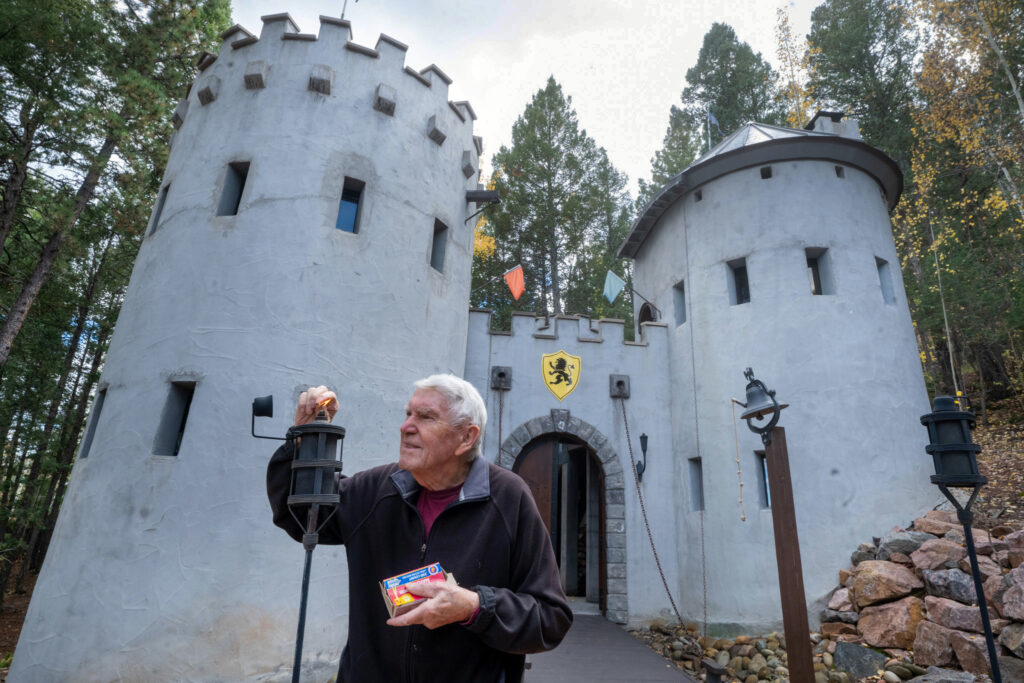
Meet Hermann Beeh, and marvel at his concrete castle.
Born and raised in a small German village, Beeh, 87, is no stranger to castles.
His native country is known to encompass more than 25,000 castles, according to U.S. News & World Report. One of the more famous is Neuschwanstein Castle, the inspiration for the iconic Disney logo.
But Beeh is careful to explain his castle is not the type to house Sleeping Beauty and Prince Charming in the vein of many a German-style palace; rather, his castle takes its form after a burg — a medieval-style fortress designed for protection.
Framed by four turrets, the castle overlooks a picturesque log, a matching guesthouse and an idyllic property chockful of color and whimsy.
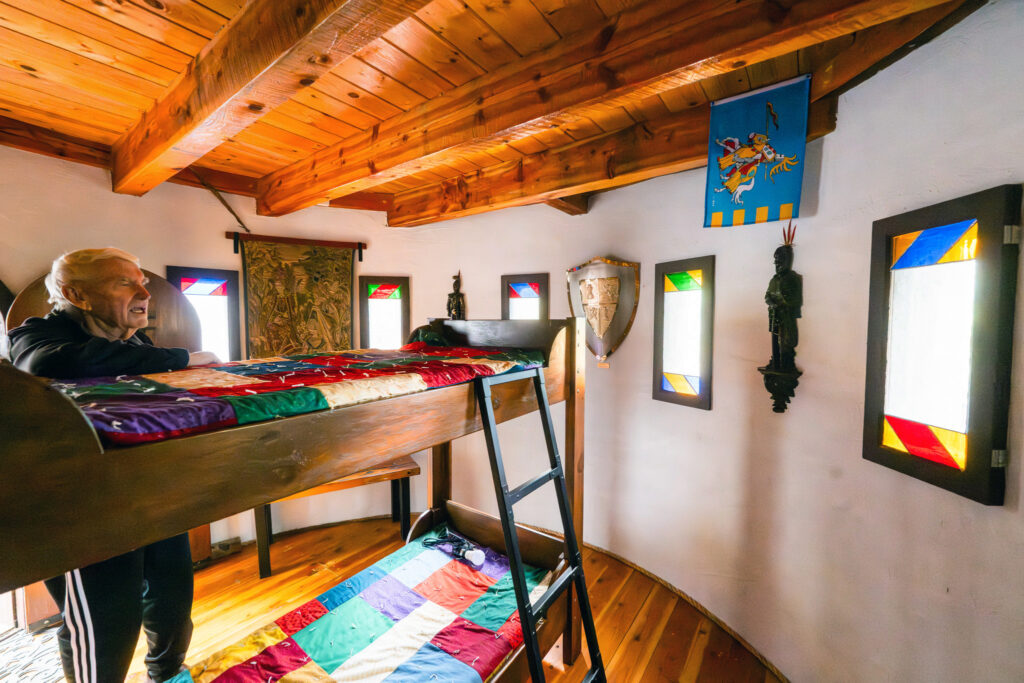
Beeh built pretty much everything in this fairy-tale-like oasis, stamping each creation with his initials and the year in which it was completed.
There’s the gnome village he crafted and displays under a canopy of towering trees. There’s the coop where he used to house chickens and a pheasant. There’s the two-story doghouse where his Akita once lived.
“Some people who come, their kids run around and want to see if they can find my initials,” he said.
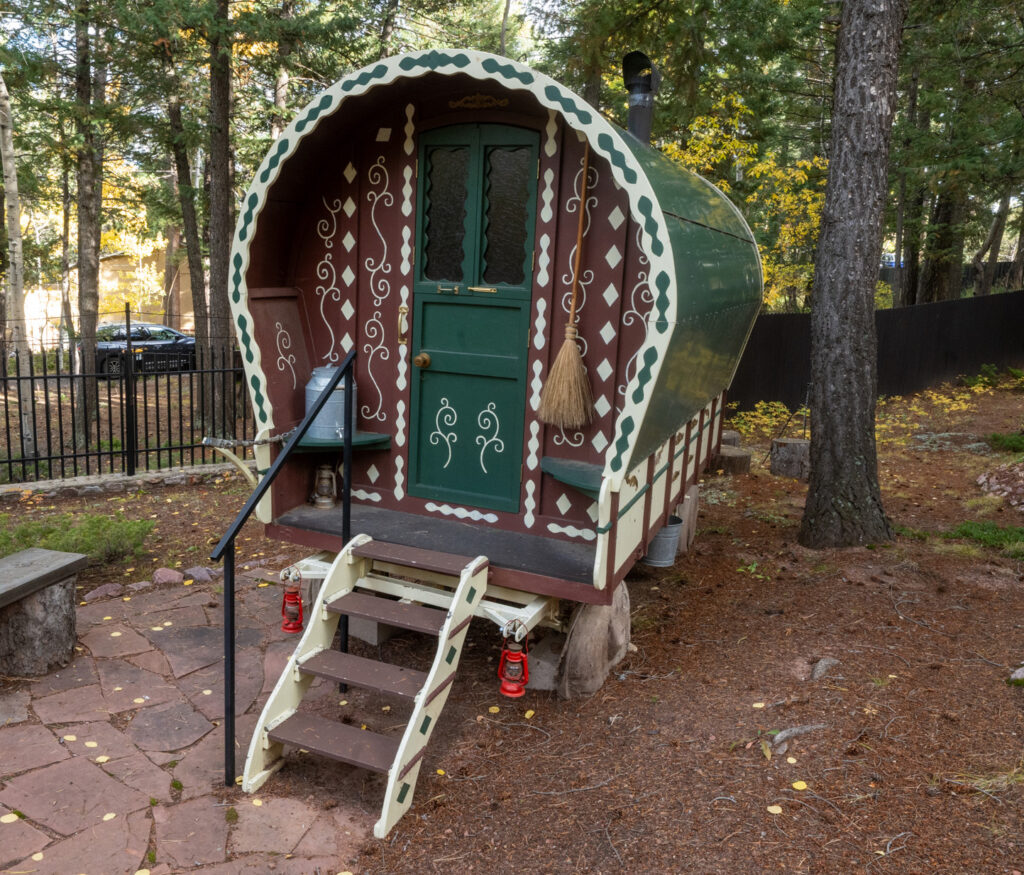
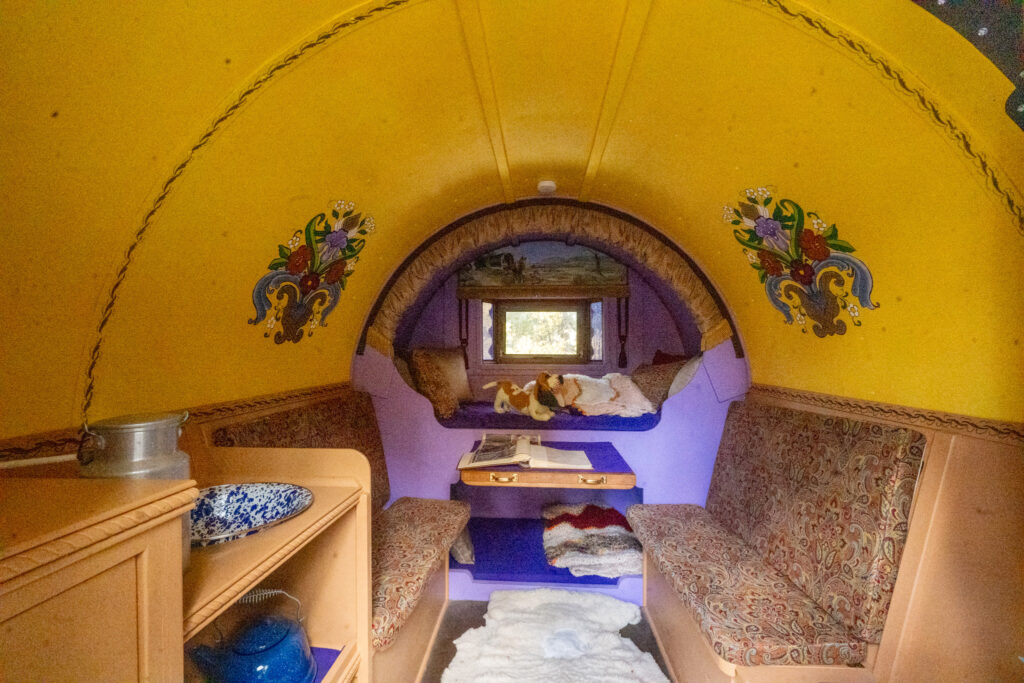
They can find “HB” in the Gypsy wagon, modeled after a postcard depicting the Irish folk-style versions of the 1800s.
“When I was a kid, the Gypsies came around three times a year,” Beeh said. “They usually sold pots, pans and sharp knives from house to house, and they lived up in the woods there.”
As a teenager, Beeh began apprenticing as a tool and die maker, a trade that would become a career and eventually help him fulfill the dream to build a castle.
Upon finishing the apprenticeship in 1957, Beeh moved to the U.S. — a 19-year-old full of ambition.
“Everyone wanted to come to America,” Beeh said. “I came here to see cowboys and Indians.”
And he came to escape the painful memories of the Nazi regime.
“A lot of bad things happened,” Beeh said.
But his childhood also had plenty of good times, with plenty of good people. That’s why he chose to focus on a simpler time in Germany — the age of castles.
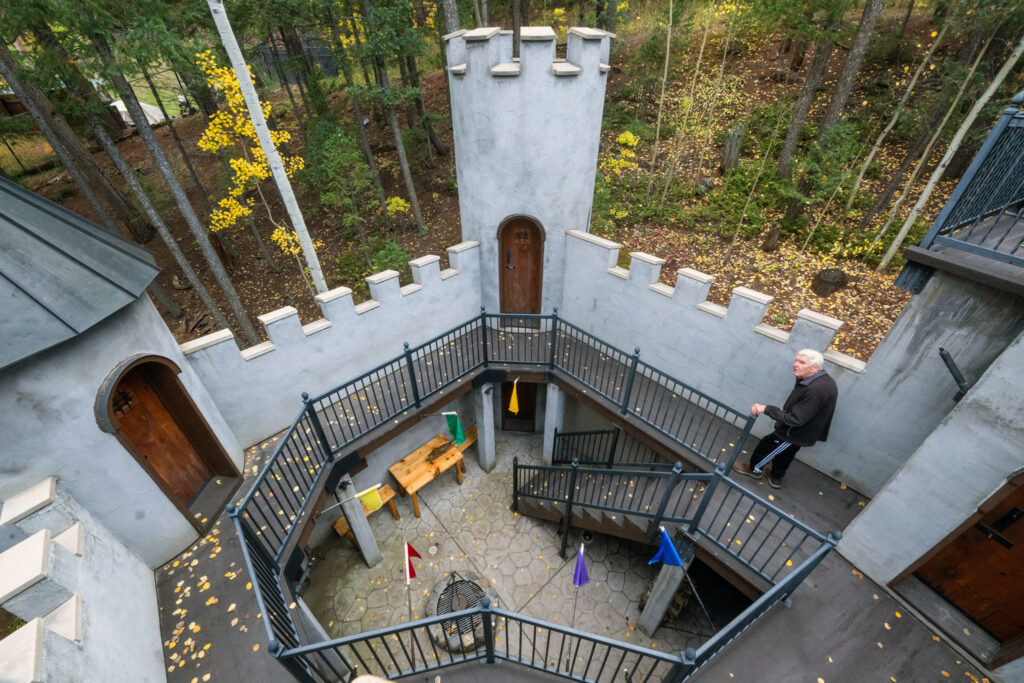
Fortifying the entrance to his castle is a drawbridge over an empty moat. Inside the courtyard, a firepit serves as the central spot for intimate get-togethers.
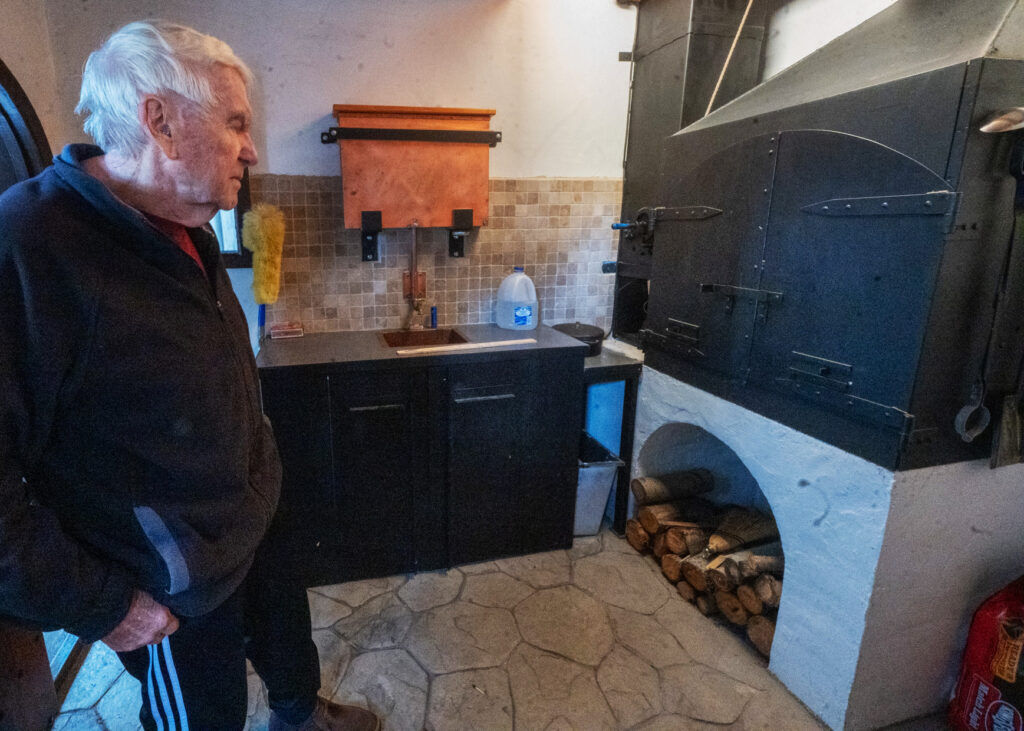
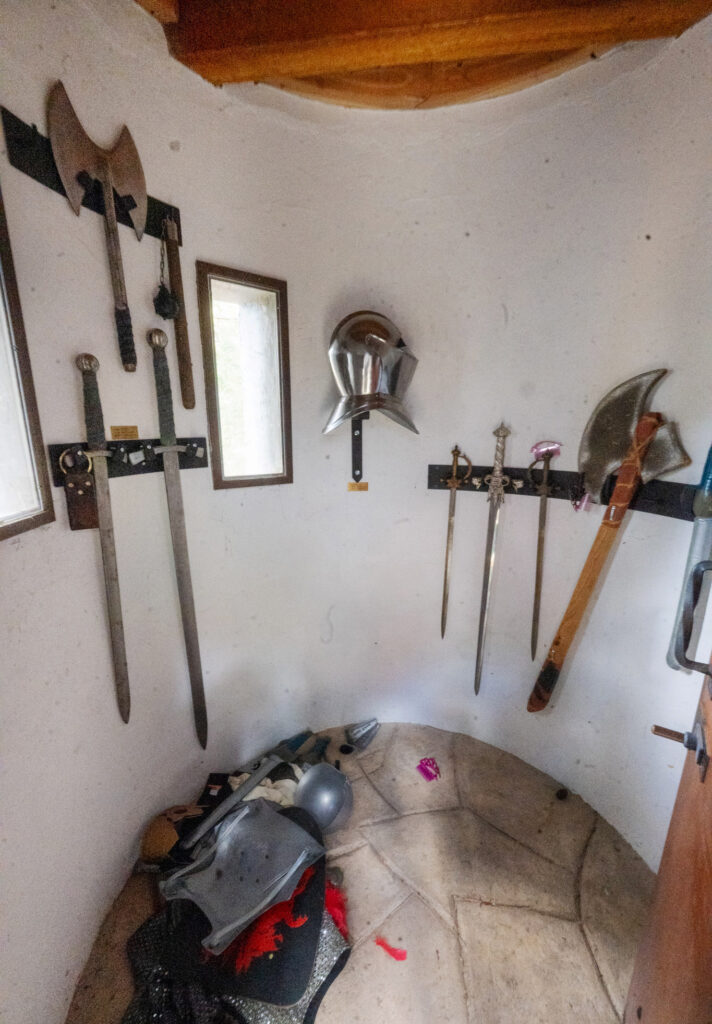
Each tower of the multilevel castle boasts small rooms, from the kitchen equipped with a wood-burning oven and dumbwaiter to the wine cellar with chalices from the gift shops of authentic European castles to various other sitting rooms and bedrooms furnished with beds, chairs and tables crafted by Beeh.
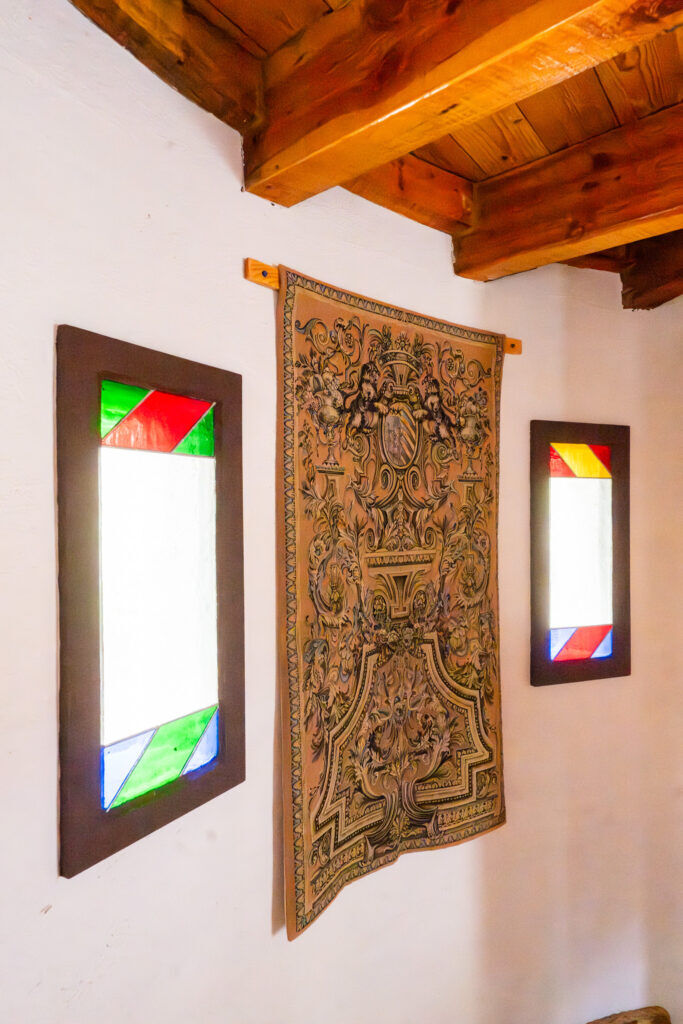
In one tower, stained glass windows accent a chapel, with the childhood Bible of Beeh’s wife sitting atop an altar framed by candles. A cross hangs above.
Another tower features a purple bedroom where Beeh’s niece painted the words “Mein Traum,” translated “My Dream” from German.
There’s even a medieval bathroom since the castle lacks running water. There’s no electricity either, with light designed to come only from torches and lamps.
The project, which took him a decade to complete, is something of which Beeh is proud, but now seems almost bittersweet after a diagnosis of macular degeneration three years ago.
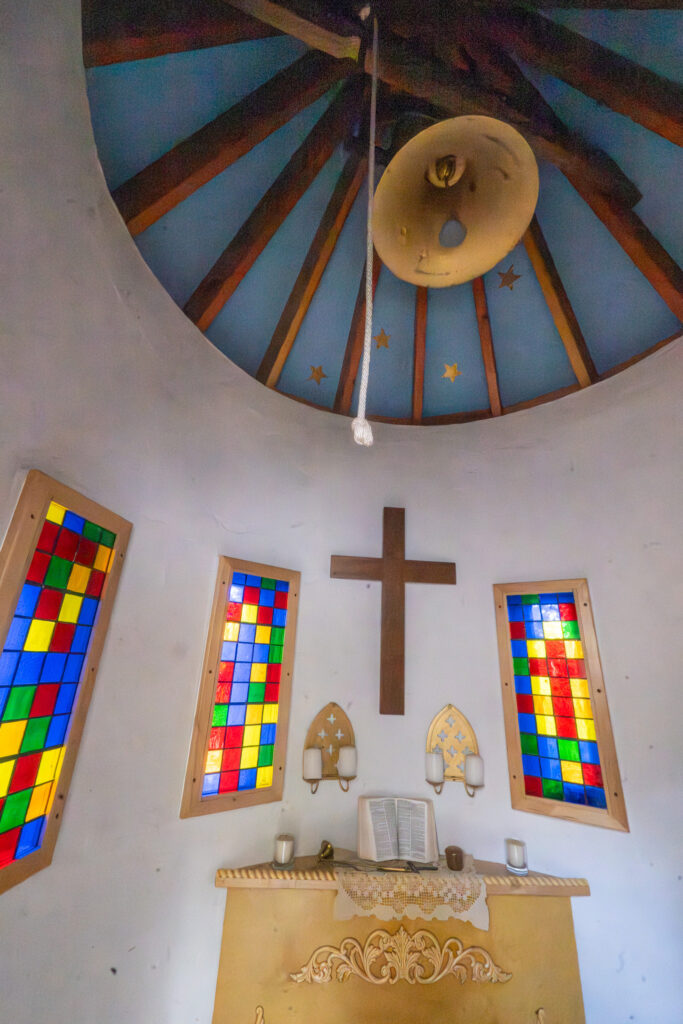
“I got done everything I wanted to get done,” Beeh said. “I feel really good, but now I cannot see it.”
These days, he mostly uses the castle as a spot to watch the bats that live in its shadows and fly at night.
“My dream was always to have a little castle,” Beeh said. “Finally, my dream came true.”