






Rural radio stations in Colorado navigate the loss of Corporation for Public Broadcasting
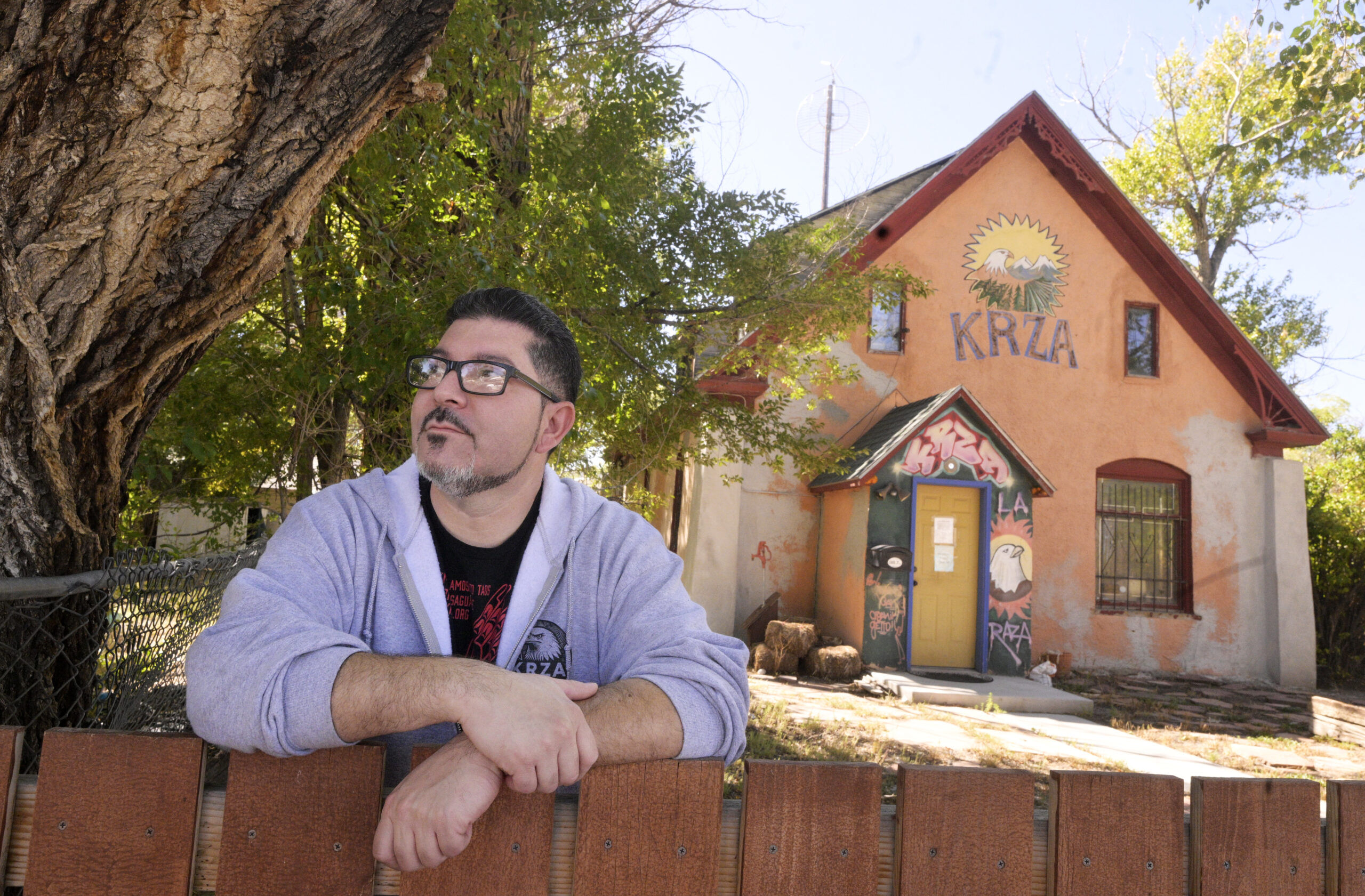
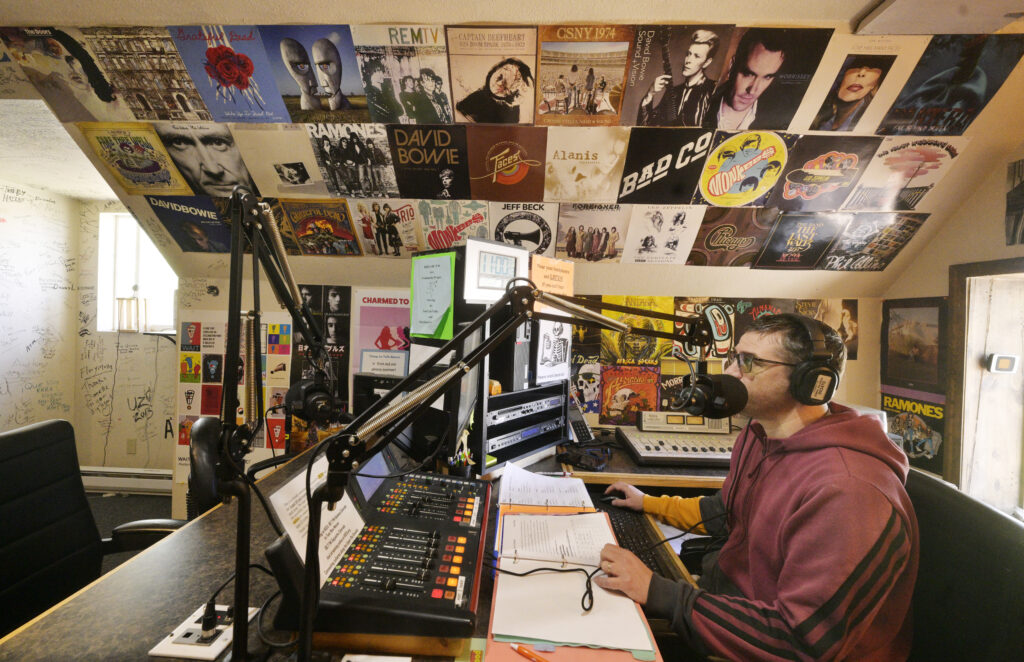
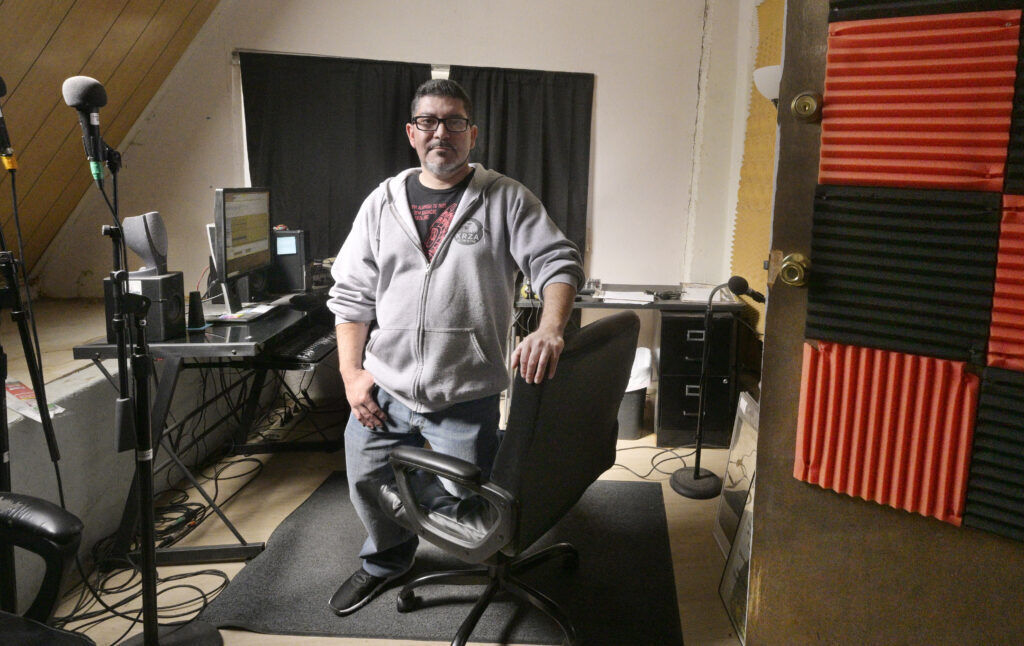
ALAMOSA • Gerald Rodriguez, station manager at KRZA, Alamosa’s public broadcasting radio station, plopped into a desk chair before quickly jumping back up to tend to another task, a cycle he repeats for more than nine hours a day, six days a week.
This is what his shifts have looked like for almost two months, Rodriguez said, since the passing of President Donald Trump’s public broadcasting claw-back bill on July 24.
Under Trump’s recissions package, known as the NPR and PBS Act, $1.1 billion was eliminated from the Corporation for Public Broadcasting, forcing the organization that funds more than 1,500 public networks to close its doors as of Sept. 30.
Trump and his allies in Congress insist they are pursuing more political balance on the nation’s airwaves. The president called NPR and PBS’s programming “radical left monsters,” while the White House dismissed CPB’s programming as “woke propaganda disguised as news.’”
Rodriguez’s KRZA, which serves a small population across the San Luis Valley that is largely cut off from other free local news, received over 50% of its annual budget of $300,000 from the CPB, and without it, the station may have to close its doors.
“I never thought this would ever happen,” Rodriguez said. “Even when they were talking about (voting on the bill), in my head, I was thinking, ‘It’s not going to happen, right?’ But it did. And it’s like a nightmare, seeing all of the worst things that could happen, actually happen.”
To prepare for the deficit of over $150,000, Rodriguez said KRZA will need to cut its programming and staff costs.
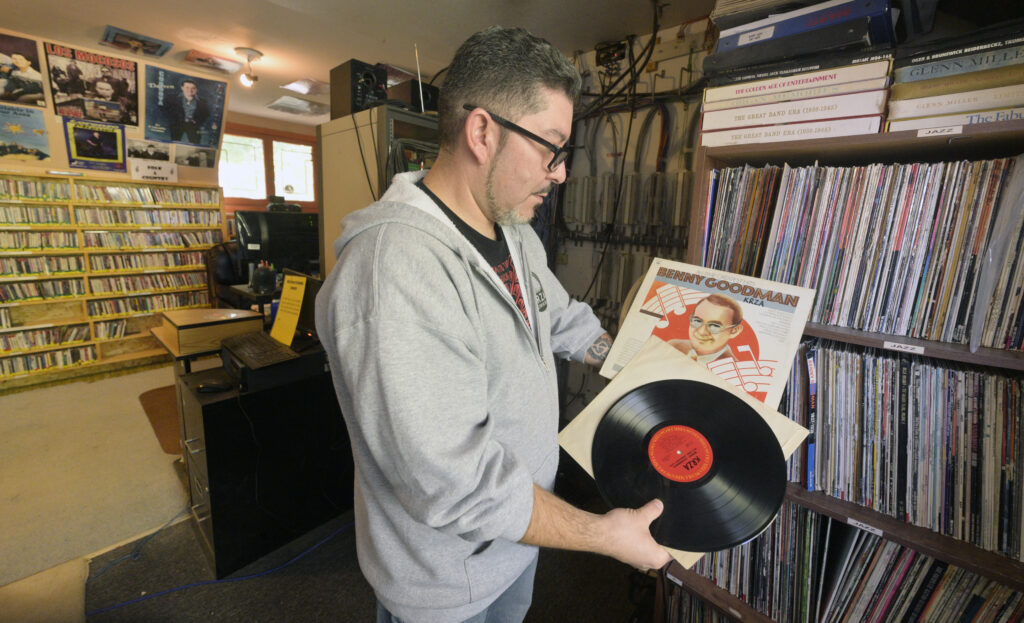
Since the bill was signed into law, the station has let one longtime employee go, leaving a three-person staff, and it has also cut two NPR programs. Rodriguez says he can imagine a future in which the station could be forced to cut all its NPR programs, relying on independent broadcasting, such as DJ hours in the studio and partnerships with other stations through broadcast websites.
Independent broadcasting websites cost the station an annual subscription fee of around $2,500 for access to hundreds of programs, a fraction of their total programming budget of $50,000. Rodriguez says he is aiming to cut the programming budget by $30,000, incrementally, over the next year or so by eliminating some number of their nine remaining NPR programs, each of which can cost up to $10,000 annually, depending on program and frequency.
Cutting NPR programming would be disappointing, Rodriguez said, but not as disappointing as closing the station altogether.
“If we don’t cut that programming, I could see us closing doors by the end of next year,” Rodriguez said. “At the end of it all, if worse comes to worse, I’ll be the last person there running around, doing everything just to stay alive.”
Beyond cutting programming and staff, Rodriguez said he has been making money-saving efforts for years. To save a few dollars here and there, Rodriguez has trained himself to be a contractor, completely renovating the station; an engineer, fixing any equipment when it breaks; and a man who fits into any role, acting as a DJ, a manager, an executive director, a programming planner and more.
Donor events, fundraisers and marketing are a must for the station to avoid more cutbacks, and Rodriguez says he hopes he can get the attention from a major philanthropic group offering support. But really, what would save the day would be an emergency fund like the one public broadcasting networks received during the pandemic, Rodriguez said.
As a part of the Coronavirus Relief Bill, the CARES Act, public broadcast networks through the CPB in 2020 received $75 million to help them stay afloat in an economically tumultuous time.
Rodriguez’ KRZA got a relief package of $100,000 from the bill, and he says that something like that would be lifesaving, though he knows the federal government will not be saving the day any time soon.
“Our goal is to hang on as long as we can until something gets reversed or somebody finally realizes how much this is affecting people,” Rodriguez said. “Maybe not the government, but a big foundation or something.”
KRZA serves an area of over 1,200 square miles, reaching all the way to Taos, N.M., and though the land mass is there, the population is mostly ranchers spread across vast swaths of acreage — not dense enough to keep the station alive on donor support alone, as is possible in more metropolitan areas.
The threat to larger stations
KCME, Colorado Springs’ public broadcast jazz station, meanwhile, received only about 10% or $100,000 of its annual budget from the CPB. General Manager Stephanie Horton says the loss of funding will hurt every station under the CPB, but KCME will survive for at least another year before the pressure is on.
KCME was among the CPB funded stations that received the pandemic relief package, and Horton says she invested every penny of that COVID grant. She estimates that the investment funding will keep the station afloat for two years, and in the meantime, they have launched campaigns to attract new donors.
“We can only go back to our current donors so many times. They are giving what they can, so we really need to bring new donors on board. Our biggest strategy right now is new monthly giving,” Horton said. “We’re not in crisis mode today, but we certainly have a lot of work to do. We will have to do the work to keep our full funding.”
While stations that relied on the CPB for their funding needs are all impacted by the loss of the broadcasting corporation, larger organizations in metropolitan areas including Colorado Public Radio are feeling fortunate to have more of a safety net.
Stewart Vanderwilt, president of Colorado Public Radio, said though the organization has historically received about 10% — about $1.5 million — of its annual budget from the CPB, they will figure it out and continue on.
“Colorado Public Radio isn’t going anywhere, period,” Vanderwilt said. “We just feel bad for the little guys.”
KRCC, Colorado Springs’ NPR network, operates under the aegis of Colorado Public Radio, so the station does not receive direct funding from the CPB. As long as Colorado Public Radio stays afloat, so does KRCC, Vanderwilt said.
Around Colorado
Telluride, far from being a major metropolitan area, has a big enough population in its ski and vacation rooted economy that the town’s public network, KOTO, is feeling the love of the community, Executive Director Cara Pallone said.
“The outpouring of support has been incredible, and we are beyond grateful for the way the KOTO community shows up time and again, especially because KOTO is non-underwritten and operates almost entirely on listener’s support,” Pallone said.
KOTO is, of course, threatened by the closure of CPB, Pallone said, but listeners are stepping up.
Telluride’s station received about 25% or $190,000 annually from the CPB. To make up for this deficit, donors have increased their monthly giving, and Pallone shaved about $100,000 from the budget without cutting any programming or staff.
“We already run a pretty tight ship, as a non-profit, but my team and I went line-by-line through the budget and were able to shed over half of the deficit,” Pallone said.
In doing this, she said the station is going back to its “roots,” creating community in Telluride.
Every year, KOTO organizes and advertises dozens of events meant to engage with and introduce new listeners to the station, including their staple events that listeners look forward to each year: the annual Ski Swap and the annual End-of-Season Spring Street Dance.
To save money, the station will still organize these events, Pallone said, but they will do so on a smaller budget.
“We can still have these iconic events that KOTO has produced for years and years, but we might not be ordering the $5,000 stage, we might just be putting the band on the street, and people will understand. Our community will understand,” Pallone said.
Located in Ignacio, KSUT has a similar close-knit, community-serving relationship with its listeners. Station Manager Tami Graham values her community and listeners so much that she is gambling over $50,000 for their safety on a weather transmitter that could save her listeners in a time of crisis, she says.
KSUT was founded in 1976 by the Southern Ute Tribe and serves five southwest Colorado counties, four native tribes, and parts of New Mexico and Arizona, serving a population of over 250,000 people, but where many residents still effectively live off the grid.
“A lot of very rural areas, especially tribal communities, still don’t have great broadband access or reliable cell phone service,” Graham said.
Public radio in these areas serves as much more than just entertainment, she said. It also offers crucial, potentially life-saving services.
“It’s really important in times of emergencies like wildfires or flooding that people really know they can turn on the radio and get live info from their public radio station and immediate updates on what’s happening in their community,” Graham said.
KSUT has historically received 20%, about $330,000, annually from the CPB, Graham said. On Oct. 1, the station is supposed to receive half of this, as part of its biannual grant. But that check may never arrive, she acknowledged, due to the CPB’s closure.
With their biannual grant of around $165,000, the station had planned to buy a “next generation” FEMA emergency broadcast system with a price tag of around $50,000.
By purchasing the emergency weather transmitter, Graham says the station is taking the risk of having to pay for it themselves if no reimbursement comes through. However, she said her community needs and deserves it, so they are taking the gamble.
“Emergency weather alerting should not be a partisan issue, especially in rural communities,” Graham said. “We might have to just cover it ourselves, but there’s also the chance that we won’t,” Graham said.
Graham has found comfort in the influx of unexpected support that the station has received, including over $60,000 from new donors in just three weeks after the bill that resulted in CPB’s closure.
“We’ve had people say, ‘Well, I live in Chicago. I know my station’s going to be just fine, but I want to give you guys some support,'” Graham said. “That’s been pretty remarkable.”
The $60,000 in donations doesn’t cover the lost $330,000 from CPB, but Graham is hopeful that donors will stay active and that support for public media will return.
“People really rely on these stations in rural areas, and I’m hopeful that moving forward, in another administration, a new Congress, funding might be restored for public media because it is a public service,” Graham said.
Congress follows Trump
President Donald Trump’s decision to cut $1.1 billion in already approved funding from public media was announced with a May 1 executive order.
The so-called “Ending Taxpayer Subsidization of Bias Media” order called for the Corporation for Public Broadcasting to defund NPR and PBS due to “bias portrayal of current events” by network outlets.
Trump initially scrutinized what he perceived as PBS and NPR’s political bias during his first presidency, and proposed a bill in 2018 to defund the CPB, but that bill was blocked by the Senate.
Partisan controversy surrounding NPR’s alleged bias surged in 2024 following an essay by former NPR editor Uri Berliner, which accused NPR of having a progressive bias, causing the “loss of trust” by Americans.
In April, Trump posted on his Truth Social account, “Republicans must defund and totally disassociate themselves from NPR and PBS, the radical left monsters that so badly hurt our country.”
Shortly after, he issued the executive order calling for the CPB to defund the two networks, and when the corporation refused, Congress amended and passed the Recissions Act of 2025, or the PBS and NPR act, at a vote of 51-48, with only two Republicans voting against the bill which resulted in CPB’s closure.
One of the Republican’s who voted against the bill, Lisa Murkowski of Alaska, said it went against the well-being of her communities.
“Not only would a large portion of Alaska communities lose their local programming, but warning systems for natural disasters, power outages, boil water advisories, and other alerts would be severely hampered. What may seem like a frivolous expense to some has proven to be an invaluable resource that saves lives in Alaska,” Murkowski said in a statement.
Republican Sen. Roger Marshall of Kansas said public broadcast stations are near obsolete in his state because of the growth of technology since the CPB’s founding.
“In today’s world, I haven’t met a person who doesn’t have a phone and access to news and weather,” Marshall said during an interview with CNN. “If those stations want to stay open and they can make it, I wish them the very, very best … (but) I think this is one of the nice things we can do without.”
The House then passed the amended act which rescinded $1.1 billion in funding for the CPB.
Speaker Mike Johnson said that he was proud to be apart of the passing of the recissions package.
“I just signed our H.R.4, which is our recissions package, the first of what we believe will be multiple recissions packages,” Johnson said to Fox News after the bill passed. “This was directed to wasteful spending … the Corporation for Public Broadcasting … We looked at that, we thought it was a waste of taxpayer funds, and we ‘re taking care of business.”
PBS also takes hit
Rocky Mountain PBS, the PBS TV network serving the entire state of Colorado and beyond, is not going anywhere, either, President Amanda Mountain said, despite pressure from the Trump administration.
“We’ve been around for nearly 70 years, serving the people of Colorado. We’re the largest membership organization in the state with over 107,000 members in every county in Colorado,” Mountain said.
“We fully intend to step into the gaps and beat this moment in a way that keeps Colorado’s access to free public press abundant.”
Though confident about surviving the loss of 10% of funding, about $3 million of RMPBS’ budget, Mountain is still mourning the loss of the CPB. She says the closure of the corporation hurts smaller stations much more than well-known broadcast networks like PBS and NPR.
“It’s devastating to see an almost 70 year old institution shut down, virtually overnight. This is a huge loss for our country and a huge loss for our free press. In many ways, I think we’re all mourning that loss,” she said.
Philanthropy steps up
On Aug. 18, the Public Media Company, a non-profit organization that financially supports public media and independent journalism through the support of mostly philanthropic donors, launched a Public Media Bridge Fund initiative in response to CPB’s closure.
The Bridge Fund initiative focuses on funding rural and at-risk stations nationwide that received more than 30% of their budget from the CPB, and has a fundraising goal of $50 million by the end of 2025.
One day later, on Aug. 19, seven philanthropic organizations, many of which have been longtime sponsors of public broadcasting, pledged to donate $37 million to the fund in support of rural media, according to one of the donating organizations, the Knight Foundation.
The Knight Foundation, along with the MacArthur Foundation, Ford Foundation, the Schmidt Family Foundation, the Robert Wood Johnson Foundation and Melinda Gates’ Pivotal pledged the multi-million-dollar donation as part of their effort to save local journalism.
“We are proud to join this emergency funding effort to get additional resources to public media at this time of great need. We all must continue to support public media and develop new and innovative strategies and funding mechanisms for the long-term sustainability of this critical resource,” Darren Walker, president of the Ford Foundation, said in the Knight Foundation’s announcement of the pledge.
If these big names are able to secure funding to keep rural public broadcasting stations afloat, stations like KRZA would have a fighting chance of surviving.
Until that money comes through, Rodriguez will be busy at work, doing everything in his power to keep Alamosa’s history that lives through KRZA alive.
“Giving up is not an option,” Rodriguez said. “I’ll still be here.”
