






Final, hopeful journey is underway for Colorado tarantulas
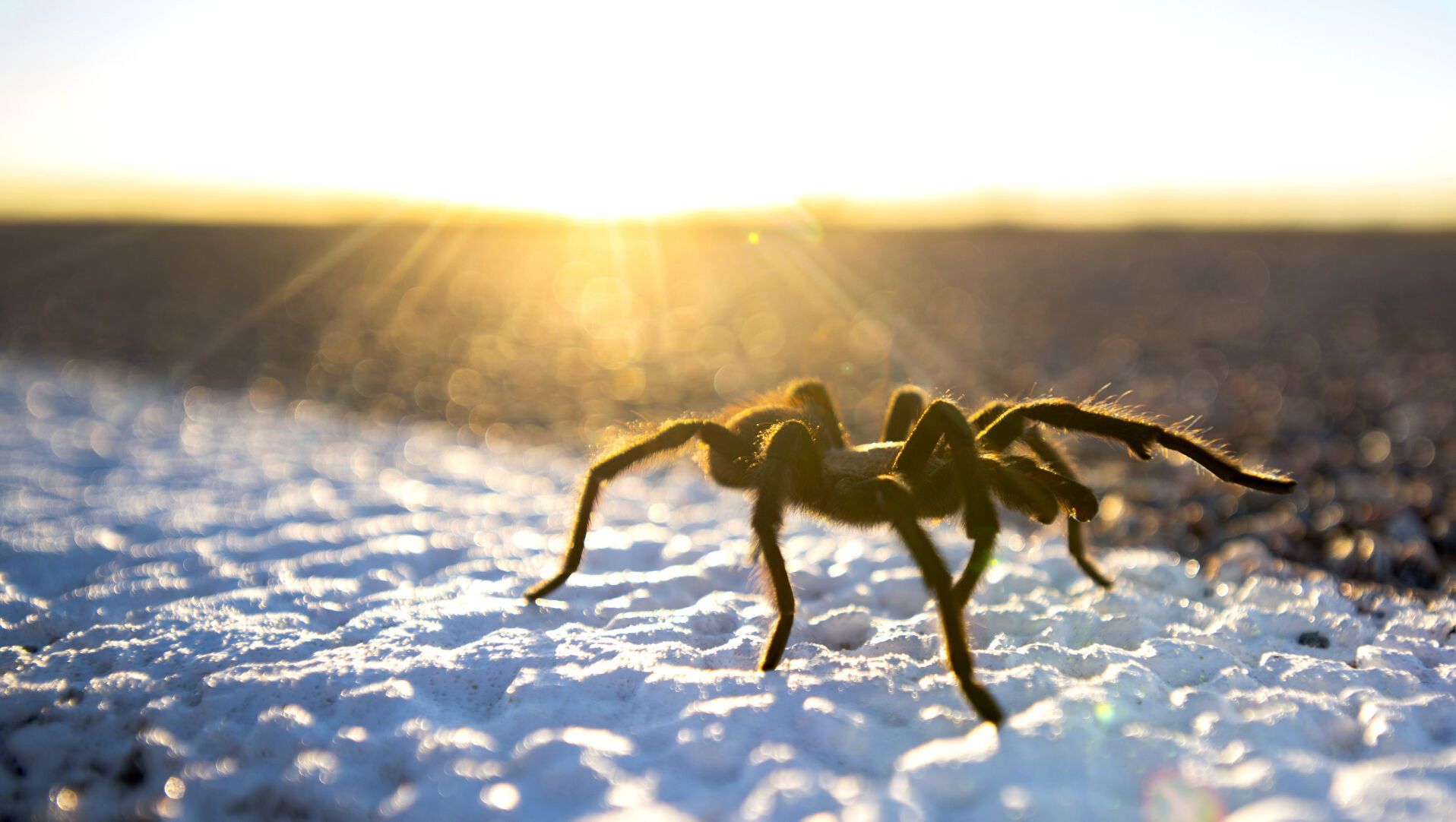
Editor’s note: This story has been updated. Graduate student Spencer Poscente and adviser Cara Shillington from Eastern Michigan University are studying the tarantulas in southeast Colorado.
A fact, fun or not depending on your reaction: like other nocturnal animals, some spiders have eyeshine.
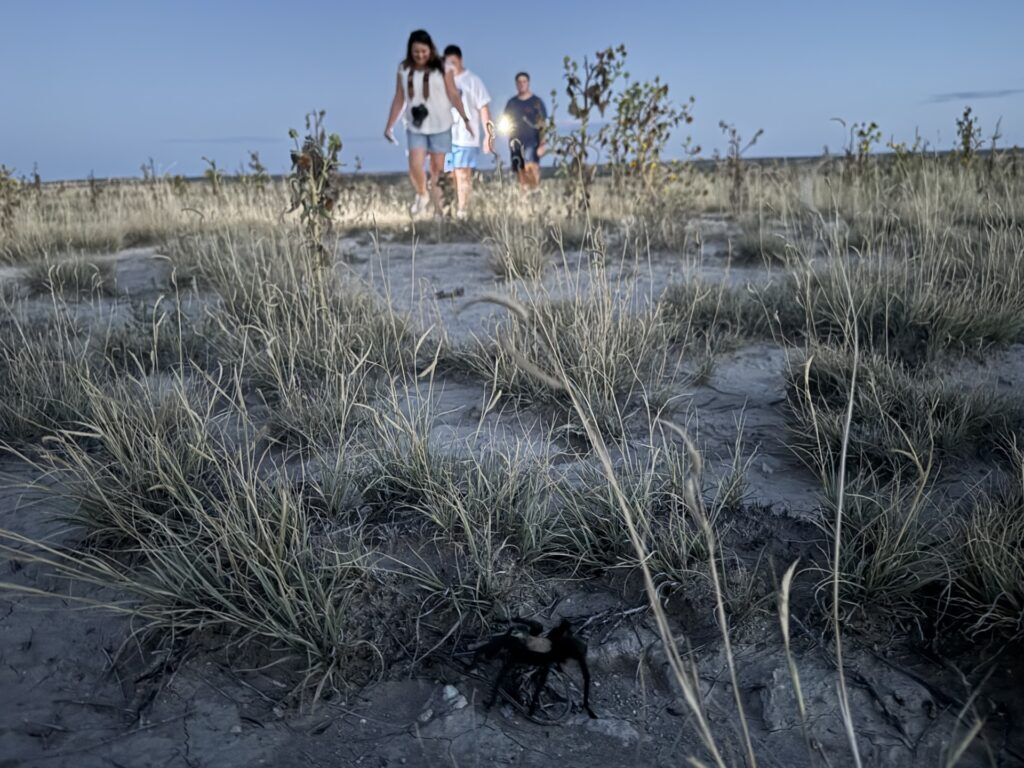
Tracking a flashlight around open prairie in the Comanche National Grassland just as the sun set, Tiffany Steiner was trying to catch a reflection in the lens of those tiny eyes.
The wildlife photographer from Parker said a wolf spider is likely to be looking back upon closer inspection, but the sought-after star of the show that night was the brown tarantula. The fuzzy arachnid is the ambassador of the nearby town of La Junta, which is celebrating an annual frenzy of tarantula activity at a festival this weekend.
Steiner and her friends, April Lahr and her sons Connor and Jacob, were early spectators for the creepy-crawly alternative to Rocky Mountain National Park’s elk rut.
For a few weeks at the end of September and the beginning of October, the grasslands in southeast Colorado are host to a race against time for male tarantulas to find mates. After spending most of their lives hidden away in burrows, the spiders reach maturity — and a crisis.
Even for a tarantula raised in captivity, this is the end of the line. A male spider won’t live beyond about three months as senescence, essentially biologically programmed death, begins to take hold.
“They just cash out at the end of the season,” said Eastern Michigan University graduate student Spencer Poscente.
Poscente and his adviser Cara Shillington, an EMU biology professor and longtime tarantula researcher, are in the middle of one of their seasonal trips to the grassland to catalog data.
This time, Shillington and Poscente are hoping to learn more about the last journeys of male tarantulas. Despite their popularity as pets, tarantulas are not well documented in the wild.
For example, a male tarantula can live 7 to 8 years in captivity, while females have been documented living into their 20s and 30s. Is it the same for spiders in the wild?
“We know very, very little,” said Shillington.
Life gets terminally dangerous for male tarantulas this time of year, and they aren’t just victims of biology. The otherwise shy creatures are determined to get somewhere, crossing open prairie and roads, ignoring the potentially trampling feet of tarantula tourists. Tarantula hawk wasps threaten a particularly terrifying end: paralyzed, buried and eaten from the inside out.
Shillington is hoping in this expedition to gather data on how fast and how far the male spiders can travel during this period. She said environmental conditions like temperature and humidity can play a big role.
Last year, the EMU researcher observed the annual mating season during a drought. Spiders like tarantulas get around using hydrostatic pressure — kind of like a hydraulic pump to move their bodies instead of muscles. No water in the environment posed a problem.
“These guys were decidedly wobbly,” Shillington said.
In an era of prolonged drought conditions for the American Southwest, it’s not hard to imagine impacts on tarantula populations. Shillington can also document destruction of tarantula habitat through human development in her other research sites like in Oklahoma. Without data, however, mapping the effects of the human world on the arachnid one is difficult.
“The only way to know that is to have long-term monitoring, and that hasn’t been done,” said Shillington.
The scientific world may not give tarantulas very much love, but the town of La Junta certainly does. Tarantula Fest is underway, with guided bus tours full due to overwhelming interest, according to the La Junta website.
This Friday Shillington could be found taking a break from her research site to give talks about tarantulas at Woodruff Memorial Library and Otero College.
“We really appreciate the interest in these animals,” she said.