






Fort Carson starts testing new Army-wide communications system
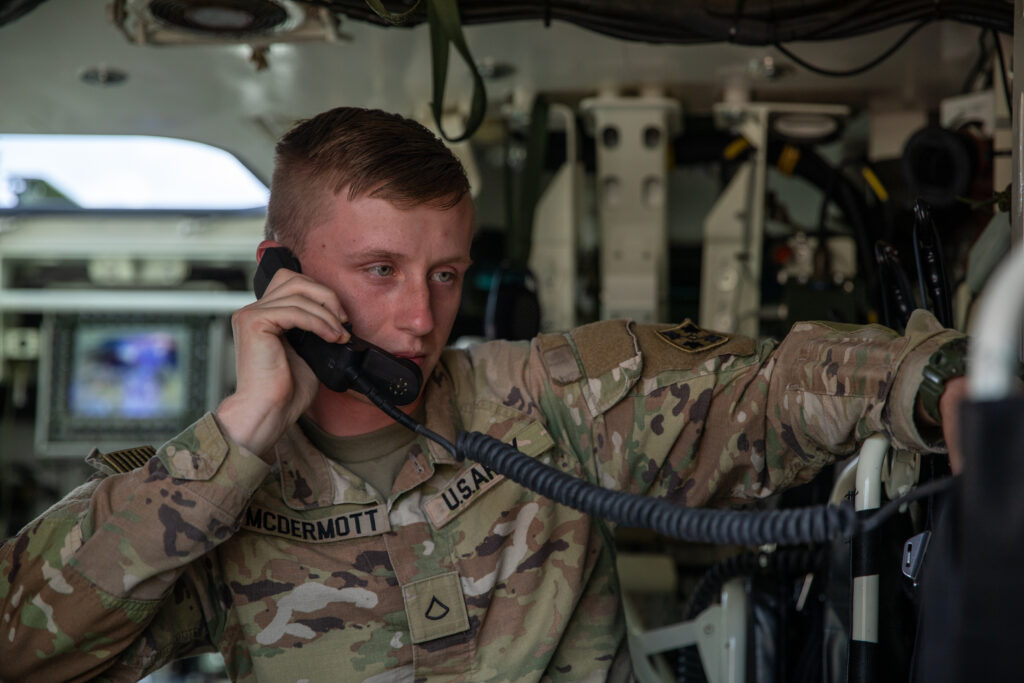
When two M777 howitzers fired at Fort Carson Wednesday the blasts were identical, but the computer systems behind the explosions were decades apart in sophistication.
One from 1995, still used across the Army, carries a name matching its clunky nature. The Advanced Field Artillery Tactical Data System is slow to reboot, taking 45 minutes at times, and has numerous points of failure, soldiers explained. Its replacement, the Artillery Execution Suite, was the system behind the second blast and provides a long-needed update and much faster reboot time.
Similar updates are also planned across other legacy computer systems as the Army builds a single modern IT foundation for all of them, known as the the Next Generation Command and Control System. The sweeping upgrade will allow the Army to purchase new software and hardware, such as radios, computers and smart phones as needed that can plug into the system.
The new system is expected to help soldiers move faster and stay safer as information is automatically shared across groups, explained Col. Charlie Brown, commander of the 4th Infantry Division Artillery. In the case of firing a howitzer, all the soldiers connected to the system will be able to see which gun fired, what it hit, how much damage happened and how many munitions were consumed.
“The more real time data you have, the safer you are,” he said.
The system is now in the prototyping stage and Fort Carson is hosting the civilian contractors who are working directly with soldiers on the system that will be rolled out across the Army, said Gen. Patrick Ellis.
“We all here feel it very acutely, the pressure to make sure that we get this right, not for any glory, personal glory or unit glory. It’s actually because we know that our brothers and sisters are going to have to use whatever it is that we help build out here,” he said.
The time is right for an upgrade because Army senior leaders recognize that existing systems don’t work as well as needed and the Army is welcoming a generation of soldiers who are tech savvy, he said. The Army granted Anduril Industries a $99.6 million contract to lead the prototyping work and integrate technology from other companies, according to a news release.
“If we want to be effective on the modern battlefield, we got to make some pretty significant changes pretty quickly,” Ellis said, noting he recently found a radio more than 20 years old still in use by the 3rd Armored Brigade
For several years, the Army has been restructuring to prepare for large-scale war again, informed by lessons from the battlefield in Ukraine, where weapons such as drones are more autonomous through software and electronic communications are ever more contested.
The new command and control system will allow messages to travel over different paths, using a 5G cellular network or radios. It’s a critical piece of the system that Ellis expects will be thorough tested across a division at the National Training Center in California next summer.
“We’re going to be jammed. We’re going to be monitored. We’re going to be detected, and we can go back and then help the Army make informed decisions,” he said.
The new system will also allow for more soldiers to use far more software applications including some written in-house by soldiers, Ellis said, likening that part of the system to the app-store on a cellphone.
The testing at Fort Carson started with artillery because the decision of whether to fire a weapon with shells weighing about 100 pounds and the power to blast a hole in a building filters through groups that decide the best target and the best weapon system to use along with ensuring the air space is clear. The necessary interactions with so many critical layers made it a good place to start, Ellis explained. Each one of those groups can also expect upgrades through the new system to help with decision making through artificial intelligence.
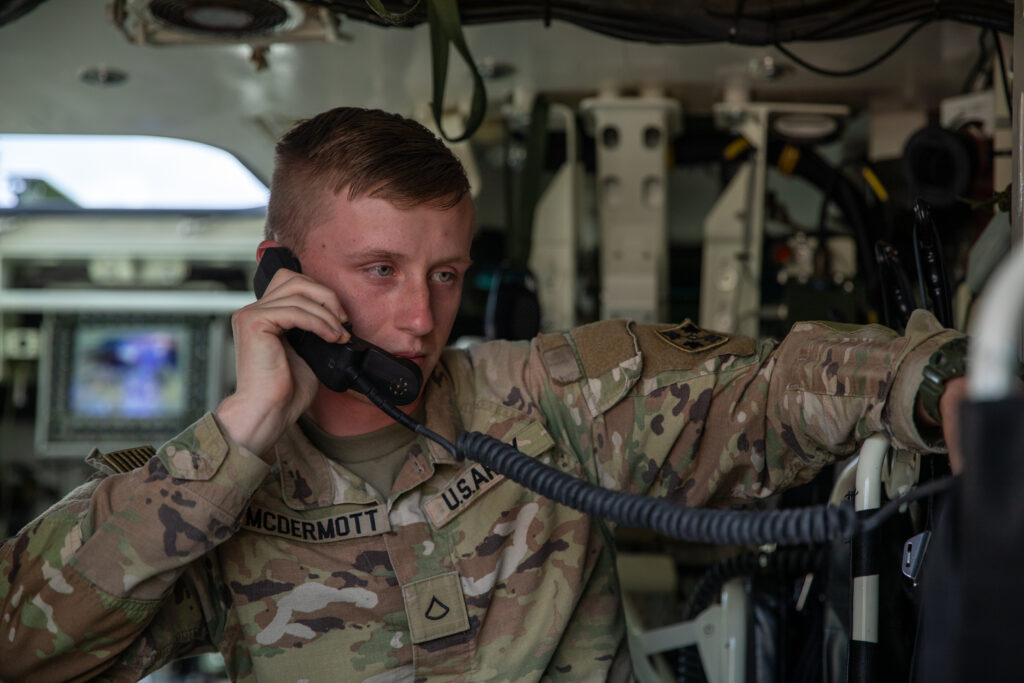
Fort Carson will be hosting regular testing events in the coming months as it works to develop the new command and control system.
The upgrades are expected to help manage vast amounts of data in a large-scale conflict where all of the 4th Infantry Division’s artillery could be brought together in one place.
“When you think of mass, you tend to think of those World War II artillery sieges, where you had 10,000 guns on one side, all shooting at the same time. We can replicate that effect, but just distribute it all over the map,” Brown said, describing the anticipated role of artillery.
Lt. Col. Dana Lafarier, commander of the 2nd Battalion, 77th Field Artillery Regiment, also noted he expects even as the battlefield changes with increased use of drones “artillery will always be king. It’ll always be the most mass producing casualty effective weapon on the battlefield.”
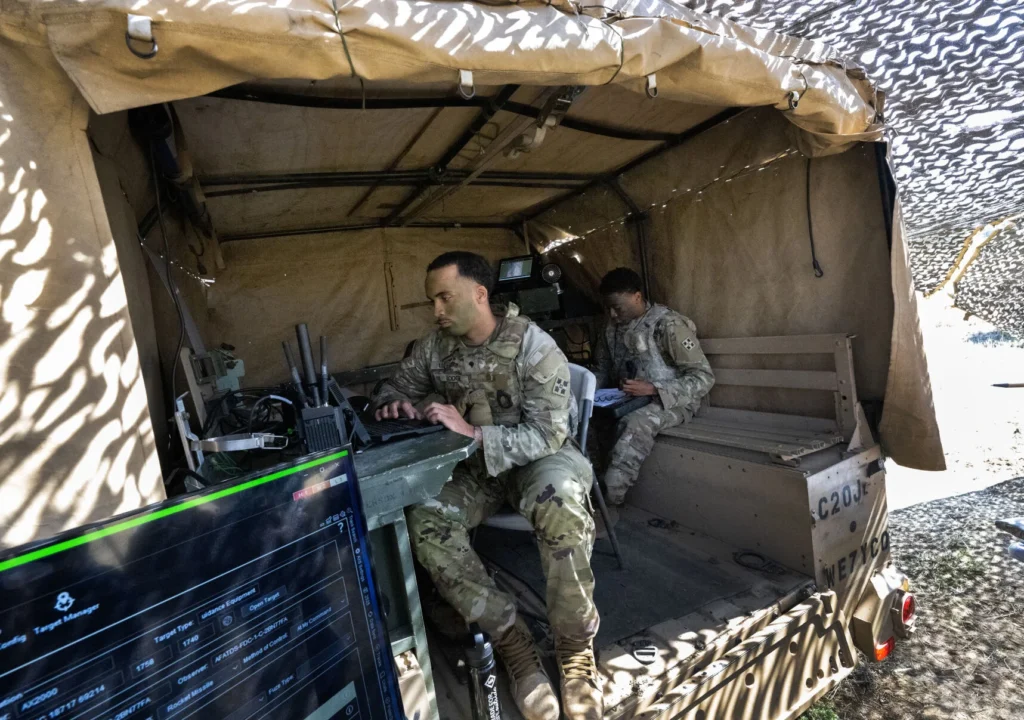
To manage that firepower, the Artillery Execution Suite helps soldiers running it from the back of a truck as part of the Fire Direction Center turns targeting information into precise directions for directing the howitzer barrel, said 1st Lt. Aidan O’Dowd, with the artillery regiment.
The software produces 3-D graphics that show whether the explosive shell will land where it was intended, he said. It’s also much easier to identify problems.
“We’re already really impressed with it. … I think that our biggest gripes with the legacy systems are exactly what this is addressing,” he said.
