






Monument-based Tech7 and its ‘sherpas’ win $489 million contract with a focus on speed
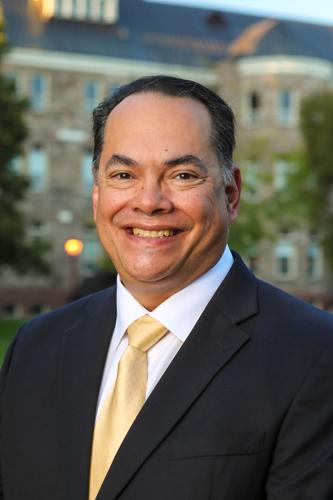
Contributed by Jay Weise
The Tech7 Company, a Monument-based business, recently won a $489 million contract through the U.S. General Services Administration to help speed the process for acquiring new technology within the Department of Defense, Department of Homeland Security and the Department of Commerce.
President and CEO Juan Echeverry founded Tech7 about 10 years ago and expects the company’s work will help cut down the years agencies can spend waiting for new software applications. In time, the work could help speed hardware purchases as well.
During his time as an Air Force officer, Echeverry learned the details of the traditional acquisitions process and how it can feature two to three years focused on refining the requirements that companies must meet and another seven before a product is delivered. After 10 years, the product might not be useful anymore, he said.
The process has caught significant criticism through the years and its been through other reform attempts. The Trump administration also wants to fix it.
So the timing of Echeverry’s proposal to the General Services Administration was good.
“We were fortunate that what our technology does and what our capabilities are were very relevant to what you’re hearing this year,” he said.
The company expects to work directly with government employees to identify their needs and gaps in capability. Then the government team will put out a call for commercial solutions. Once the government decides which companies have a solution they want to test, Tech7’s app TRACE 2.0 helps get companies ready to compete for the work, ensuring all the competitors have exactly the same resources, including all the right data, and they are integrated into the government’s computer platform.
The company’s app also objectively measures the different company’s performance against government-defined criteria. It’s up to the government agency to decide who to contract with, Echeverry said.
“The most important outcome of the TRACE contract is that it deploys capabilities to our operators to enable them to fight today,” he said, noting Tech7 can deliver these capabilities to both classified and unclassified environments.
Once the government selects a contractor, Tech7 can help companies get integrated into an agency quickly.
In its role to bring companies in, Tech7 employees have earned the nickname “sherpas,” Echeverry said.
The work will start with companies developing software applications for the military. But it will eventually be used to evaluate hardware that produces the data.
For example, if a government agency wanted to evaluate how different GPS receivers operate and test them in a contested environment, where an enemy might be trying to jam the signal, Tech7’s could evaluate the data from those tests.
Ahead of this contract award, Tech7 developed its TRACE application around the space sector and the answered the question: “How could you evaluate a sample of space tracking software that existed?” he explained.
The work helps move the government away from evaluating proposals on paper, Echeverry said.
“We’ll actually allow them to do fly-offs,” he said.
If the government agency requests it, Tech7 can also pay the third-party companies to compete for the work through its contract award.
The large contract amount will be spent down as government agencies work with Tech7 to bring in new technologies, through task orders, Echeverry said. Each task order will allow Tech7 to hire 35 to 50 people, building on the current workforce of about 70. The location of the new hires will be determined by the location of the government agency the company is serving. He expects the Colorado-based crew will also grow.
The company’s first task order is for the Space Force’s Joint Commercial Operations Cell, a group that analyzes commercial space activity.
The new contract builds on the “perfect wave” the company caught when Echeverry moved it to Monument from Los Angeles in 2018 just as two software factory labs were getting started in the area.
Space CAMP, short for the Space Commercially Augmented Mission Platform, was getting started at Catalyst Campus in Colorado Springs and the Tools, Applications and Processing Lab or TAP Lab was getting started in Boulder.
Both labs are focused on how existing data can be exploited in new ways through software applications, Echeverry said.
As a contractor for both in their nascent stages, Tech7 brought in needed people such as software engineers and data scientists.
Through the work for the software factories, Echeverry’s company morphed from a systems engineering company into its current form as a software integration and development company. It’s also been steadily winning larger and larger contracts allowing it grow, he said.
Contact the writer at mary.shinn@gazettedev.gazette.com or (719) 429-9264.
