






School to offer path to success to students who’ve had brush with the law
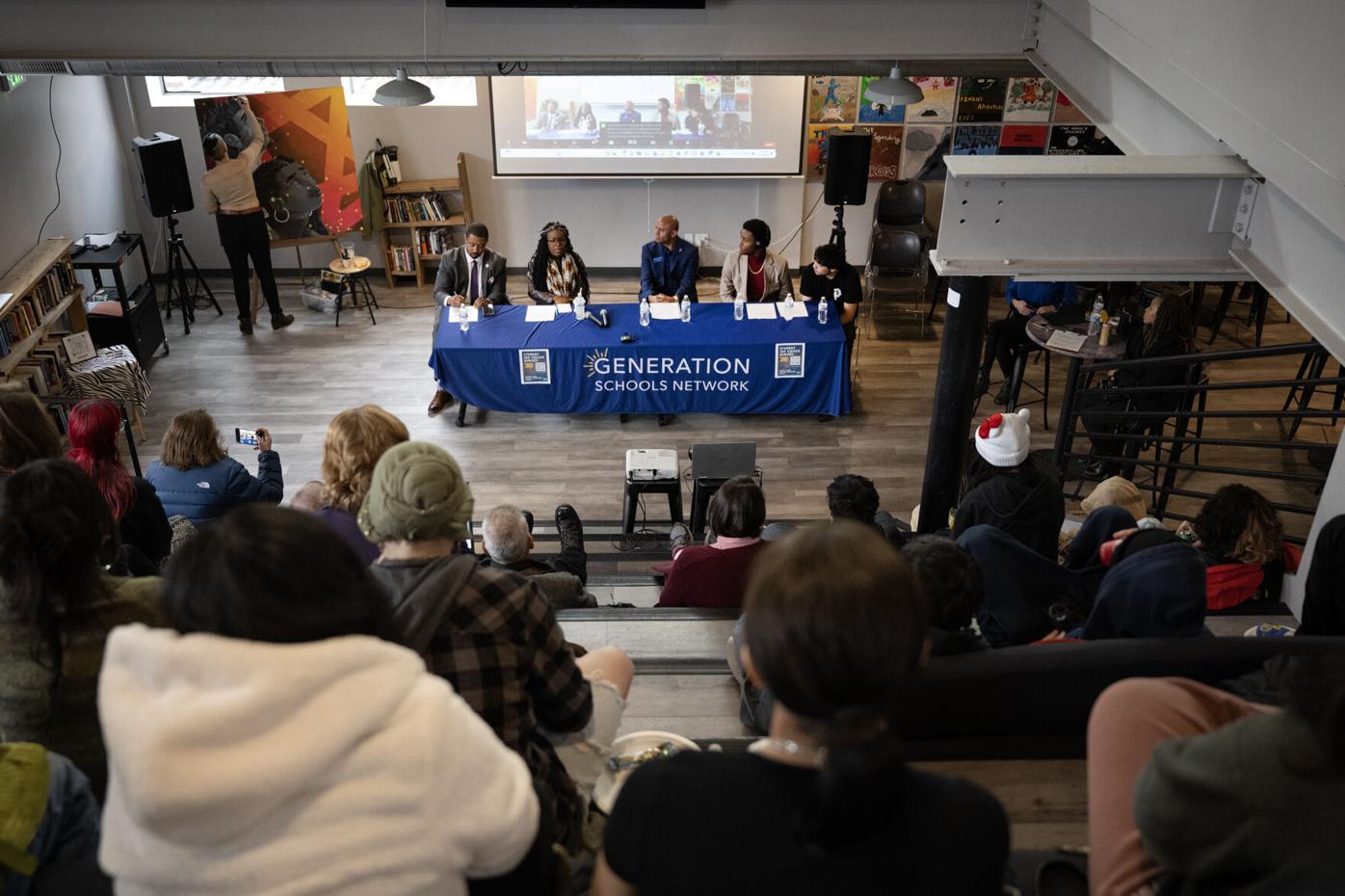
gazette file
Wendy Loloff Cooper knows all too well the systematic hurdles that juveniles face upon returning to school from the criminal justice system.
Between her son’s freshman and sophomore years of high school, he was charged with four felonies and struggled to find a school that would accept him that fall.
While he ultimately found a school and recovered from his setbacks, Loloff Cooper recognized the staggering number of families with similar circumstances but without the institutional knowledge and resources from which she benefited.
“I know how the system works, I speak the language and, with the justice system being proportionately weighted towards people of color and people in poverty, I started thinking about, ‘What are all these other parents supposed to do?’” she said.
Now, starting this fall, local students like her son will have a new pathway to success through a pair of new “micro-schools” kickstarted by the Denver-based nonprofit Generation Schools Network.
The Community Opportunity Education Campus is a new public school in Colorado Springs and Aurora. It is designed to help justice-engaged youth age 14-21 earn their high school diplomas through customized learning schedules, wraparound services and work credentials.
“Nationally, only about 1 in 5 justice-engaged students graduate high school — rates are even lower for youth locked up for 30-plus days,” Generation Schools Network Vice President Jose Silva said in a news release.
“The Community Campus is here to make sure every student — regardless of past circumstances — has a clear, supported path to graduation and success. Our model offers a fresh start — with the supports to make it stick.”
The micro-schools, designed to serve small student populations with specialized instruction, are among the results of House Bill 24-1216, which defined a “justice-engaged student” as “a student who is involved in the criminal justice system in any capacity, including, but not limited to, adjudication, probation, ticketing, detention, diversion, commitment, or community supervision.”
The legislation also developed a “Bill of Rights” for these students, the first of its kind in the nation, that grants them alternative solutions and plans for education and privacy related to any diversion, probation or questioning about a crime and access to school activities and career pathways.
The new law also led to the development of a hotline for justice-engaged students and families to offer personalized support with school credit recovery, reenrollment, legal referrals and mental health resources.
Colorado launches hotline to aid K-12 students navigating justice system engagement
Loloff Cooper said they learned through the hotline that, while some schools rejected students based on their history and the additional resources they needed, there was “mostly confusion” felt in reentering the education system.
“Students didn’t know, parents didn’t know, principals didn’t know. Nobody knew,” she said. “And what we really need to do is have a clear pathway for these 22,000 kids across the state to be able to finish their education.”
During her son’s court hearings, Loloff Cooper would often see other teenagers by themselves, who spoke a foreign language or had no way to navigate the judicial process otherwise.
Because these students’ educational outcomes aren’t currently tracked by any agency in Colorado, Generation Schools Network began tracking the crime rates by county that included percentages of youth offenders. Loloff Cooper said the nonprofit found that El Paso County and Aurora ranked near the top in recent years, which it used to determine the school’s locations.
To offer a new option for these students, the nonprofit designed an instructional approach with WonderED, an accredited online school based in Florida that provides guidance and resources to develop personalized curriculum. The school contracted with the Education ReEnvisioned BOCES in Monument to meet state education standards and requirements while allowing the instructional flexibility for its students.
Students take an initial benchmark assessment to determine their proficiency in core subjects before school staff map out their graduation requirements and design their program. The result is a customizable schedule for each student that can include on-site learning, certification programs, college coursework, internships and community experiences.
WonderED founder Jamie Maloney said this approach accommodates each student’s availability, personal interests and levels of comfort in traditional school settings.
“It’s more of a pedagogy than a curriculum,” he said. “It’s more, ‘Here’s how you can do things.’ That really drives it from the student-centered side of things, which fits really well with the justice-engaged.”
The Aurora school, for example, has integrated trips to Top Golf into both applicable science and career opportunities, Silva said. Project-based learning plans explored thus far have also included shaping instruction around concepts like if the national currency became Bitcoin, fully curing cancer versus remission and the possibility of solving homelessness.
Another component separating the school from traditional public schools is the intentional support provided for students working through the judicial system.
Loloff Cooper said they will ask students about current circumstances including upcoming court dates, fines that have yet to be paid, and probation officers or social workers who may need to come on campus based on their level of comfort.
“We go through this with kids and with families so that they know we’re not there to penalize them. We’re just there to know what they need so that we can make sure that that happens,” she said.
How they make sure that happens will come largely through local partnerships.
The Aurora campus is located in the ACO House recovery center while the Colorado Springs campus will be based at Hope Advanced, which provides recovery and reentry services.
Melissa Maestras, who works with Hope Advanced through her group Confidence in Hope, said they are able to complement the work provided by the schools because of the ongoing support they provide these same families and the trust already built in these communities over the years.
“We have a lot of footwork in the streets, we have a lot of background, we come from the same things, so we can relate to them (the students) on the same page,” she said.
Generation Schools Network Vice President of Development and Partnerships Alison Lauge said partnering with existing organizations to complement their new instruction was part of the plan from the beginning and that organizers hope to build on this community input.
She added that, because the legislation and its initiatives are the first of their kind, other states have already taken note and are watching how the school develops.
“Because they know that there’s need in their states, too,” she said. “Because, a lot of times, these kids don’t have programs targeted for them.”
Because of their agreement with BOCES, the school’s enrollment deadline is Sept. 15 with a goal of 20-25 students at each location. The Colorado Springs School will host an open house Wednesday to showcase the school and register interested students on-site.
