






Denver superintendent: ICE officials not allowed on campuses
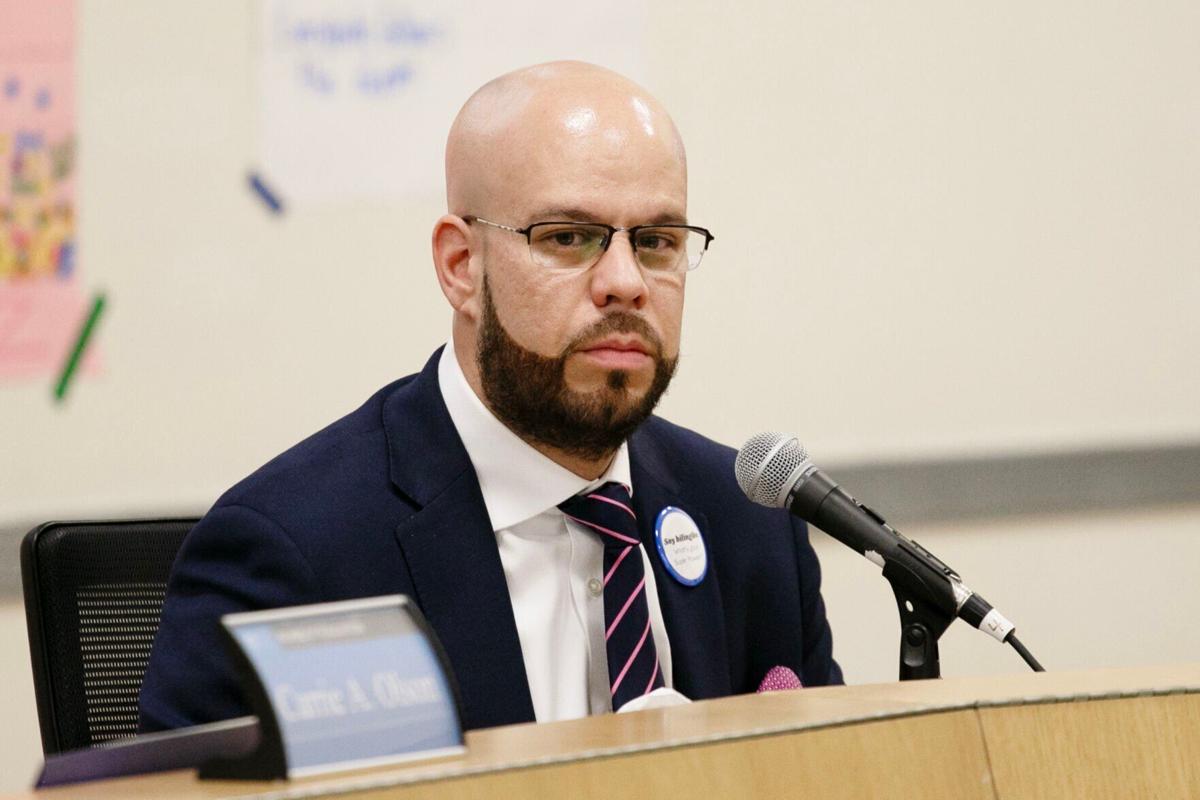
Tom Hellauer/Denver Gazette
A top Denver school official has reiterated a district policy that does not permit U.S. Immigration and Customs Enforcement officials on campus as the Trump administration prepares to crackdown on illegal immigration.
In his inauguration speech on Monday, Trump said he will go after criminals and gang members, a reference to, among others, the Venezuelan gang that is seeking to entrench its tentacles in metro Denver. Trump campaign officials have said his administration will go after individuals convicted of crimes and those who already face deportation orders.
“No individual should be permitted to enter the building without ascertaining whether the individual has a legitimate business or educational purpose,” Denver Public Schools Superintendent Alex Marrero wrote in a memo on Jan. 14, 2025.
“Per DPS Administrative Policy JIH (Student interviews, interrogations, searches and arrest), federal immigration law enforcement activities would not be permitted at our schools on transportation routes on DPS property or during school activities,” Marrero wrote.
The student policy was first adopted in 1971 and revised in 2019.
Marrero urged school leaders to use a building’s intercom system to communicate with federal officials and place a campus on lockdown.
Ahead of President Donald Trump’s inauguration Monday, Marrero provided guidance and training to staff, who may be tasked with dealing with immigration authorities under the new administration’s mass deportation program. An estimated 11 million immigrants are unlawfully living in the U.S., according to the Pew Research Center.
The staff training was conducted last week.
In his guidance to school leaders, Marrero suggested they determine the purpose for the visit, inquire about a warrant or court order and call the district’s general counsel, among other things.
The district is required under the Family Educational Rights and Privacy Act to limit access to student documents.
Every student in the United States — regardless of their immigration status — is guaranteed a public education since the landmark U.S. Supreme Court decision in 1982. Consequently, neither the Colorado Department of Education nor the district tracks students’ immigration status.
Immigrant students who arrived in Colorado, particularly Denver, over the past two years have strained the education system.
Last year, Gov. Jared Polis signed a bipartisan bill authorizing $24 million from the state education fund for the 2023-2024 budget year. Under the new law, Colorado will distribute a one-time payment of $4,500 for each “new arrival student.”
It’s unclear how much additional funding DPS received. Scott Pribble, a district spokesperson, could not be immediately reached for comment.
The law went into effect on April 18, 2024.
The district has been experiencing an enrollment decline that has been temporarily buoyed by the new students, many of whom crossed the border illegally with family members.
In Colorado, enrollment is tied to funding.
DPS has about 1,000 more students enrolled this school year than district officials had projected, marking a second year of consecutive gains.
The Denver metro area has been grappling with the crisis that started two years ago when about 90 immigrants — primarily from South and Central America — were dropped off at Union Station and left to navigate the cold.
Since then, nearly 43,000 immigrants, many who crossed the border illegally, have arrived in Denver.
Early in the crisis, Denver officials decided to assume the response to the crisis.
To date, those costs have soared to more than $80 million, the bulk of which has been borne by Denver taxpayers.
In his inaugural address Monday, Trump vowed to declare an emergency at the southern border and called the cartels “terrorist organizations.” He has also promised mass deportations, beginning in Aurora, in part to root out the Venezuelan prison gang known as Tren de Aragua (TdA), which nabbed national headlines last year after taking control of at least two apartment complexes.
The trans-national gang has a diverse criminal portfolio that includes drug and human trafficking — particularly immigrant women and girls, kidnapping, extortion, and money laundering.
Under a long-standing procedure known as “sensitive locations policy,” federal agents avoid enforcement actions in certain locations such as schools, churches and hospitals. Exceptions include imminent threats to public safety or national security.
Trump has indicated that he intends to revoke this policy.
Denver superintendent: ICE officials not allowed on campuses

A top Denver school official has reiterated a district policy that does not permit U.S. Immigration and Customs Enforcement officials on campus as the Trump administration prepares to crackdown on illegal immigration.
In his inauguration speech on Monday, Trump said he will go after criminals and gang members, a reference to, among others, the Venezuelan gang that is seeking to entrench its tentacles in metro Denver. Trump campaign officials have said his administration will go after individuals convicted of crimes and those who already face deportation orders.
“No individual should be permitted to enter the building without ascertaining whether the individual has a legitimate business or educational purpose,” Denver Public Schools Superintendent Alex Marrero wrote in a memo on Jan. 14, 2025.
“Per DPS Administrative Policy JIH (Student interviews, interrogations, searches and arrest), federal immigration law enforcement activities would not be permitted at our schools on transportation routes on DPS property or during school activities,” Marrero wrote.
The student policy was first adopted in 1971 and revised in 2019.
Marrero urged school leaders to use a building’s intercom system to communicate with federal officials and place a campus on lockdown.
Ahead of President Donald Trump’s inauguration Monday, Marrero provided guidance and training to staff, who may be tasked with dealing with immigration authorities under the new administration’s mass deportation program. An estimated 11 million immigrants are unlawfully living in the U.S., according to the Pew Research Center.
The staff training was conducted last week.
In his guidance to school leaders, Marrero suggested they determine the purpose for the visit, inquire about a warrant or court order and call the district’s general counsel, among other things.
The district is required under the Family Educational Rights and Privacy Act to limit access to student documents.
Every student in the United States — regardless of their immigration status — is guaranteed a public education since the landmark U.S. Supreme Court decision in 1982. Consequently, neither the Colorado Department of Education nor the district tracks students’ immigration status.
Immigrant students who arrived in Colorado, particularly Denver, over the past two years have strained the education system.
Last year, Gov. Jared Polis signed a bipartisan bill authorizing $24 million from the state education fund for the 2023-2024 budget year. Under the new law, Colorado will distribute a one-time payment of $4,500 for each “new arrival student.”
It’s unclear how much additional funding DPS received. Scott Pribble, a district spokesperson, could not be immediately reached for comment.
The law went into effect on April 18, 2024.
The district has been experiencing an enrollment decline that has been temporarily buoyed by the new students, many of whom crossed the border illegally with family members.
In Colorado, enrollment is tied to funding.
DPS has about 1,000 more students enrolled this school year than district officials had projected, marking a second year of consecutive gains.
The Denver metro area has been grappling with the crisis that started two years ago when about 90 immigrants — primarily from South and Central America — were dropped off at Union Station and left to navigate the cold.
Since then, nearly 43,000 immigrants, many who crossed the border illegally, have arrived in Denver.
Early in the crisis, Denver officials decided to assume the response to the crisis.
To date, those costs have soared to more than $80 million, the bulk of which has been borne by Denver taxpayers.
In his inaugural address Monday, Trump vowed to declare an emergency at the southern border and called the cartels “terrorist organizations.” He has also promised mass deportations, beginning in Aurora, in part to root out the Venezuelan prison gang known as Tren de Aragua (TdA), which nabbed national headlines last year after taking control of at least two apartment complexes.
The trans-national gang has a diverse criminal portfolio that includes drug and human trafficking — particularly immigrant women and girls, kidnapping, extortion, and money laundering.
Under a long-standing procedure known as “sensitive locations policy,” federal agents avoid enforcement actions in certain locations such as schools, churches and hospitals. Exceptions include imminent threats to public safety or national security.
Trump has indicated that he intends to revoke this policy.
