






Colorado Springs ‘safe parking’ project nears launch as statewide organization prepares to close
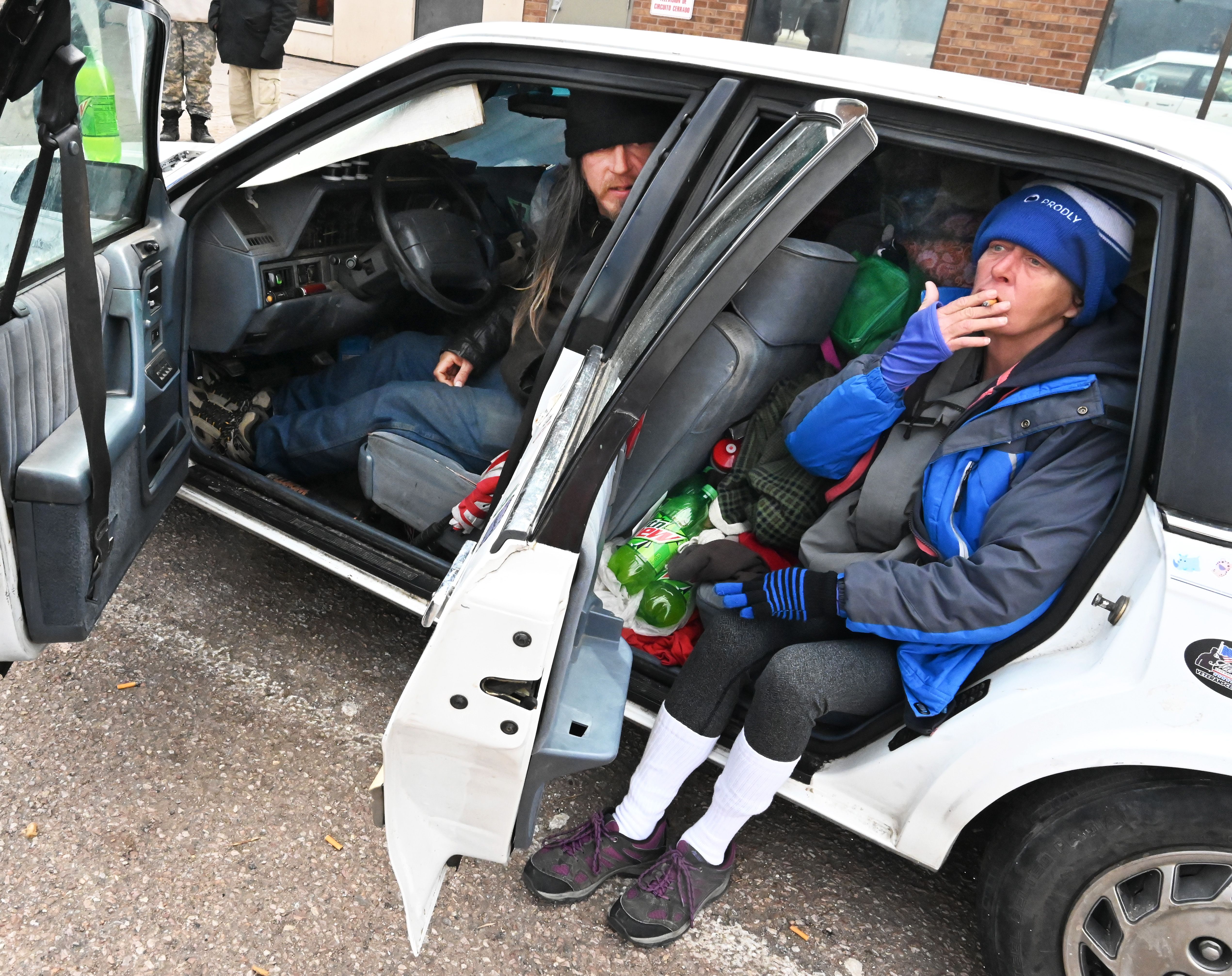
After two years of trying to convince some churches in Colorado Springs to open their parking lots and use volunteer forces to undertake a simple concept that has successfully channeled homeless people back into stable housing in other Colorado cities, the first local “safe parking” project is making progress, according to organizers.
Locations of the inaugural sites that will sanction secure and legal overnight parking for people who live in their vehicles are not being released yet, said Jane Barnes, president and CEO of Benefits in Action. The statewide nonprofit has an office in Colorado Springs with 10 employees who assist indigent and low-income residents with obtaining government assistance such as health care and food benefits.
“We’re working with a couple of churches and nonprofits to try to get something set up here, and we’re further along than we were,” Barnes said Monday.
“We’re waiting on the city for zoning in church lots,” she said. “We want to get this going — we know there’s a need.”
The update comes as the Denver-based Colorado Safe Parking Initiative will cease operations as of Wednesday, citing financial difficulties.
“For better or worse, we opened coincidentally when the pandemic started and relied on state and federal dollars,” Executive Director Terrell Curtis said Monday.
Some of the funding has dried up and some was restricted by how the money could be used, she said, which contributed to financial problems.
However, Curtis said, an interesting development over the five years since the Colorado Safe Parking Initiative began will allow for the program to continue independently of the founding organization.
“We’ve collaborated with local communities to support and implement safe parking, and most of our sites are in parking lots of safe organizations that have been managing, supporting and running the lots,” Curtis said.
As of Monday, participating churches, nonprofit commercial parking areas and organizations plan to continue the safe parking program at the 15 sites that are currently operating in metro Denver area, she said.

“Safe parking as an innovative intervention for homelessness with a unique population has been embraced and adopted by our local governments and our communities,” Curtis said, “and it’s humbling and to see the commitment.”
But the details need to be worked out. The shuttering of the organization means churches will no longer receive provided portable toilets, which cost about $200 a month per site, Curtis said.
In centralizing operations, Colorado Safe Parking Initiative also handled applications, intake, background checks on parkers and case management.
“I’m not sure how that will go without a central office — it could get more complicated for churches,” said Barnes, whose organization has been working with parkers in Broomfield in addition to getting the Colorado Springs program up and running.
Churches continue to hold the insurance because it’s their property.
Some communities, including Jefferson County and the city of Arvada, have already deployed homeless navigators to provide support services for parkers — such as signing up for subsidized benefits and applying for housing.
Broomfield’s existing lots may decide to have one point of contact, Curtis said, while cities in Arapahoe County have said they will work together to create a safe lot of their own in the next year.
“Each lot is figuring out how to receive new applications, and some may collaborate on a hyper-local model,” she said.
The 15 current lots have accommodated eight to 15 cars a night and average 10 vehicles a night. They receive sanitation stations such as portable toilets and sinks, meals provided by volunteers and case management for other services.
Consistently about 40% of the people who leave the program move into stable housing, according to Curtis, whether it’s an apartment or a tiny home or reuniting with family.
“At its real core it’s so simple and so effective to open a legal parking space for people living in their cars while they’re trying to get stable,” she said.
About 800 people were sleeping in their cars in the Denver area earlier this year during the annual Point in Time Survey.
People who live in their cars are defined by the United States Department of Housing and Urban Development, the agency that funds homelessness initiatives in communities, as “unsheltered homeless.” The category also includes people who live on the streets, in illegal encampments, under bridges, on sidewalks and other uninhabitable places.

The population of unsheltered homeless has been climbing steadily since 2015 and in 2024 reached a total of 274,224 nationally, according to HUD’s Annual Homelessness Assessment Report.
“The need for safe parking remains great,” Curtis said.
The Colorado Safe Parking Initiative received more than 1,700 calls for help last year and assisted 290 parkers, according to its annual report. Nearly half were employed and another 20% had other income, primarily government subsidies.
While the Colorado Safe Parking Initiative figures out what bills are outstanding and what income still expected, the books should be closed in March, Curtis said. She expects less than $50,000 to remain, which she said will be donated to entities that plan to carry on some form of safe parking.
“Of course it’s disappointing to be closing a program,” she said. “We are really proud to see that safe parking is understood as a very productive and viable solution for this population that has not been addressed at all over the years and that continues to grow.”
Contact the writer: 719-476-1656.
