






COLUMN: Livestock crimes must be seriously prosecuted
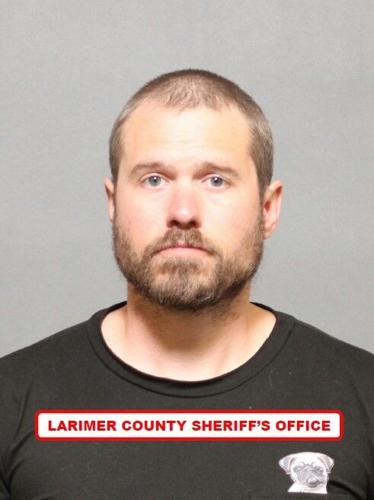
Courtesy of the Larimer County Sheriff’s Office
A Larimer County man drove a side-by-side utility vehicle around his rural neighborhood last April, chasing and shooting cattle that belong to two different neighbors. He shot across roads and reportedly sped recklessly around homes while shooting. When the dust settled, Larimer County Sheriff’s Deputies and two brand inspectors found seven dead cattle and an eighth cow that was hurt so badly she had to be destroyed.
According to court records, Michael Hester, 37, pleaded guilty on Friday to three counts of aggravated animal cruelty and three counts of animal theft — all felonies — as part of a plea deal. The deal dropped 12 additional charges of aggravated animal cruelty, animal theft, shooting from a public road, and felony trespassing. He could face two to six years in prison and fines of up to $500,000 on each charge.
Can you imagine if an armed man drove around your neighborhood shooting and killing pets only to face 2 to 6 years in prison? I realize it’s not an identical situation, and the neighborhood is more rural than not, but my blood runs cold thinking about a man speeding around and shooting in any neighborhood.
The cattle killed near Fort Collins included four bred cows, a yearling heifer, a herd bull, and two cows with calves at side. The cattle shot belonged to two neighbors, one who initially witnessed the shooting. The cattle, based on the week’s prior sale report at Sterling Livestock Commission Company, were potentially worth $2,500-2,800 for a bred cow and $3,000-3,500 for a cow calf pair. At the time, bulls were fetching about $150 per hundredweight. For seasonal market comparison’s sake, bred females sold last week in Torrington, Wyoming, at Torrington Livestock Auction for a high of $3585.
Colorado is an open range state and Colorado Brand Commissioner Todd Inglee, said the area has a great deal of damaged fencing because of recent wildfires, though state laws put the responsibility for building and maintaining fence on the landowner.
Inglee said the Brand Office is working to increase outreach to local law enforcement officials across the state to help assist prosecuting livestock related thefts and crimes. It’s a task that isn’t easy though Inglee said he often presents it to prosecutors not as a “what” was stolen, but rather the value of what was stolen.
Livestock crimes should be treated seriously by prosecutors who are willing to take the cases before the bench. One of the most infamous cattle thefts occurred in rural Washington state. Cody Easterday entered into an agreement to feed cattle for Tyson Fresh Meats and billed Tyson to procure and feed more than 265,000 head of cattle, known as a ghost herd, existing only on paper. Easterday has been in the news again after new sentencing guidelines require that his sentence be reduced. Easterday reportedly filed a brief to reduce his original 11-year fraud sentence to 8 years, one month. Federal prosecutors are not on board with a 35-month cut, arguing that a cut of 11-months is the maximum reduction that should be granted.
I agree with the federal prosecutors that cutting Easterday’s sentence by more than a quarter sets a bad example for white collar crimes, and I argue also for livestock crimes. Easterday was born into a hugely successful agriculture operation and the scale of his crimes — $233 million from Tyson and another $11 million from another investment group – should be treated seriously. The cattle weren’t real, but the money certainly was.
It’s much the same in Hester’s case. I’m no mental health expert, but I can’t help but wonder what sort of underlying complications led to a shooting rampage. That is absolutely what it was and I hope the sentencing reflects that. Hester is next scheduled to appear in court on Jan. 31, 2025, for sentencing.
The Brand Board predates the state and plays an important role in preventing theft of horses and cattle. A brand inspection is required when there is a change of ownership, in state transportation of more than 75 miles, out of state transportation, prior to slaughter, upon entry to a Colorado feedlot, prior to sale at a licensed Colorado livestock market, upon shipment from a Colorado feedlot to slaughter (unless the feedlot is licensed by the Brand Board as certified), when unbranded or freshly branded beef calves are weaned and sent to market or slaughter, and when cattle owned by a non-resident of Colorado enters the state for grazing. Brand inspectors are especially busy this time of year, as people move cattle home from grass and ship calves in the fall.
Rachel Gabel writes about agriculture and rural issues. She is assistant editor of The Fence Post Magazine, the region’s preeminent agriculture publication.
Rachel Gabel writes about agriculture and rural issues. She is assistant editor of The Fence Post Magazine, the region’s preeminent agriculture publication.
