






Old Colorado City special taxing district question headed for November ballot
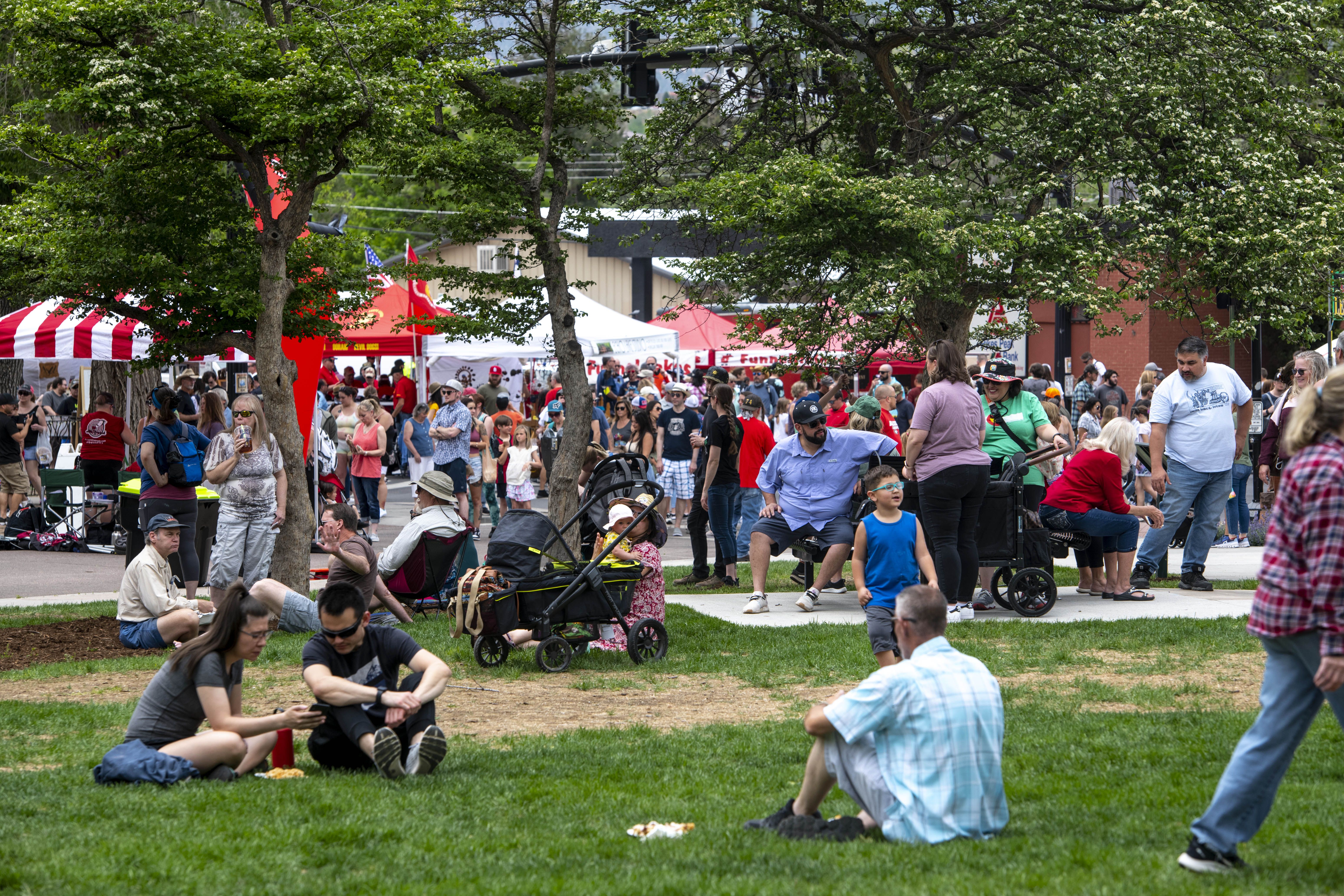
An overarching vision to revitalize Old Colorado City, which supporters say would create new entrepreneurial opportunities and establish consolidated leadership that would better guide rejuvenation efforts, is on its way for voters to decide this fall.
The Colorado Springs City Council voted for the first time Tuesday, 8-1, to determine if it is necessary to establish an Old Colorado City Downtown Development Authority. The council supported referring several questions to the Nov. 5 ballot that would create the development authority, establish a special tax rate within district boundaries to fund it, and authorize the proposed district to take on up to $5 million in debt to pay for development and redevelopment projects.
Councilman Mike O’Malley was the sole opposing vote.
The district is proposed to be bounded at the Colorado Springs and Manitou Springs line to the west; to the north by the alley between West Pikes Peak Avenue and Colorado Boulevard; to the east by Interstate 25; and to the south by the alley between West Cucharras Street and Colorado Boulevard. It would also include the southern nodes at I-25 and 21st Street.
About nine Old Colorado City residents and business owners told the council on Tuesday an established downtown development authority would allow for more diverse funding options to revitalize the area, bringing more opportunity for growth and economic development in Old Colorado City.
A development authority uses its tax revenue for downtown development and redevelopment; public and private investment made possible by the proposed special district will transform the community, they said.
Longtime west-side resident Becca Sickbert, who has helped advance efforts to establish an Old Colorado City DDA, said that despite Colorado Springs’ efforts in recent years to clean up neighborhoods and waterways, Old Colorado City needs more robust funding mechanisms to address issues like parking and vandalism.
“What I see is that our problems look like downtown problems. We’ve got parking congestion, traffic, theft, vandalism and trash. Because we have those kinds of issues, we need the kinds of financial tools that help downtown districts, like a DDA,” she said.
If Old Colorado City voters created the special district, Colorado Springs would be the first municipality in the state to have two board-governed development authorities in its boundaries. Its Downtown Development Authority, approved by voters in 2006, encompasses just over 1 square mile of downtown.
“It’s almost an embarrassment,” O’Malley said about why he opposed establishing the district for Old Colorado City. “They’re telling us the city is not doing its job, the government is not doing its job.”
A development authority will give new and diverse companies the chance to establish themselves and contribute back to the local economy, neighbors said.
Ryan Lloyd, an architect and the owner of a retail building on Colorado Avenue, said he previously worked with the Colorado Springs Downtown Development Authority to bring in several businesses to downtown, including the Trolley Block, Catalyst Campus for Technology and Innovation, and Sushi Row.
“Those businesses wouldn’t have happened without the help of the DDA, and we just could use that help in Old Colorado City,” he said.
The Old Colorado City DDA would consolidate several stakeholder groups, including two special improvement maintenance districts currently located within its proposed boundaries, said Jamie Giellis, president of Denver-based consultant firm Centro Inc.
Joining these groups into a development authority will create a sustainable revenue source, allows the district to leverage additional funding to top up its projects and will establish clear leadership for revitalization efforts, she said.
Like the Colorado Springs Downtown Development Authority, the proposed Old Colorado City DDA would be funded first through a capped, annual 5-mill tax levy to support operations. The mill levy taxes all commercial and residential property owners in the district’s boundaries.
It would also be funded through a mechanism called tax increment financing. This is when the district uses future sales and property tax revenue from new and redeveloped properties to help pay for development and redevelopment projects; the development authority often partners with the private sector in these cases.
Giellis did not present tax increment financing revenue projections on Tuesday.
Jariah Walker, executive director of the Colorado Springs Urban Renewal Authority that restores and redevelops blighted areas, cautioned that lack of tax increment financial modeling could invite more scrutiny over other projects that also use this kind of funding, like the transformation of the historic Union Printers Home east of downtown.
If the development authority was established, it would include about 425 businesses, 350 commercial properties, and 250 residential properties representing about 700 residents, Giellis said.
Under the development authority, the average Old Colorado City residential property owner within the district would pay about $136 a year in assessed special taxes. The average commercial owner would pay around $686 a year, according to financial projections. Old Colorado City residents would no longer pay the SIMDs’ assessed tax rate of about 13 mills.
An Old Colorado City DDA tax rate would generate about $300,000 in 2025, its proposed first year, Giellis said. It would generate low revenue in its early years, until additional economic activity generates larger tax increment financing revenues.
The ballot questions are not being coordinated with the Nov. 5 election run by the El Paso County Clerk and Recorder’s Office, Giellis and City Clerk Sarah Johnson said.
Eligible voters living within the proposed authority boundaries will receive a second ballot this fall, separate from the ballot mailed by the county clerk, to vote on just the authority-related questions.
