






Navajo Code Talkers Day: Heroes of World War II
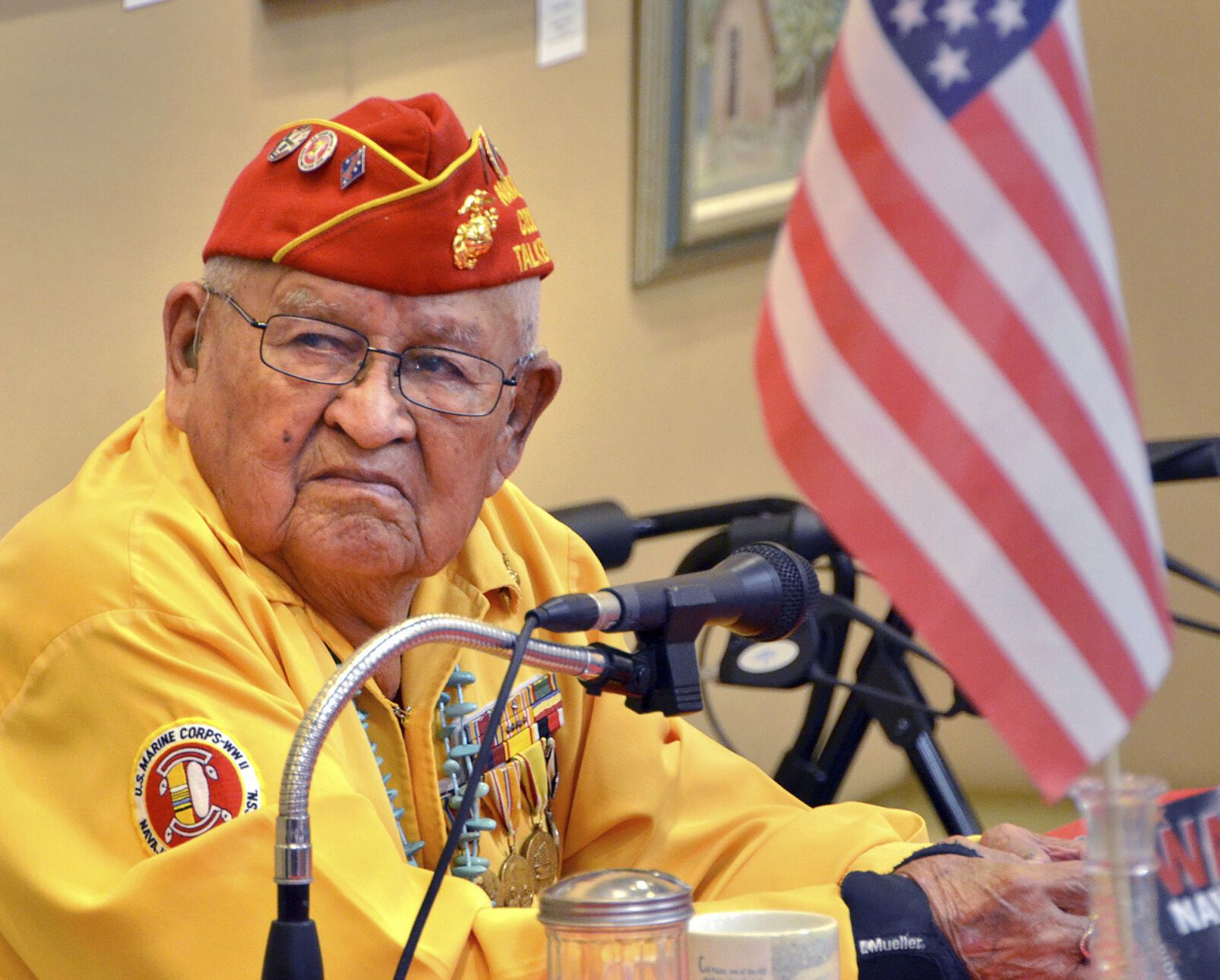
Navajo Code Talkers Day was established in 1982 through a presidential proclamation by President Ronald Reagan and it’s noted each Aug. 14. Arizona Gov. Doug Ducey signed legislation in 2020 to make National Navajo Code Talkers Day a state holiday.
While Navajo Code Talkers were known for their service in World War II, it was the Choctaw Indians from the 142nd Infantry Regiment, 36th Division, who became the first Code Talkers while stationed in France in 1918 during World War I, according to the National Archives and Records.
At the time, the enemy frequently intercepted Allied communications, inhibiting tactical plans and troop movements.
Two Choctaw officers were called on to supervise a communications system staffed by 18 other tribal members. Battle messages were sent in the Choctaw language. The enemy never broke their “code,” and Allied leaders deemed their efforts a success, according to the National Archives.
The Army continued to enlist soldiers from other tribes as Code Talkers, including the Cherokee, Cheyenne, Osage and Yankton Sioux in World War I.
When the U.S. entered World War II, military leaders remembered the success of the Choctaw Code Talkers and enlisted new recruits from the Creek, Hopi, Kiowa, Seminole and other tribes to encrypt messages for the Army and Marines.
The Marine Corps initially recruited 29 Navajo men to train as Code Talkers in specially designed courses, according to reports. By the end of the war, the Marines had more than 400 Navajo men trained as Code Talkers, many of them serving in the Pacific. The Army had similar training programs for its Code Talkers, who generally served in Europe and North Africa.
Navajo Code Talkers transmitted messages in World War II using a code based on their native language.
The idea for using the Navajo language as a military code came from Philip Johnston in 1942. He was a World War I veteran and the son of a missionary who lived on the Navajo Nation, which encompasses land in New Mexico, Arizona and Utah.
In 1942, recruits trained in San Diego before going off to war
The Navajo Code Talker program was classified until 1968. In 2001, the original 29 Navajo Code Talkers were awarded the Congressional Gold Medal and all others were awarded Congressional Silver Medals.
The Code Talkers took part in every assault the Marines conducted in the Pacific, sending thousands of messages without error on Japanese troop movements, battlefield tactics and other communications critical to the war’s ultimate outcome.
