






Redistricting process begins to equalize population of six Colorado Springs City Council seats
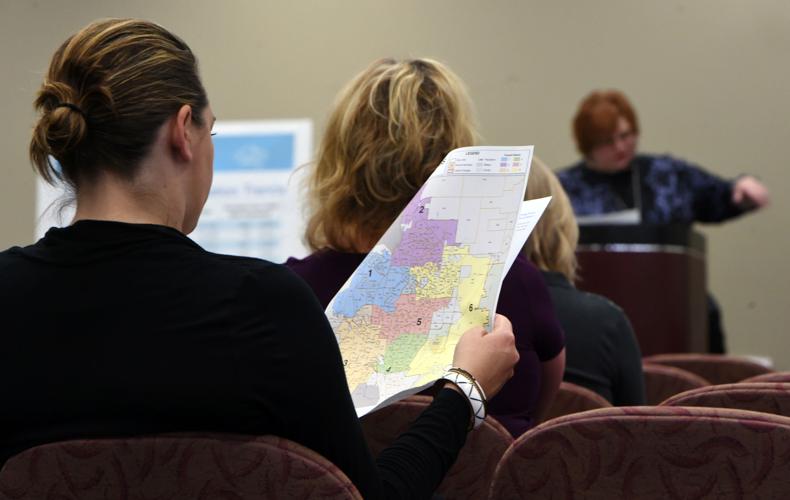
Jerilee Bennett,The Gazette
Residents living near the edges of six Colorado Springs City Council districts could find themselves with different representation in future elections.
The city’s four-year cycle of redrawing district boundaries based on increasing population, not voter affiliation, kicked off this week.
The administrative process is required by city charter and involves the city hosting one public meeting in each district and soliciting public comment in upcoming months.
The reconfiguration does not require approval by the mayor or city council, City Clerk Sarah Johnson told City Council members on Monday.
Colorado lawmakers adopt cuts, hard choices as state faces $170 million budget shortfall
Of the nine City Council seats, six are elected every four years by voters who live in specific geographic districts; three candidates are elected to at-large seats to represent constituents throughout the city.
A population estimate from the U.S. Census Bureau of 500,333 residents is being used this year, Johnson said, which will equate to districts being divided into 84,389 people per district.
“Some districts will be right at these numbers, and some will be lower,” she said.
Four years ago, the population number was 481,000 residents, with around 80,167 people in each district.
Cherokee Metro District board members to face recall
Growth has remained steady in the east, southeast and downtown core of the city but not in the western sector, Johnson said.
While voter district lines are used in refiguring redistribution, Johnson emphasized that unlike congressional redistricting, the number or affiliation of registered voters are not a consideration in municipal redistricting because City Council seats are non-partisan.
Rather, the methodology is based on leveling the expanding population, from newborns to elderly citizens, Johnson said.
Districts must be substantially equal in population, contiguous and comply with Voting Rights Act and other laws.
The April 1, 2025, general municipal election is the first time the new boundaries will apply, Johnson said.
Her advice to potential candidates planning to run for office: don’t preprint any materials until you know for sure which district you live in after the boundaries have been redrawn.
“I’d be very cautious — there will be some changes along those edges,” Johnson said. “You may live in District 2 now, but you may end up in District 1.”
The predominant change in the 2020 go-round was that 20 precincts were moved from Districts 2 and 6 into other districts to balance representation, she said.
Colorado Springs to consider new requirement for utilities services for annexations
City Council will appoint a seven-member, volunteer redistricting advisory committee to help guide the procedure. Anyone who is considering running for City Council in April of 2025 should not apply, Johnson said.
Her office will release proposed changes in a preliminary report and a map of the new configuration around Oct. 1.
A final district boundary report will be made public no earlier than Nov. 4 and no later than Dec. 2.
More information will be available throughout the process at ColoradoSprings.Gov/2024Redistricting.
Contact the writer: 719-476-1656.
