






Europe’s economy has stalled. But an interest rate cut will likely have to wait for summer
The European Central Bank has left its key interest rate at a record high even though inflation is way down from its painful double-digit peak and the economy has stalled
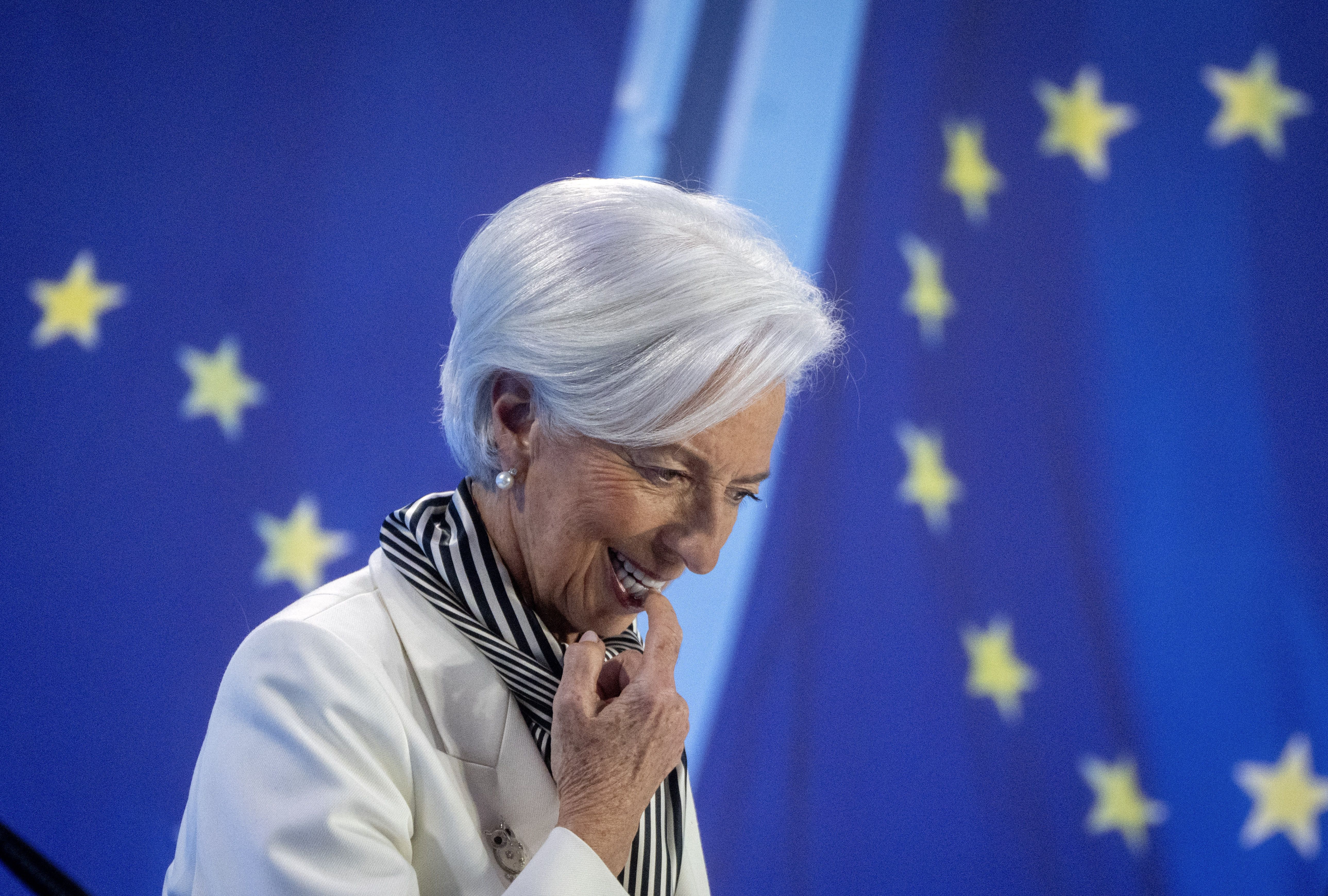
FRANKFURT, Germany (AP) — Inflation in Europe is way down from its painful double-digit peak, and the economy has stalled. But the European Central Bank left its key interest rate at a record high Thursday, and its leader suggested a much-anticipated cut to borrowing costs would likely wait until June.
The decision comes as central banks around the world, including the U.S. Federal Reserve, are trying to judge whether toxic inflation has been tamed to the point that they can start cutting rates — making it cheaper for consumers and businesses to borrow, spend and invest — and avoid an economic slowdown that throws people out of their jobs.
ECB President Christine Lagarde said at a news conference that the central bank was “making good progress” in pushing down inflation to its 2% target but that “we are not there yet.”
She dropped a clue about the timing of a rate cut, saying economic data would decide the bank’s next move and that “we will have a little in April and a lot more for our June meeting.”
Lagarde’s remark was “a not very subtle hint” that the ECB would wait until June for a rate cut, said analysts at ABN AMRO Financial Markets Research.
“The ECB is getting closer to the point where it will have sufficient confidence in the return of inflation to the 2% target,” said Frederik Ducrozet, head of macroeconomic research at Pictet Wealth Management.
He pointed to Lagarde’s remark and to the ECB lowering this year’s inflation projection to 2.3% from December’s forecast of 2.7%.
The ECB raised its key rate from below zero to 4% between July 2022 and September 2023 to squelch double-digit inflation driven by supply chain issues during the rebound from the coronavirus pandemic and by an energy crisis after Russia invaded Ukraine.
Higher interest rates dampen inflation by making it more expensive to borrow and buy things on credit, reducing demand for goods. But high rates can weigh on economic growth, too.
The rate rises, for instance, have stalled construction activity in Germany, Europe’s largest economy, and put an end to a nearly decadelong rise in home prices in the 20 countries that use the euro currency as tighter credit deters borrowers and sellers.
The eurozone saw no growth in the fourth quarter of last year after shrinking 0.1% in the previous quarter. Germany expects growth of just 0.2% this year.
One reason the ECB can afford to wait on a rate cut: a strong jobs market that is keeping people in work and with paychecks to spend. Unemployment of 6.4% is the lowest since the euro currency was launched in 1999.
A similar situation is shaping up in the U.S., where Federal Reserve Chair Jerome Powell told Congress this week that the central bank needs more confidence inflation is under control before cutting rates. Fed officials have signaled three rate cuts this year, but Powell has given no indication when they might start.
In Europe, inflation was down to 2.6% in February, well below its peak of 10.6% in October 2022. But the consumer price index has been stuck between 2% and 3% for five months, raising concern that the last mile toward the ECB’s goal may be slower than hoped.
While the spikes in food and energy prices that helped drive the outbreak of inflation have eased, inflation has spread to services, a broad sector of the economy that includes everything from movie tickets and office cleaning to tuition and medical care.
Meanwhile, wages rose as workers started bargaining for higher pay to make up for lost purchasing power as inflation ballooned.
FILE – President of European Central Bank, Christine Lagarde, attends a press conference after an ECB’s governing council meeting in Frankfurt, Germany, on Jan. 25, 2024. Europe’s outburst of inflation is receding. But a cut in interest rates from a record-high 4% is not going to happen at Thursday’s European Central Bank meeting. And it may even have to wait until summer. ECB President Christine Lagarde is likely to stress after a meeting Thursday that the bank wants to see more evidence that the inflation beast has been tamed before cutting rates.
The European Central Bank is pictured at the river Main in Frankfurt, Germany, Sunday, March 3, 2024.
A girl swings near the European Central Bank in Frankfurt, Germany, Wednesday, March 6, 2024. The governing council of the ECB will meet on Thursday.
A man plays basketball on a public court near the European Central Bank in Frankfurt, Germany, Wednesday, March 6, 2024. The governing council of the ECB will meet on Thursday.
President of European Central Bank Christine Lagarde, center, walks to the press conference in Frankfurt, Germany, Thursday, March 7, 2024, after a meeting of the ECB’s governing council. The European Central Bank left its key interest rate at a record high as it waits for more confirmation that toxic inflation is under control for good — even as high borrowing costs drag on the stalled economy.
President of European Central Bank Christine Lagarde meets the media after a meeting of the ECB’s governing council, in Frankfurt, Germany, Thursday, March 7, 2024. The European Central Bank left its key interest rate at a record high as it waits for more confirmation that toxic inflation is under control for good — even as high borrowing costs drag on the stalled economy.
President of European Central Bank Christine Lagarde talks to the media after a meeting of the ECB’s governing council, in Frankfurt, Germany, Thursday, March 7, 2024. The European Central Bank left its key interest rate at a record high as it waits for more confirmation that toxic inflation is under control for good — even as high borrowing costs drag on the stalled economy.
President of European Central Bank Christine Lagarde talks to the media after a meeting of the ECB’s governing council, in Frankfurt, Germany, Thursday, March 7, 2024. The European Central Bank left its key interest rate at a record high as it waits for more confirmation that toxic inflation is under control for good — even as high borrowing costs drag on the stalled economy.
President of European Central Bank Christine Lagarde talks to the media after a meeting of the ECB’s governing council, in Frankfurt, Germany, Thursday, March 7, 2024. The European Central Bank left its key interest rate at a record high as it waits for more confirmation that toxic inflation is under control for good — even as high borrowing costs drag on the stalled economy.