






New Pikes Peak Housing Network hopes to tackle Colorado Springs’ housing woes
Can anything be done to increase the supply of housing and expand affordable housing options in Colorado Springs and surrounding areas?
The Pikes Peak Housing Network hopes to explore those problems — and find solutions.
Community leaders, along with business and housing organizations, formed the nonprofit last summer to serve as a vehicle to study ongoing concerns about skyrocketing housing costs, while it also works to increase the area’s availability of all housing types, among other initiatives.
The Pikes Peak Housing Network is working under the umbrella of the Colorado Springs Chamber of Commerce & EDC, whose business members have expressed concerns about a lack of affordable and attainable housing for their employees. The Housing Network will be overseen by a leadership council made up of business people, housing advocates, government officials and others.
The group has a big challenge.
When it was launched, the Pikes Peak Housing Network cited a February 2023 report from the Common Sense Institute — a statewide research group that focuses on economic issues — that said Colorado Springs needed 28,000 to 39,000 additional housing units by 2028 to meet the area’s population growth.
Even so, the pace of residential construction slowed significantly last year in Colorado Springs and surrounding El Paso County, in large part because higher mortgage rates discouraged buyers.
In 2023, building permits that were pulled for the construction of single-family homes and townhomes would add 2,545 units, a nearly 27% decline from 3,478 in 2022, Pikes Peak Regional Building Department figures show. Likewise, building permits for multifamily construction in 2023 would create 2,247 apartments, down almost 55% from 4,963 in 2022 — though 2022 was a record year for apartment projects.
Local single-family homes, meanwhile, sold for a median price of $450,000 in January, according to the Pikes Peak Association of Realtors; that’s down from the record high of $495,000 in June 2022, yet prices have remained above the $400,000 mark since February 2021.
Average apartment rents also set several record highs the past few years and surpassed $1,500 a month in the third quarter of 2022, according to an industry report. Rents have since dipped, but still averaged a pricey $1,456 a month in the fourth quarter of 2023.
Former Colorado Springs City Councilwoman Jill Gaebler was named as the Pikes Peak Housing Network’s executive director. Gaebler assumed her post Nov. 1; her background includes eight years on the council and six years as development director of Greccio Housing, the nonprofit that works to provide affordable housing for low- to moderate-income families.
“While I’m pro housing, I’m not connected to the developers, I’m not connected to any of those who have something to gain,” Gaebler said of her role. “I’m just a pro-housing voice.”
The Gazette recently asked Gaebler to discuss the Housing Network’s goals and direction. The following questions and answers were edited for brevity and clarity:
What is the Pikes Peak Housing Network and how was it formed?
Pikes Peak Housing Network was established in 2023 by a group of community leaders who care deeply about Colorado Springs and its lack of affordable and attainable housing for our growing workforce and senior population. In the short time it’s been in operation, it has become a respected and valued entity that is working to increase the development of all housing types throughout our city and region.
Describe the network’s mission and what you hope to accomplish.
The Pikes Peak Housing Network’s mission is to foster innovative and collaborative solutions that advance housing affordability, access and production in the Pikes Peak region. Its work is focused on three key areas: advocating for pro-housing polices at the state and local levels of government; developing pro-housing messaging for housing developers, local leaders and nonprofits that support the development of all types of housing throughout our region; and becoming a valued and respected resource for housing data, education, connections and information.
Who does the Pikes Peak Housing Network represent? Developers? Homebuilders? Homeowners? Renters? All of the above?
It represents nonprofits, decision-makers and housing developers; those who want to build and encourage housing; and our citizens who need to find housing they can afford in the area of the city they desire to live.
What’s good these days about housing options in the Pikes Peak region?
When I worked at Greccio Housing before my years on City Council, the words “affordable housing” were not often mentioned. Today, because of our many years of housing price increases, affordable housing is a common phrase, used by businesses and our military who are seeking housing for their employees, our elected leaders, our nonprofits and our residents, who are struggling to live within their finances because the cost of housing is rising much faster than incomes. Because of this, our housing developers are adapting by building smaller homes and becoming more innovative in the types of housing they are building and to reduce housing costs. I am especially excited about modular home development. Lastly, our nonprofits are working harder than ever to stand in the gap by serving our residents who need housing, rent and food assistance and educational support.
What are the region’s challenges when it comes to housing?
Colorado Springs is a geographically large city and over 70% of our land is zoned for single-family homes. While all housing is good housing, the city needs to continue modifying its zoning code to allow the development of more housing types within residential neighborhoods. Duplexes, small apartment properties and accessory dwelling units are all great options. We must also ensure that construction litigation legislation passes during this legislative session. SB24-106 has been introduced and is supported by both parties. This legislation will make it less costly for housing developers to build condos, often the entry-level home ownership option for our younger residents.
Three years ago in April 2021, community leaders and business groups held the first of a series of forums to discuss what then-Chamber & EDC president Dirk Draper called a “housing crisis,” which he said threatened the success of local businesses; those businesses fear that unaffordable housing will prevent them from recruiting and retaining the workers they need. Has the community made any progress in those three years to create more affordable housing options?
Yes. Those same community leaders, who led those forums, are the same folks who started Pikes Peak Housing Network to ensure there is an organization working 24/7 on our region’s housing issues and promoting a pro-housing message with our business and elected leaders and our community members. The network has now been in operation almost four months. Those same community leaders now serve as my board members and are guiding my priorities as we work to increase our housing stock. The Pikes Peak Housing Network’s founders decided against starting yet another nonprofit, but instead formed a partnership with the Chamber & EDC, who serves as the fiscal agent for the Housing Network. We are also housed in their offices. This partnership allows us to partner on housing-related legislative issues and local housing project support.
Some community members talk about the need to make multiple housing options available in the Pikes Peak region. And yet, apartment complexes proposed near established single-family neighborhoods and workforce housing projects designed to provide opportunities for lower-wage workers sometimes draw opposition from residents and homeowners who say they worry about increased traffic, a negative impact on property values and clogged roads in the event of a wildfire or other disaster. How does the Pikes Peak region balance its need for more housing with the concerns of its residents?
There is a balance between quality of life for existing residents and our need to provide housing for our growing population. This balance occurs when we can find agreement on the need for housing and the true impacts of new housing. Housing projects draw opposition from neighbors who do not have the facts on traffic impacts and wildfire risk. With education and good messaging, most neighbors will realize that their concerns are minimal and that they should work directly with the development to mitigate real impacts. Studies consistently show that multifamily housing does not bring down property values or increase crime. Voicing these concerns is often used to scare neighbors, so it’s important for the real data to be available and transparent for our residents.
Community leaders and housing industry experts have said more homes and apartments are needed to boost the area’s housing supply, which they hope would help stabilize and even drive down home prices and apartment rents. Can we indeed build ourselves out of our housing affordability problems?
The law of supply and demand is real, but it’s also important to ensure we are building the housing types that are needed by our citizens in the areas of our city where they’d like to live. Not all affordable housing should be built in the southeast part of town, as many community members work in the north part of our city and would like to live near their jobs to keep transportation costs low. We must also ensure that construction litigation legislation passes during this legislative session.
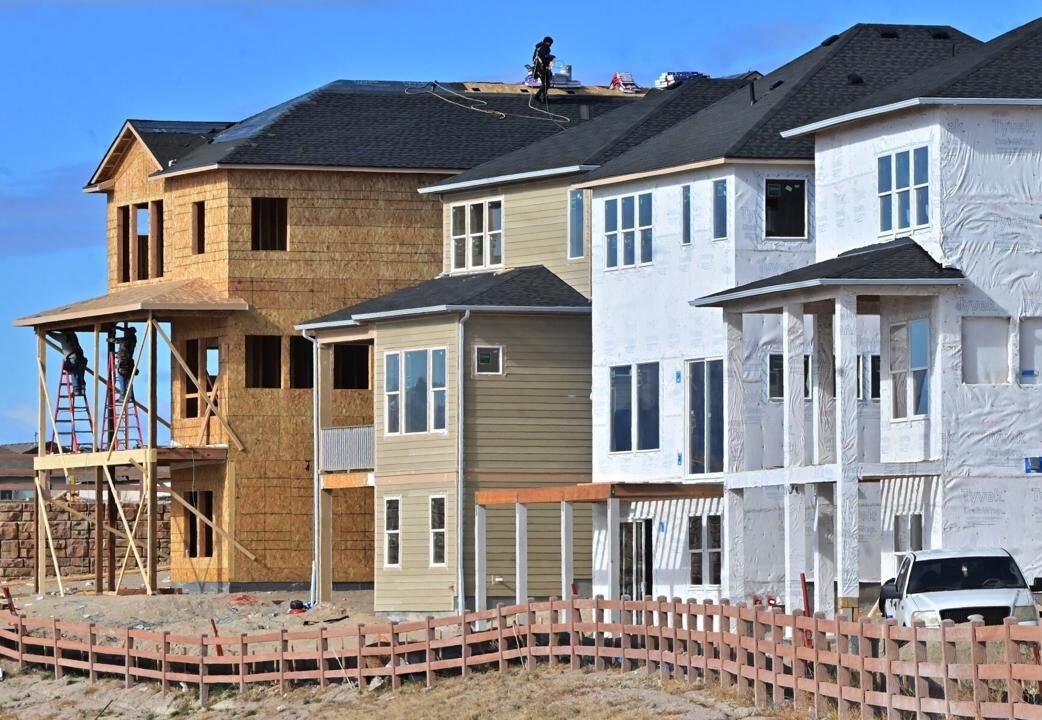
The pace of Colorado Springs-area home construction slowed in 2023, in part, because higher mortgage rates priced many homebuyers out of the market. The Pikes Peak Housing Network, a nonprofit formed last year, is working to explore ways to expand the area’s housing supplies and increase affordable housing options.
The pace of Colorado Springs-area home construction slowed in 2023, in part, because higher mortgage rates priced many homebuyers out of the market. The Pikes Peak Housing Network, a nonprofit formed last year, is working to explore ways to expand the area’s housing supplies and increase affordable housing options.
Colorado Springs-area home sales fell 23% in 2023 on a year-over-year basis; long-term mortgage rates that roughly doubled from the start of 2022 to more than 6% last year priced many homebuyers out of the market. The Pikes Peak Housing Network, a nonprofit formed last year, is working to explore ways to expand the area’s housing supplies and increase affordable housing options.
Former Colorado Springs City Councilwoman Jill Gaebler was named in November as executive director of the Pikes Peak Housing Network. COURTESY COLORADO SPRINGS CHAMBER & EDC