






Colorado Springs councilman criticizes city immigrant response plan as ‘vague’
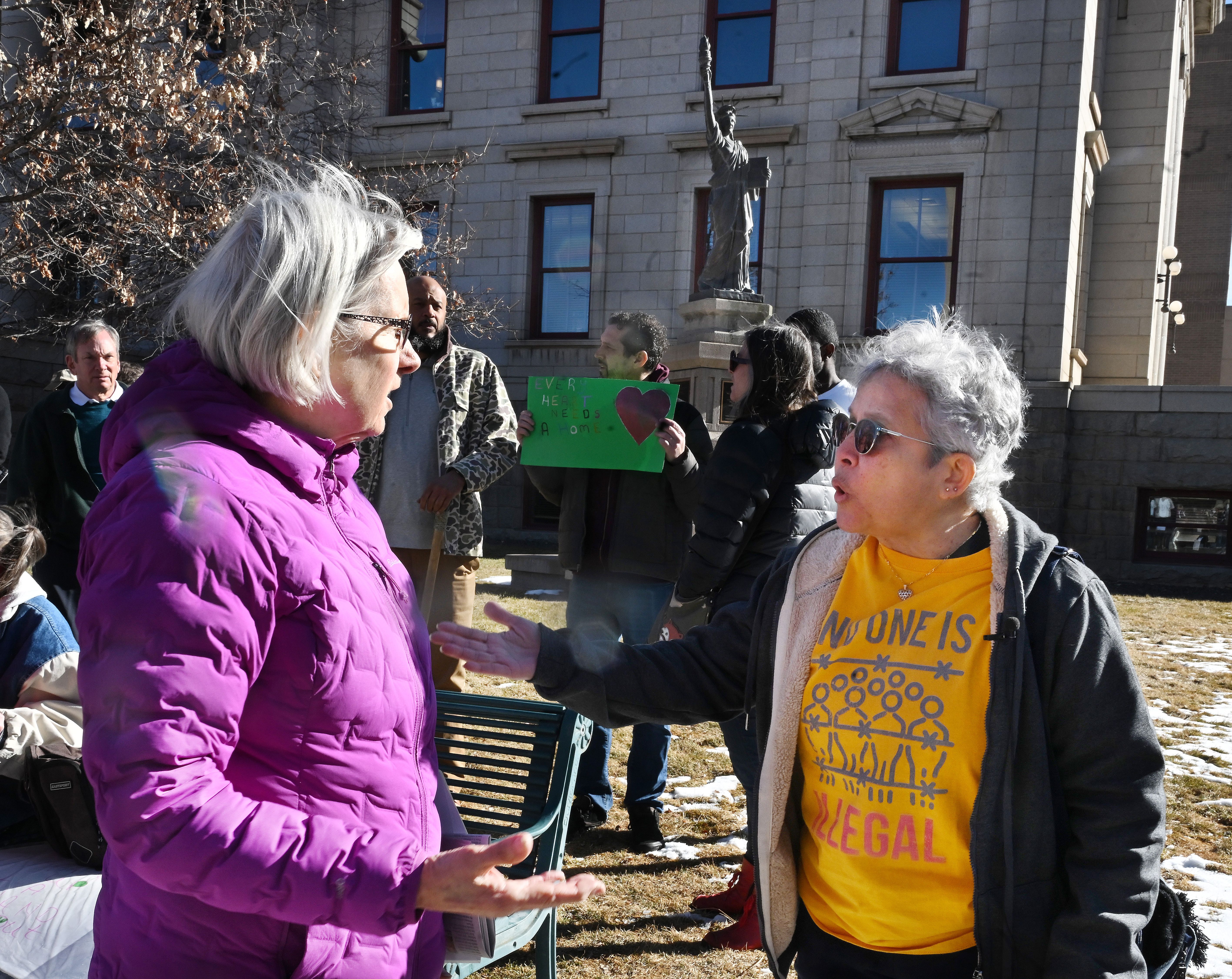
The Pikes Peak Regional Office of Emergency Management has a broad plan to guide Colorado Springs’ response if a “significant” number of immigrants crossing U.S. borders come into the city, but one councilman criticized the plan as “vague.”
Andrew Notbohm, director of the regional emergency management office, told the council at its work session Monday his office relies on Colorado Springs nonprofit organizations and other community partners to provide information about the number of immigrants arriving at their doors.
Much of the information the emergency management office receives is anecdotal, Notbohm and city Deputy Chief of Staff of Operations Ryan Trujillo said.
Without a reliable and accurate tracking system, city and regional officials can’t know exactly how many immigrants are in Colorado Springs at any given time, they said. Both Notbohm’s office and the city vet the information they receive to better gauge if or how the city should respond.
“I recognize that it’s unsatisfying to our community not to have concrete numbers, but it would be irresponsible if we were to share anecdotal information as if it was … concrete data,” Trujillo told reporters in a separate interview Monday.
Notbohm and Trujillo could not define what a “significant” number of migrants coming into the city would be, but reiterated statements Mayor Yemi Mobolade has made over the last month that Colorado Springs is not currently experiencing a “crisis” level influx of migrants into city borders.
However, Denver is experiencing a crisis, they said. Colorado Springs is planning for the possibility that as immigrants reach shelter time limits in Denver, more of them may come “organically” to Colorado Springs, in a manner not coordinated by the city and county of Denver or the city of Colorado Springs.
Notbohm said he also anticipates “significant increases” in migrants moving throughout Colorado in November or December — around the time of the Nov. 5 presidential election — as federal immigration policies or practices could change no matter the election’s outcome.
Councilman Dave Donelson expressed frustration over what he said was a “vague” city response plan.
“The whole purpose of this is to come up with a plan for when things exceed our capacity. … What is the plan?” Donelson said.
Trujillo said officials did not present a specific plan Monday because emergency situations are fluid and community response is based on each individual emergency.
“Our hope is that we can plan for when we do … anticipate some flow of migrants into Colorado Springs,” he said.
Notbohm said community partners have indicated they are seeing increased demand for services like shelter, food and clothing, but it cannot be directly attributed to migrants. For example, in colder winter weather, shelters see demand increase from the local homeless population for services, he said.
UCHealth data released this month showed that of 12 hospitals surveyed across Colorado in the UCHealth system, Colorado Springs’ Memorial Hospital Central had the second-highest jump over the past three months of new patients who appear to be immigrants.
Notbohm told the council Monday reports that local hospitals are also seeing “an upward trend in non-reimbursable services provided” can’t be directly attributed to migrants because of health care information restrictions.
Donelson said a Jan. 28 voicemail Mobolade received from Salvation Army’s Capt. Doug Hanson, who leads the El Paso County church, indicated the nonprofit was seeing an influx of migrants that would take up shelter space for residents living homeless in El Paso County.
Springs Taxpayers United, a right-leaning advocacy group, received a copy of the voicemail through a Colorado Open Records Request filed with the county and posted it onto the group’s YouTube channel in early February.
“In that case, (Hanson) clearly did say, ‘We’re full up, we’re having to turn away locals now.’ Why does this (presentation) say we can’t attribute it (to migrants)?” Donelson asked.
Salvation Army spokeswoman Jeane Turner said in an email to The Gazette earlier this month that Hanson, in the voicemail, relayed a “concise version” of the situation to the mayor based on data the nonprofit received from clients self-identifying as immigrants.
When Hanson notified the mayor about the immigrants, the Salvation Army family shelter “was reaching capacity but had not exceeded capacity,” Turner said, adding the immigrant families “moved through (the) shelter quickly.”
Notbohm told the council Monday the community’s current system for sheltering homeless people puts it “very close to capacity on a daily basis.”
“That is when you have an increase, it pushes that system a little bit further towards the edge,” he added.
Councilman Randy Helms said he appreciated the city’s efforts to plan its response ahead of a possible emergency migrant situation.
“I know we’re working on a very difficult, challenging subject. I think we’re all on the same boat, just peddling a little different. I think we need to come together on that. We’ve all said we’re not a sanctuary city. We don’t intend to be, and we don’t want to spend city resources on this issue because we can’t.”
Colorado Springs’ immigrant response plan is online at coloradosprings.gov/2024MigrantResponseFramework.
