






Emergency office preemptively plans response to migrant arrivals in Colorado Springs, mayor reiterates there is ‘no crisis’
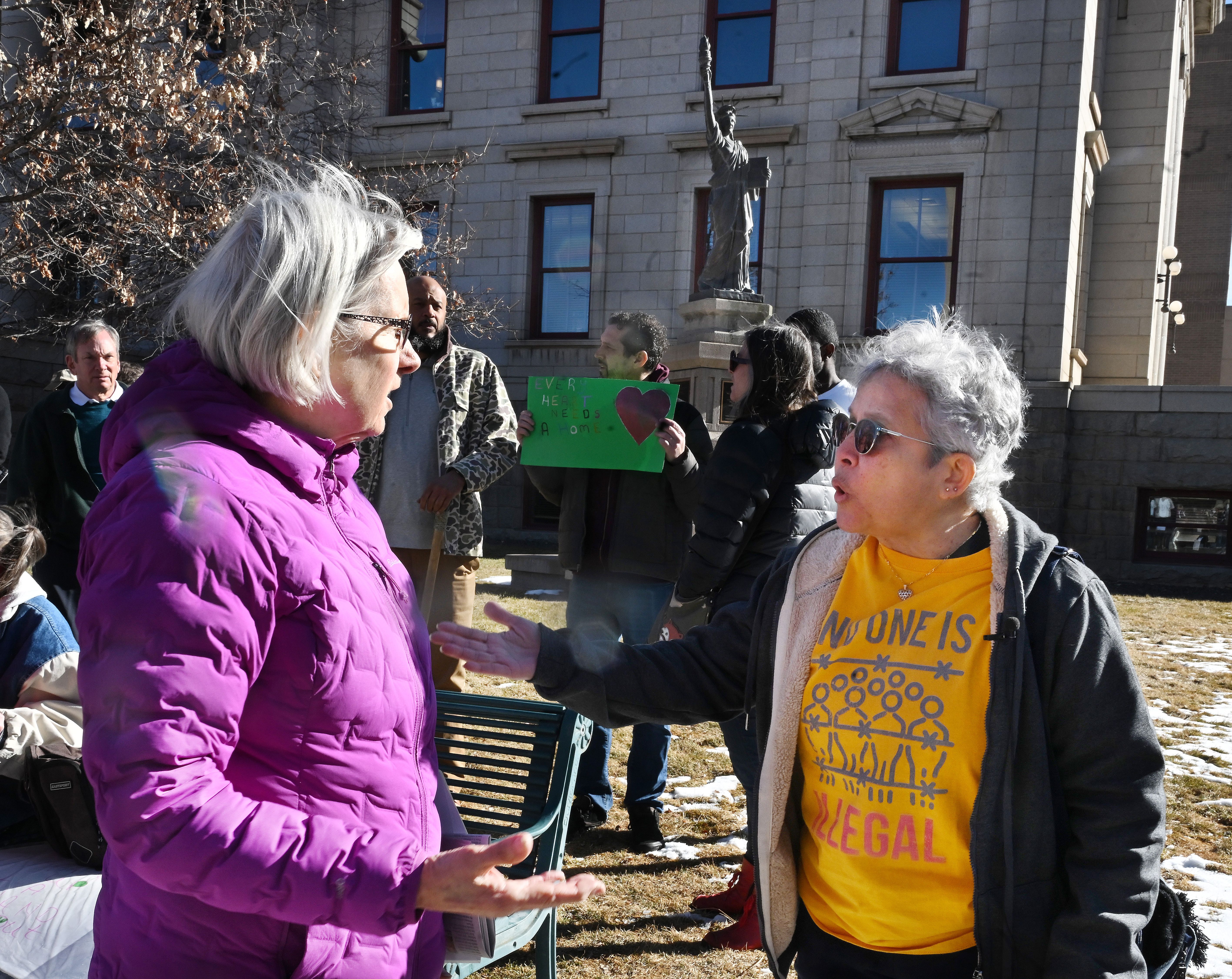
The Pikes Peak Regional Office of Emergency Management is preemptively planning its response in case an uncoordinated influx of immigrants arrive in Colorado Springs, though there is no emergency in the city, Mayor Yemi Mobolade reiterated Thursday.
“We do not have a crisis of an influx of migrants coming to our community. That said, we are planning for how this could impact our community,” Mobolade told reporters gathered at the regional emergency management office for the mayor’s monthly press briefing.
Mobolade and Andrew Notbohm, the director of the Pikes Peak Regional Office of Emergency Management, will provide an update on the migrant response plan at the City Council work session Monday. The meeting begins at 10 a.m. at City Hall.
Mobolade said his administration and the emergency management office continue monitoring the situation in Denver, a declared sanctuary city that has served nearly 40,000 immigrants since the beginning of 2023, according to the city’s immigrant count dashboard.
To create the response plan, officials are identifying local organizations and agencies that can help ease the burden of response on local government; establishing what roles they would play in a response scenario; and determining which situations will trigger further response coordination or action, then identifying alternative responses, Mobolade said.
A presentation linked on Monday’s online work session agenda said the Pikes Peak Regional Office of Emergency Management will establish emergency coordination calls with other leadership and supporting partners to determine next steps if a “significant and uncoordinated” surge of migrants arrive in the Pikes Peak region; if they are notified local hotels are being contracted to shelter migrants; or demand for shelter and other life-saving services exceed the community’s capability, among other events.
Mobolade on Thursday could not define what a “crisis-level” number of migrants coming into Colorado Springs would be. He said Denver is experiencing a crisis because it has serviced thousands of immigrants over the past year. Denver has spent more than $42 million over 14 months to provide services to migrants, with just $14.1 million covered by state and federal funding as of Feb. 19.
It is unclear how many immigrants have come to Colorado Springs, Mobolade said. The city is working with nonprofit partners such as the Salvation Army and Catholic Charities, relying on data they provide to get a sense of how many are here, he said.
The Pikes Peak region has not received masses of people crossing the southern border like some other cities across the nation. Even without actual figures, Mobolade said the number of immigrants coming “organically” to Colorado Springs is not near the level Denver is experiencing.
News broke in late January that about 21 migrant families had arrived at the Salvation Army in Colorado Springs, but the nonprofit hasn’t seen additional migrants seeking assistance in the weeks since, Mobolade said Thursday.
Earlier this month, Springs Rescue Mission Chief Development Officer Travis Williams told The Gazette it has not “observed a substantial influx of known immigrants” arriving at its shelter. The nonprofit does not ask individuals for identification to receive services, he said.
“We are not seeing any kind of increase that’s falling outside of the norm of individuals or a specific population. We live in a big county and we serve so many various people. So it’s possible, but not probable,” Williams said.
Mobolade said Catholic Charities President and CEO Andy Barton told the mayor this week the nonprofit is receiving people seeking asylum, but they make up fewer than 1% of the 2,500 people Catholic Charities serves every week.
Both the city and El Paso County have reaffirmed in recent weeks that neither are sanctuary jurisdictions. Because of that, Mobolade does not think Colorado Springs will see the level of migrant influx Denver has.
“What I’m more concerned about is if Denver gets overwhelmed and we start organically seeing migrants into our city. How do we respond? That’s our own version of what the crisis would be,” he said.
The mayor emphasized he wanted to “deescalate” the community’s sense in recent weeks that Colorado Springs is dealing with a migrant crisis. City officials are actively planning its possible response and vet every tip they receive, he said.
“What I’ve been trying to do is deescalate the situation; to say, we don’t have a crisis, but good governance is to be prepared ahead of a crisis, whatever that means or looks like,” Mobolade said.
