






[PRINT] Academy D-20 to host public session discussing concealed carry in schools (copy)
In an effort to bolster their schools’ safety and security, the Academy District 20 Board of Education will hold a study session Thursday to discuss options to update its policies. One possible change would involve allowing and training teachers and staff to conceal carry firearms in schools.
The session will take place at the Education and Administration Center, 1110 Chapel Hills Drive, at 3:30 p.m. and is open to the public.
Board member candidates contacted FASTER Colorado founder Laura Carno in September during the election cycle to discuss improving school safety when local parents began asking for their thoughts on concealed carry firearms for teachers and staff.
Since 2017, the nonprofit organization has provided firearm and emergency response training to over 400 school employees throughout 41 school districts in Colorado.
Carno didn’t reveal which candidates she spoke with, but said that one ended up winning their election and the other didn’t and that one was in favor of arming staff, and the other wasn’t. In the case of these races and other races throughout the state, she said that the candidates often contact her to learn more about the process when asked about it by voters, regardless of their personal feelings towards it.
“I get a lot of calls during campaign seasons,” Carno said.
Since it’s only a work session, no formal action will be taken by the board members in attendance. D-20’s director for safety and security will present an overview of the district’s safety and security team along with a different type of approach involving nonuniformed armed staff at the board’s regular meeting later Thursday.
Certifying staff
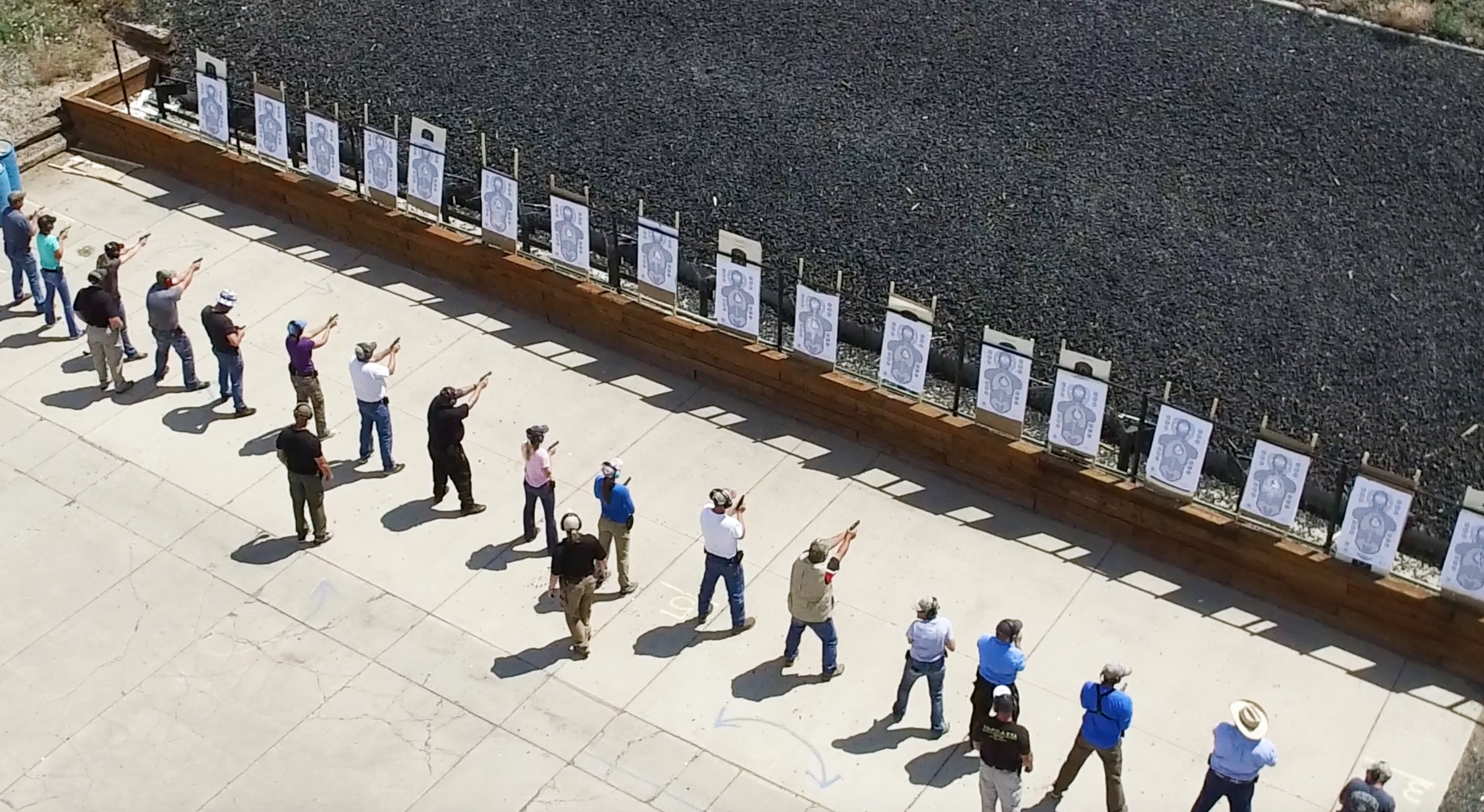
Founded in 2016, FASTER, which stands for “Faculty/Administrator Safety Training and Emergency Response,” offers four levels of training by off-duty law enforcement professionals that include live and simulated scenario-based training, emergency casualty care, advanced handgun proficiency and tactical skills.
Colorado allows concealed carried firearms in schools, but the implementation of arming school employees beyond security or school resource officers varies, depending on district policies established by its board of education.
When state school boards authorize employees as security officers, they are required to conduct annual training and annual requalification. On its website, FASTER Colorado states that its training meets and often exceeds the annual training required by the school’s or the district’s insurance company and that armed school employees can save lives until law enforcement and other emergency responders arrive.
The first level of training offered by FASTER Colorado is priced at $1,000 per person while all subsequent levels cost $600 each. Level 1 acts as annual renewal training for individual districts’ board and insurability requirements and is the only one that is required while the following levels provide more advanced training.
All applicants must have a state concealed handgun permit, which requires at least eight hours of live-fire training and a background check, before they can begin the FASTER program.
Carno said that about 60% of the districts she has worked with to date have been smaller, rural districts where they are often farther from emergency resources and response times are longer. School employees who volunteer for the program also often had experience with handling firearms.
Despite many of the volunteers already having a concealed carry permit and their own personal firearms and ammunition to carry, funding for this type of policy can also include training guns, ammunition, gun range memberships and travel and lodging expenses for annual and quarterly training that come out of the district’s security budget.
With the emergency response training that’s also provided, districts also identify emergency medical gaps in schools. Tourniquets and trauma kits have repeatedly been highlighted as insufficient in schools in the event of an emergency.
Since many school budgets are often set before the calendar year begins, FASTER has a fundraising program and scholarship form for districts that may have decided to enact a new policy but have yet to factor in the needed expenses for it.
With all the funding and insurance aspects and overall vetting process to keep in mind, Carno emphasized the role that each school boards’ decisions have on each concealed carry policy and how much flexibility there can be.
“Everyone wants to talk about the training, but that’s about 5% of the work,” she said.
Concerns raised
Since its announcement last week, the study session has not been without its detractors. An online petition started by a group of staff members within the district began gathering signatures last week to voice their opposition to adopting the FASTER program, fearing that bringing firearms into the school might increase risks and believing that the security program is sufficient.
“Introducing firearms into this setting could potentially escalate conflicts rather than defuse them,” the petition stated.
“Furthermore, introducing firearms into an educational environment can disproportionately affect marginalized groups who already face systemic discrimination and violence.”
As of Wednesday afternoon, 370 signatures had been gathered.
Carno said she had heard similar concerns in the past and that she has yet to see any evidence of these possibilities happening as described. Little data is available on the effectiveness of armed school employees in preventing emergencies, but proponents argue the policy creates a deterrent effect. Instances of accidental weapon discharges at schools have been reported in recent years, though none have led to fatal injuries.
Nearby districts such as Peyton D2-3 and Hanover D-28 already have policies in place to allow concealed carry for teachers and staff along with the Liberty Tree Academy charter school in Peyton.
Former D-23 Superintendent Tim Kistler is now the senior program manager for FASTER, helping other districts effectively implement their own armed staff program. Carno said more districts in the state are exploring the possibility, with most hosting sessions like D-20 before enacting any changes.
“It’s really become a robust public process,” she said. “They want to get as many parents and people from the public involved in this decision.”
A drone view of teachers and other school staff doing a training class through FASTER Colorado.
Teachers and other staff from schools around the state participate in FASTER Colorado training.
Interest is growing in arming teachers after recent school shootings. The training that’s offered to law enforcement, similar to this annual school emergency drill at Fountain-Fort Carson High School on June 6, 2018, is now being offered to educators.
