






PRINT Skyway: A mountainside residential neighborhood | Cronin and Loevy (copy)
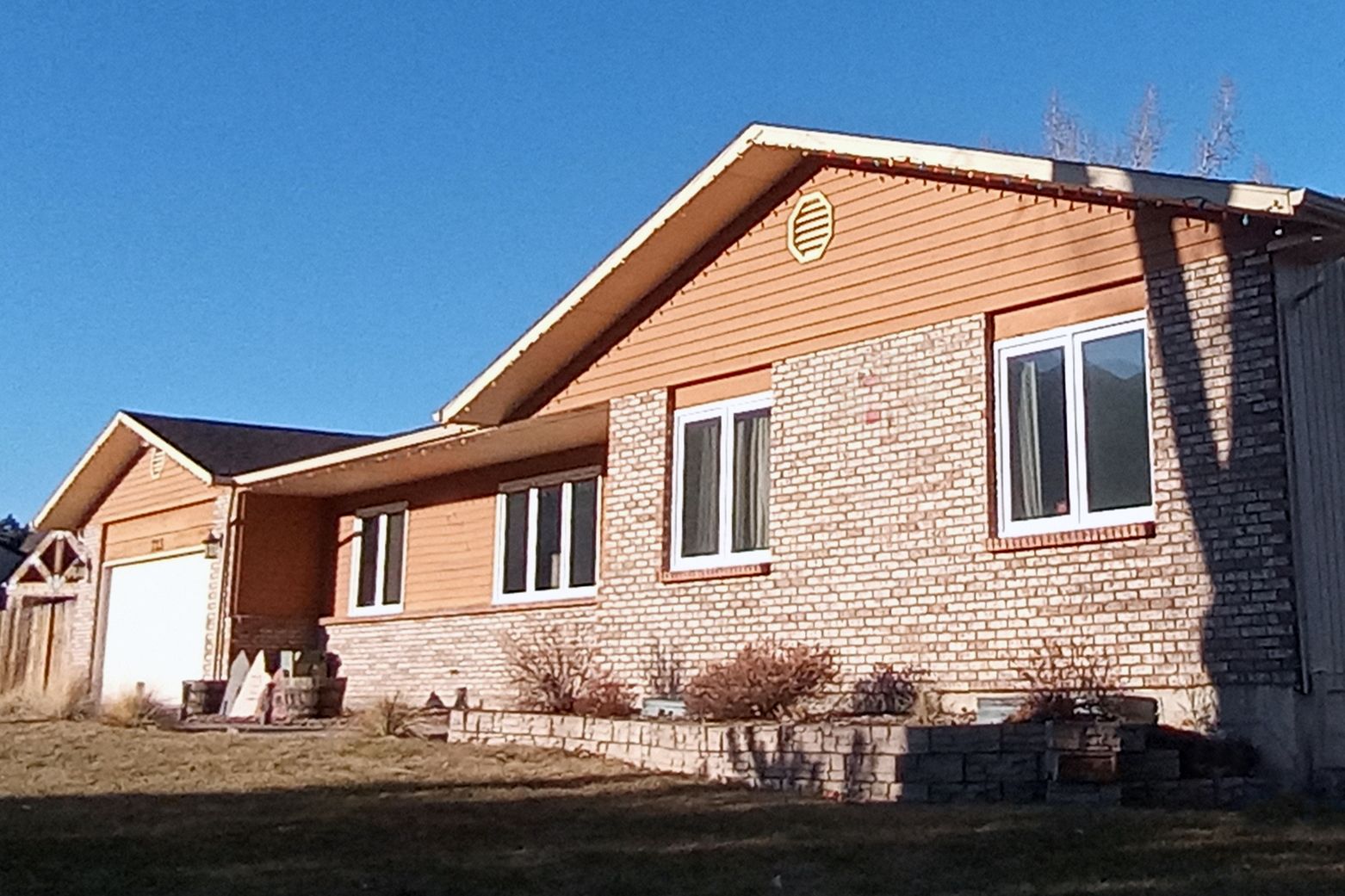
Imagine a neighborhood of classic post-World War II ranch houses that is built on a lower mountainside of the Rockies. The farther up the mountainside the ranch homes go, the more expansive the views of the city below and the great Eastern Plains beyond.
The scenic views from the higher-up homes are particularly gorgeous at night, when the lights of the city form the panorama below while the stars shine in the sky above.
No need to imagine such a neighborhood in Colorado Springs. It was constructed between 1950 and 1970 just a few miles and a 10-minute drive southwest of downtown Colorado Springs. As the neighborhood goes from east to west up the mountainside, it appears to rise in the air.
So they named it Skyway. And many of its streets have astronomical names, such as Orion, Hercules, Milky Way, Jupiter, Virgo and Constellation.
Newspaper advertising when the neighborhood was being built described it as “America’s most beautiful home sites … where views, values, social status, soil conditions, favorable financing, and even the weather seems just a little bit better than any other location happens to be.”
Skyway was built in segments, each with its own name and real estate covenants. Among the segments are Skyway Park and Estates, Skyway Heights, and Top of Skyway. Most of us know it as Lower and Upper Skyway, which are divided by 21st Street and Cresta Road that go through the middle.
A 1958 newspaper article in The Colorado Springs Gazette Telegraph announced that a plat had been filed to develop 427 more acres in Skyway Park and Estates with 700 homes.
The less expensive homes would be priced at $20,000 to $25,000 and the more expensive homes at $30,000 to $40,000. Nowadays, homes range from $400,000 to $4 million or more.
The homes would be in the spacious ranch-house architectural style with the living room, dining room, kitchen, and the bedrooms on one floor. An architectural control committee composed of future residents would guarantee the architectural controls were maintained in the future.
It was made clear that there would not be a grid street pattern like downtown Colorado Springs. Skyway streets would curve around and go up- and downhill, according to the topography. There would be an emphasis on cul-de-sacs that had no noisy and high-speed traffic.
Because most of the building lots were on the mountainside, there were grown trees and heavy underbrush and shrubs on the property. The developers made clear that builders would be urged to preserve “existing brush, shrubbery, and trees consisting of oak and pine.”
The newspaper article noted that, as the homes went up the mountainside, there would be an elevation gain of approximately 700 feet. This would mean more rain and snow, more shrubs and trees, lower temperatures in the summertime, and all with “beautiful views.”
The only scenic drawback: Few of the homes in Skyway have a view of Pikes Peak.
A big neighborhood asset is the public schools. Cheyenne Mountain District 12 schools are rated as some of the best in the state and the nation, and its high school is considered one of the best. The school district includes the Broadmoor area as well as Skyway. Local property taxes are high to pay for the good public schools.
Skyway is not all spacious ranch houses. There are apartment buildings in the southeast corner of the neighborhood near South 8th Street and Cheyenne Road. Two of them are luxury high-rise apartments. There also is retail on both sides of South 8th Street from the Midland Expressway to Cheyenne Road.
Housing costs vary in Skyway. There are reasonably priced ranch houses in what is known as Lower Skyway down near South 8th Street. On the other hand, there are gated communities, like Stratton Gardens and Stratton Forest adjacent to Cheyenne Mountain High School, that are filled with luxury homes.
Skyway is big. Roughly speaking, its southern boundary is Cheyenne Boulevard, eastern boundary is South 8th Street, northern boundary is Bear Creek Park, and western boundary is Gold Camp Road (both sides) and the national forest.
And there are a wide variety of uses within Skyway and close by: the old County Farm (now community gardens), Penrose Horse Stadium (used for summer rodeos), retirement homes, a dance studio, the Center for Creative Leadership (on several beautiful acres west of South 8th Street), and a popular pasta restaurant called Panino’s on South 8th.
An additional note about the community gardens: Vegetable gardens have existed here on county-owned land for over 100 years. For decades, it was known as the Poor Farm, and gardens were operated by and for poor people. Older folks will recall that there was even a Poor Residence building there. Nowadays, county residents can rent a good-sized garden plot for $100. There are more than 100 gardens there with more than 200 gardeners, many from the nearby Upper Skyway neighborhood.
The county continues to provide services so that these spirited gardeners can productively cultivate the land.
A few blocks north of Skyway on 2lst Street is the highly rated upscale Carlos’ Bistro.
Skyway is well supplied with nearby park and recreation facilities. Bear Creek Regional Park has 545 acres of picnic pavilions, athletic fields, tennis courts, pickleball courts, children’s playgrounds, an archery range, a horseshoe pit, and outdoor volleyball and a basketball court. There is also a popular dog park.
Although Bear Creek Regional Park is in the city of Colorado Springs, the park is owned and operated by El Paso County. In fact, at the time Skyway was developed in the 1950s and 1960s, Skyway, Broadmoor, Ivywild and other neighborhoods in that area were in El Paso County and not in the city.
In the 1970s, Colorado Springs moved to annex Skyway, Broadmoor and other nearby neighborhoods. Various residents in Skyway and the other nearby neighborhoods strongly resisted the annexation and even went to court to stop it.
But state law was on the city’s side, and all the southwestern neighborhoods, including Skyway, were annexed.
Skyway and the other neighborhoods left their mark on the state constitution, however.
Freda Poundstone, a lobbyist at the Legislature in Denver, was upset that Coloradans could be annexed into a city against their will. She gathered the signatures for an initiated state constitutional amendment that gave citizens of an area to be annexed the right to vote on the issue. State voters adopted the Poundstone Amendment by a wide margin.
So, Skyway was one of the last neighborhoods in Colorado to be annexed into a city without a favorable vote by the residents.
Skyway residents enjoy the nearby amenities of The Broadmoor Resort complex to the south and Old Colorado City a mile or so to the north.
Built on a lower mountainside with much architectural unity and some glorious views, Skyway remains one of the larger and most distinctive neighborhoods in Colorado Springs.
Tom Cronin and Bob Loevy are news columnists who write about Colorado and national politics.
Classic post-World War II ranch-style homes are found throughout the Skyway neighborhood.
This map of the central portion of Skyway was in a newspaper advertisement in the 1950s when the neighborhood was being built.
Association
