






Wolves and recreation in Colorado: Should you be worried? (copy) (copy)
Rob Edward was scrolling Facebook early this month when he came by a reported image of one of Colorado’s new, collared wolves. It seemed credible to him, said to be taken by a rancher around Grand County, where officials released some of the first 10 wolves to be tracked in the state’s reintroduction effort.
Edward, with Rocky Mountain Wolf Project, had been advocating for that highly debated reintroduction for decades. Knowing wolves to be “elusive” and “unlikely to approach people or homes,” as described by a Colorado Parks and Wildlife brochure, he was somewhat surprised by the photo reportedly taken by a road, not far from homes.
At the same time, Edward was unsurprised. “Right now, because people have such an eye out, it’s more likely somebody sees them,” he said.
And likely a familiar dialogue will continue.
Read one email in this reporter’s inbox: “Hiking is fine, but just wait till wolves start dragging people and there dogs down.”
That CPW brochure — the agency deferred questions to it — stresses the importance of keeping dogs close by in wolf country. Last year in Jackson County, wolves that had migrated from Wyoming reportedly killed a working cattle dog and fatally injured a pet dog.
Territorial wolves very well might kill dogs perceived as threats, said Kevin Crooks, a wildlife biologist directing Colorado State University’s Center for Human-Carnivore Coexistence. “As can other large carnivores, such as mountain lions and coyotes,” he said.
Just as Coloradans should know how to handle their dogs moving through habitat of moose and elk, so should they be aware on a landscape that now includes wolves, Crooks said.
For people, similar advice applies, CPW has advised: keep distance and visual contact with any wolf spotted; talk calmly yet firmly; fight back “in the very unlikely event that a wolf attacks you,” reads that brochure.
The rarity is the focus of literature published by the Center for Human-Carnivore Coexistence, which has aimed “to integrate research, education and outreach,” Crooks said, to prepare Coloradans for living with wolves again.
Wolves were eradicated from the state in the 1940s, largely due to the issue that has returned to the forefront: their threat to livestock. Ranchers have been a main focus for the Center for Human-Carnivore Coexistence — as have general outdoor enthusiasts perceiving a threat of harm or death.
The center points to Yellowstone National Park, where wolves returned in 1995. Since then, no attack has been reported at the park. A study between 1900 and 2000 found no human deaths by wolves over that century across North America.
A study between 2002 and 2020 expanded the research to Europe. The Norwegian Institute for Nature Research determined 489 attacks on people, 26 of whom were killed. Two deaths were tracked in North America: a Canadian miner in 2005 and a jogger in 2010 in Alaska.
The report concluded: “Considering that there are close to 60,000 wolves in North America and 15,000 in Europe, all sharing space with hundreds of millions of people, it is apparent that the risks associated with a wolf attack are above zero, but far too low to calculate.”
That should not downplay a truth about wolves, Edward said: “They are dangerous. They are big canines who hunt for a living, and they have the capacity to take down large prey bigger than humans.”
Just as powerful, he suggested, was mythology.
“Little Red Riding Hood,” he said. “And that came from the European experience of wolves during the plague years, where wolves did become habituated to human flesh, because there were human beings stacked up at the edge of cities.”
Which speaks to another point scientists have stressed: “You don’t want to habituate them by providing them with food, intentionally or unintentionally,” Crooks said.
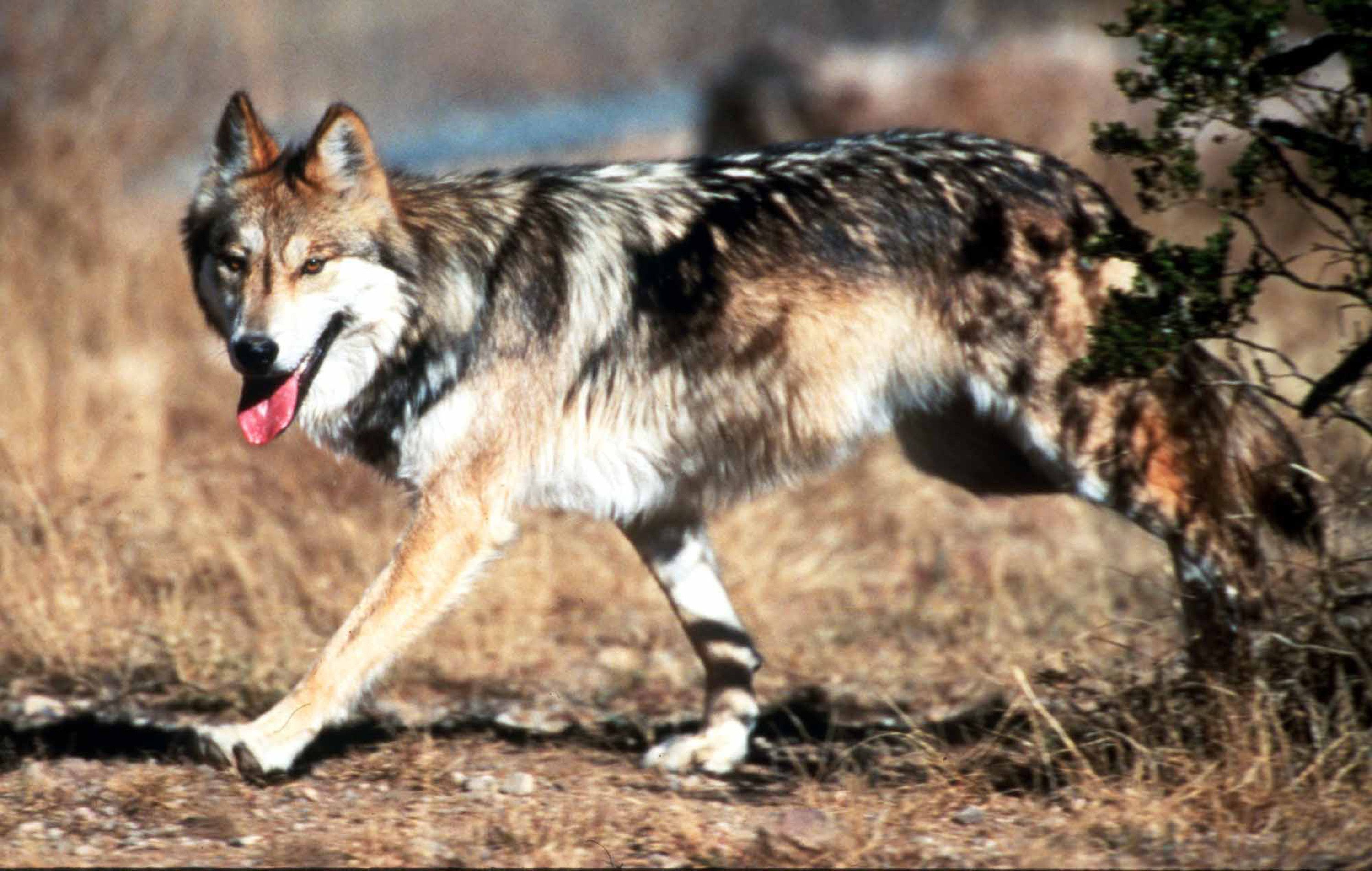
Gray wolves are being reintroduced to Colorado.
FILE — In this undated file photo provided by the U.S. Fish and Wildlife Service, a Mexican gray wolf leaves cover at the Sevilleta National Wildlife Refuge, Socorro County, N.M. Colorado wildlife officials might soon reiterate their opposition to wolves being reintroduced to the state. (Jim Clark/U.S. Fish and Wildlife Service via AP, File)
