






Peace is elusive | From my perspective
It’s 1939. A legendary ocean liner, the MS Piłsudski, crossed the Atlantic Ocean from Europe. The ship’s seven decks accommodated nearly 773 passengers plus a crew of 350. It was known as the pride of the Polish fleet with its state-of-the-art technology and modern interior. The ship was fully booked for ten voyages to the United States.
On August 11, the MS Piłsudski left Europe at full capacity while another ship was nearby on the same route carrying mostly Jewish immigrants. Shortly before reaching the United States, the captains of the two ships were ordered back to Europe. One captain agreed and returned to Europe with its load of refugees. The other ship’s captain defied the order and continued onward. This documented historical voyage marked the last time a large ocean liner took immigrants to America who were escaping Hitler’s regime.
Many of the passengers were from Poland where approximately ninety percent of the Jewish population was killed during the Holocaust. In 1938, the small town of Nasielsk, Poland, had approximately 3,000 Jewish residents; yet by the end of World War II, fewer than one hundred had survived.
The ship’s manifest listed the passengers by name, age, place of birth, and destination. It described each passengers’ occupation, race or people, and whether the person could read and write and in which language(s). Some were merchants and farmers while others were housewives and children. Some spoke Polish, German, or Yiddish, but none spoke English. The manifest indicated who paid for their passage and who they would live with upon arrival in America.
One family of three from Nasielsk included a father named Szlama (Soloman), a mother named Idessa (Edith), and a three-year old child. Occupation? Shoemaker. The little boy’s name? Kiwa (Keva) Rycherman. The Rychermans headed to Louis Silverstein’s tiny home in Buffalo, N.Y. and adjusted to a new life.
That is how my father-in-law, Keva, came to America. Along the way, the Rycherman name became Richman. Keva learned English and attended public school with his younger sister. Ultimately, Keva finished college, married Beverly Saks, became an accountant and raised three children. Some of Keva’s cousins fled Poland, traveled to Buenos Aires and Paris and retained the Rycherman name. Tragically, the rest of the extended family perished in the Holocaust.
I share this history with you as I reflect on the past few weeks. Oct. 7, nearly 250 people including children were taken hostage by the terrorist group Hamas. More than a month has passed, yet the hostages’ whereabouts and well-being are unknown. Over 1,400 Israelis were murdered that same day by Hamas, more than any single day of violence since the Holocaust. Pleas of “never again” after the Holocaust have been repeated by Jewish communities all over the world, yet again, we’re up against terrorism. Israel is smaller than New Jersey with a population of over 9 million people. It’s a diverse country where Arabs, secular Israelis, religious Jews, Christians, and Muslims live side-by-side trying to make a living for their families and coexist in peace and harmony.
After Oct. 7, disbelief and shock swept through the Jewish community. We immediately contacted our relatives and friends in Israel to find out if they were all right. Thankfully, they were. We called Jewish friends who have family in Israel to check on them as well. That very day, armed security increased at Jewish organizations across the country, in preschools, synagogues and Jewish community centers. It was reassuring to hear from our local Rabbi that Mayor Yemi Mobolade and law enforcement officials had called the synagogue with messages of support for the Jewish community.
In the U.S., 2.2% of the population is Jewish yet currently, 60% of reported hate crimes are committed against Jews. According to the FBI and the Anti-Defamation League, hate crimes against Jews have increased over 400% since the tragedy in Israel on October 7. In the first two weeks after Oct. 7, 312 antisemitic crimes were reported across the country. In California, a Holocaust survivor found an antisemitic hateful slur sprayed on her garage door. In a New York subway station, a man punched a woman in the face, telling police it was because she was Jewish. At several universities, there were death threats against Jewish students and antisemitic slogans were painted on buildings where Jewish students gather. It’s horrifying and sad.
The situation in Israel and the Gaza Strip is devastating and amidst it all, 244 hostages kidnapped by Hamas still have not been released. Tragedy has engulfed the middle east and few solutions have emerged. Although this conflict is thousands of miles away, for many of us it’s close to our hearts and constantly in our minds. We hope for peace to prevail, but for now, we must stand up against hateful rhetoric, hate crimes, or antisemitism in any way, shape or form. We have work to do which requires strength, a moral compass, and compassion. After all, for my late father-in-law and many others, this is literally what we came here for.
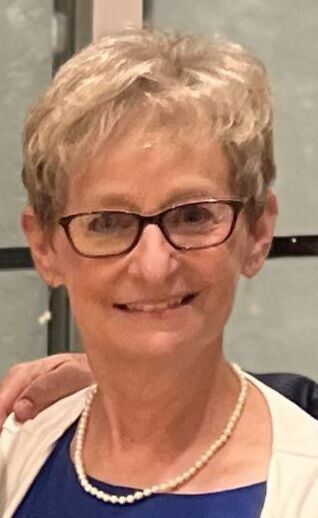
Julie Richman.
Julie Richman