






How high interest rates impact the American dream | Tatiana Bailey
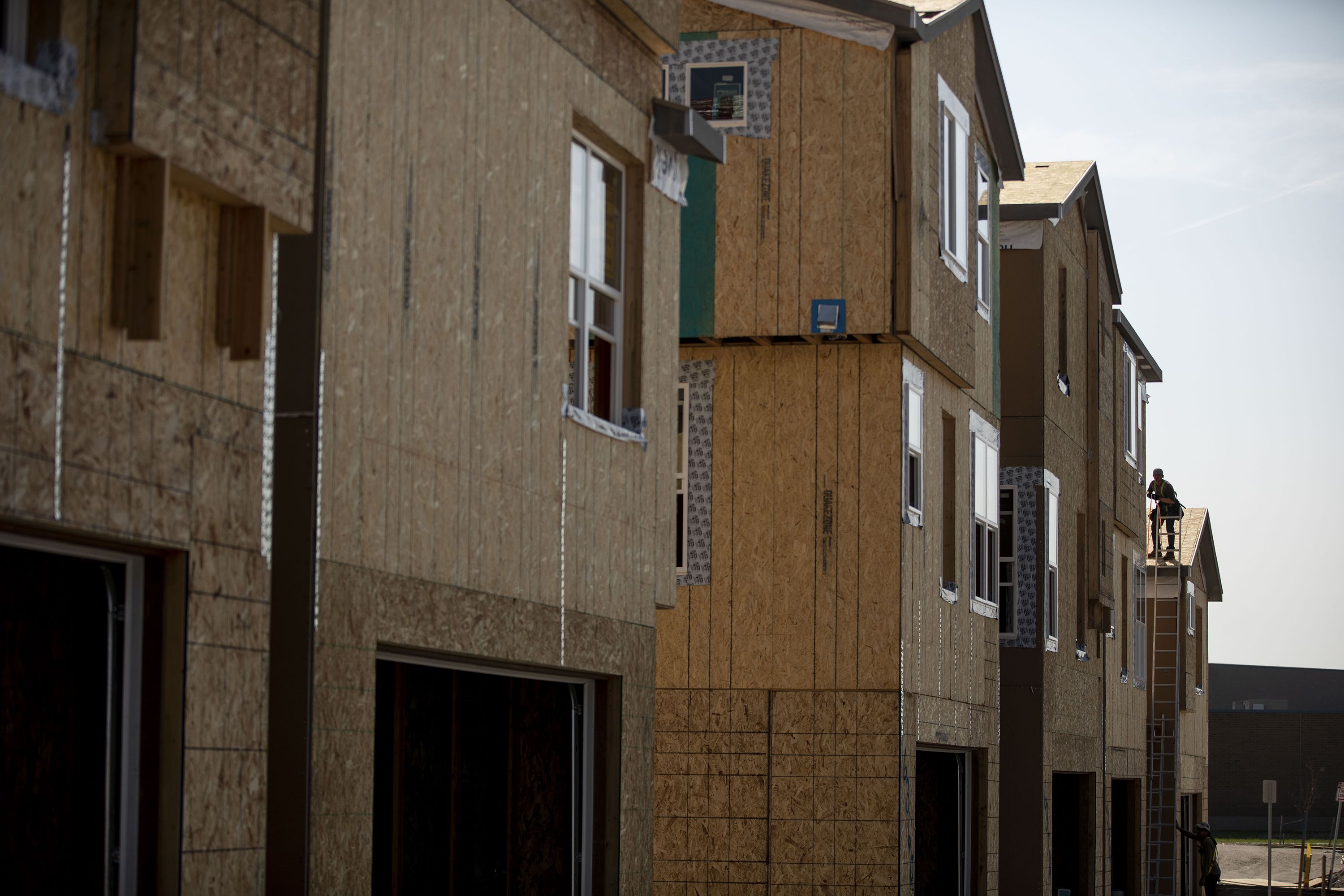
In a recent Gazette article, I talked about the “ideal” number of homebuilding permits for our region for single and multifamily dwellings. I also talked about how a housing shortage and high interest rates are exacerbating that shortage in most areas of the nation, including locally.
The standing housing shortage is mostly a legacy of the Great Recession. The high interest rates are confounding that shortage because builders simply don’t build as much when demand falls off. This has crimped residential construction, which in turn has kept home prices and rents significantly elevated.
Here’s an example. If someone bought an average-priced home in Colorado Springs for $500,000 a couple of years ago and took out a loan for $400,000 after the down payment, their monthly mortgage payment at a 2.7% interest rate is $1,600. Today that same loan would result in a $3,000 monthly house payment because interest rates are at almost 8%. So, roughly double the payment.
No wonder many people are priced out of the market. No wonder no one wants to move from their home if they locked in a low interest rate a couple of years ago.
This further reduces the supply of housing, which keeps prices elevated. Many of the people who can afford to buy at these higher interest rates are wealthier individuals so a lot of the demand for construction is in higher price ranges.
And these high shelter costs are one of the primary reasons that September inflation rates stayed elevated at 3.7%.
But an interesting dynamic is that individuals who locked in lower rates are in a relatively good financial position as my example showed. I would bet it’s primarily that segment of the population that continues to spend. The most recent retail sales data show that the U.S. consumer does, indeed, continue to spend.
By contrast, most European countries and Canada do not have the option of fixed, 30-year mortgage rates. They have variable rate loans that are reset typically every five years. This means that when their central banks increase interest rates to quell inflation many homeowners have a hard hit to their household budgets due to higher monthly payments.
Some would argue this makes monetary policy more effective in these other countries, although I can tell you the euro area and Canada still have elevated inflation levels alongside their high interest rates.
In terms of the American dream of homeownership, it’s fantastic that the U.S. has the option of fixed 30-year mortgage rates. On the other hand, an unintended consequence is that the Federal Reserve might have to raise rates one more time or, at a minimum, keep them higher for longer to quell consumption and inflation.
It’s a vicious cycle because high shelter costs ironically don’t help inflation or the housing shortage. This virtually guarantees ongoing high housing costs for the foreseeable future. Regrettably, this also doesn’t help a potential first-time homebuyer who is reaching for the American dream.
High mortgage rates are exacerbating a housing shortage, because builders don’t build as much when consumer demand falls off.
