






UCCS Economic Forum this week with new director at the helm
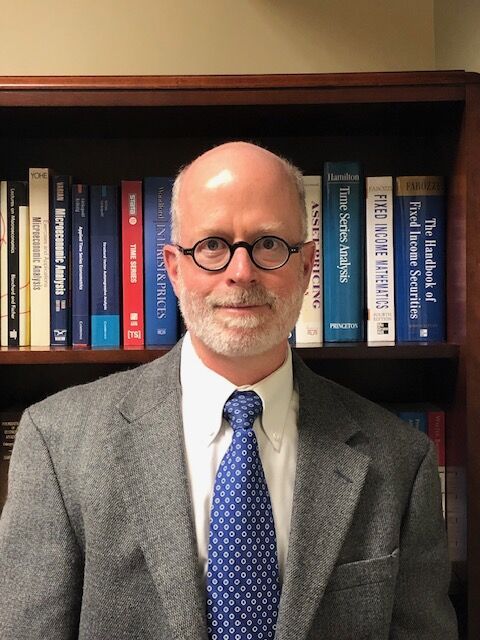
Bill Craighead has big shoes to fill in replacing Tatiana Bailey as director of the University of Colorado Colorado Springs Economic Forum.
Bailey spent eight years as the forum’s first full-time director, expanding the annual event with presentations to business and civic groups year-round and raising its profile by frequently commenting on economic data in media coverage.
She left the organization in October to start Data-Driven Economic Strategies, a nonprofit that uses economic data to help businesses and other organizations with strategic planning and workforce development.
Joe Craig, chairman of the UCCS economics department, took over as the forum’s interim director as the school searched for a permanent replacement. Craig planned this year’s forum event, which features Eve Lieberman, executive director of the Colorado Office of Economic Development and International Trade, as the headline speaker.
The forum, in its 27th year, is scheduled 1-5 p.m. Thursday at the Ent Center for the Arts, 5225 N. Nevada Ave.
Craighead, 49, was selected after a national search and will join Craig in a presentation during the forum on the local, state and national economic outlooks. The event also will feature panel discussions on “Housing Affordability: What’s on the Horizon?” and “Building a Strong Foundation: Strategies for CHIPS (Creating Helpful Incentives to Produce Semiconductors) Act.” To register for the free event, go to https://business.uccs.edu/economic-forum and click on “registration information.”
Bailey has become the city’s go-to source for economic information, but Craighead will add a new voice to economic discussions. Bailey’s academic focus had been on the economics of health care before arriving at UCCS, but in recent years she stressed workforce development.
Craighead’s academic focus has been on macroeconomics, the study of the overall economy and how it works, with an additional emphasis on international economics and economic history.
Craighead was hired for the director’s job after spending four years on the economics faculty of the Air Force Academy and three years in a similar role at Colorado College. He also taught economics at Wesleyan University in Connecticut and Miami University in Ohio. He has a bachelor’s degree in economics from Carleton College in Minnesota and master’s and doctoral degrees in economics from the University of Virginia.
A Denver native and son of an auto industry executive father and a librarian mother, Craighead grew up in Detroit and developed an interest in politics and news before enrolling in Carleton College, a small liberal arts school, where an early economics class sparked an interest in the subject.
He also minored in Russian, leading him to spend two 10-week terms in Moscow and St. Petersburg in 1994 and 1996, in the wake of the collapse of the Soviet Union.
“It was a chaotic time, but people still went about their daily lives, shopping for groceries and going to work,” Craighead said of his visit to Russia.
“The optimism when the Soviet Union fell, the end of central planning and adoption of free enterprise, didn’t lead to Russia becoming more like Western Europe. I learned the importance of institutions like courts, the rule of law and the ability to trust each other doesn’t happen overnight.”
After graduating from Carleton, Craighead took a job with a small New York-based financial publisher that compiled information and produced a database about syndicated loans. He read credit agreements filed with the Securities and Exchange Commission and wrote about the loans, mostly to Latin American nations, for a fax newsletter.
Craighead wanted to teach economics, so he entered the doctoral program in economics at the University of Virginia, where he wrote his dissertation on volatility in real exchange rates and how to develop better models to understand that volatility.
“I always had in mind that I was interested in an academic career, but I was glad I had experience in the private sector,” Craighead said.
“I didn’t have a strong math background and struggled in my first year in grad school. I knew I could go back to my old job, but what I learned was the importance of practice and the need for repetition of that practice. I figured it out just in time.” He received his doctoral degree in early 2006.
Craighead’s first university job at Miami of Ohio, a school with an enrollment of nearly 20,000 students, is where he met his wife, Janet Burge, then a computer science faculty member.
He would spend four years there before he longed for the small liberal arts college environment he experienced as an undergraduate and moved to Wesleyan University, with an enrollment of 3,000 students.
While at both schools, Craighead focused his research on macroeconomic theory, mostly with international emphasis. He researched historical data on real exchange rates, including 200 years of exchange rates between the U.S. dollar and British pound. Craighead and Burge wanted to move closer to his family in Colorado and hers in California. They joined the faculty of Colorado College in 2016.
“I found the block plan (spending 3½ weeks on one course) a real challenge for instructors,” Craighead said of his three years at the liberal arts school that is one of only a handful of colleges using that plan. “When you are in a block, you have to be ready for the next day because you are teaching a week’s worth of content from a semester plan in one day in a block plan. With a semester plan, you typically teach a class two days a week with a day off in between.”
Craighead moved four years ago to the Air Force Academy, where he had to adjust to classes that were only 53 minutes long, or about 20 minutes shorter than most colleges, and the atmosphere of a military academy where cadets stand at attention for the beginning of class.
The COVID-19 pandemic hit one semester after he arrived there, prompting the academy to move to remote teaching for the rest of his first year there and part of his second year.
“I’m glad I had the experience of working in a military academy. I was not aware of how many opportunities cadets had to go to grad school until I was involved in selecting cadets to go to grad school,” he said.
“But I found myself doing a bit of soul searching about the rest of my career. I told my students there are a lot of different things you can do in economics beyond academics — working in government and the private sector — but I hadn’t taken my own advice.”
That soul searching prompted Craighead to seek the economic forum job to put his macroeconomic theory into practice, which will be a major part of his new position where he will give economic presentations regularly.
“I used to talk about relating economic theory and data to current events when I taught economics. Now it will be the central point of what I do, instead of a side dish,” Craighead said.
“Economic data is the result of millions of economic decisions. Now I will get to hear from the people who make those decisions that drive what happens in the data. That is a big change from being an academic economist where you don’t have to pay attention to the current economy.”
To get the director’s job, Craighead had to give a presentation to the selection committee on the local economy, so he talked about the risks of a recession and what a recession might mean for the region’s economy. He told the panel he expected any recession would be mild; he is even more optimistic now though he believes the local economy “is not out of the woods yet since the impact of interest rate increases has not fully played out.”
Craighead said it’s too soon to say whether he will make changes in the way the forum operates, but he plans to meet with the forum’s sponsors and find out their needs and perspectives on the local economy, then build on the work of his predecessors.
Bill Craighead