






Tap water study reveals five problematic ‘forever chemical’ spots in Colorado
On Wednesday, the USGS released the results of a study that looked into the level of polyfluorinated alkyl substances, also known as PFAS and ‘forever chemicals,’ that were present in the country’s tap water. While there are 12,000 types of PFAS, not all can be tested for, with this study focused on finding 32 common types, taking water samples from 716 locations around the country. Based on mapping that was released as part of the report, 13 of these sample areas were in Colorado.
“USGS scientists tested water collected directly from people’s kitchen sinks across the nation, providing the most comprehensive study to date on PFAS in tap water from both private wells and public supplies,” said USGS research hydrologist Kelly Smalling, the study’s lead author. “The study estimates that at least one type of PFAS – of those that were monitored – could be present in nearly half of the tap water in the U.S. Furthermore, PFAS concentrations were similar between public supplies and private wells.”
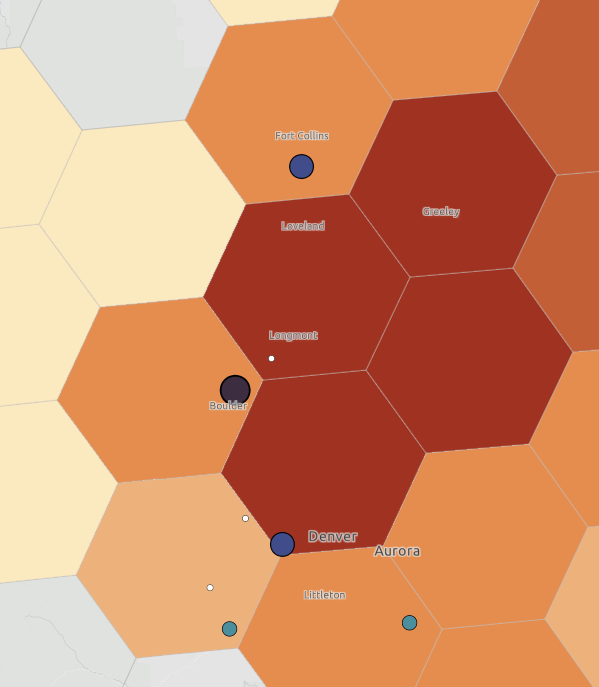
The USGS estimated that urban areas have a much higher chance of PFAS being present in water sources, at a rate of about 75% of those included in the analysis compared to just 25% of rural areas. This correlates with the Colorado specific data, which reveals the most problematic part of the state to be in the Denver metro area and the northern I-25 corridor of the areas that were included in the analysis. That being said, urban areas of Colorado Springs and Grand Junction did not reveal a PFAS issue, along with several pockets along the I-25 corridor.
See a closer look at Colorado’s PFAS analysis results below:
A white dot indicates no PFAS detected, while the blue circles indicate detection with the size indicating the number of PFAS detections (larger size means more PFAS).
The map provided by the USGS shows the rough location of where problematic samples were collected, shown in shades of blue. Explore the full dashboard here.
According to the CDC, PFAS don’t break down in the environment, can move through soil and contaminate drinking sources, and can build up in fish and wildlife. In animal studies, PFAS have been shown to impact reproduction, thyroid function, immune systems, and can damage the liver. There’s continued concern that similar impacts may occur in humans, though the CDC notes that human health effects from exposure to low levels of PFAS in the environment are “uncertain.”
Find more information about this analysis here.
EDITOR’S NOTE: We reached out to the team behind this report and specific locational information is not being released. However, this dashboard provides additional insight.
Public domain, USGS.
